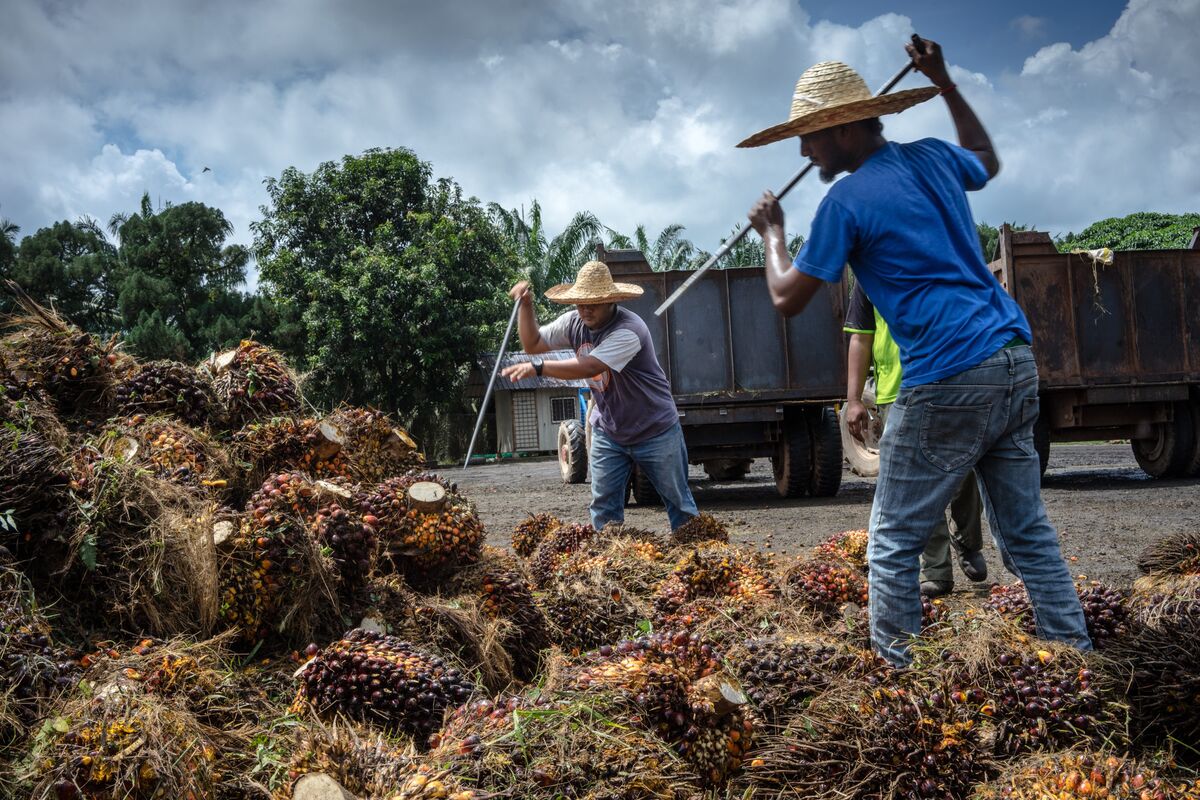
Malaysian palm oil inventories surged nearly 10% month-over-month to 2.23 million tons in July, marking a 19-month high and the fifth consecutive month of gains, according to a Bloomberg survey. This significant increase in stockpiles is attributed to rebounding production in the world's second-largest palm oil grower, signaling ample supply that could impact global commodity markets.
Palm oil inventories in Malaysia, the world's second-largest producer, are reported to have surged by nearly 10% month-over-month to 2.23 million tons in July, based on a Bloomberg survey. This figure marks a 19-month high and represents the fifth consecutive monthly increase in stockpiles. The primary driver for this accumulation is a rebound in production. A sustained and significant build-up of inventory signals an oversupply condition in the market, which is a fundamentally bearish indicator for the commodity's price. The strongly negative sentiment associated with this data underscores the market's expectation of downward pressure on palm oil prices.
AI-powered research, real-time alerts, and portfolio analytics for institutional investors.
Request DemoOverall Sentiment
strongly negative
Sentiment Score
-0.65
