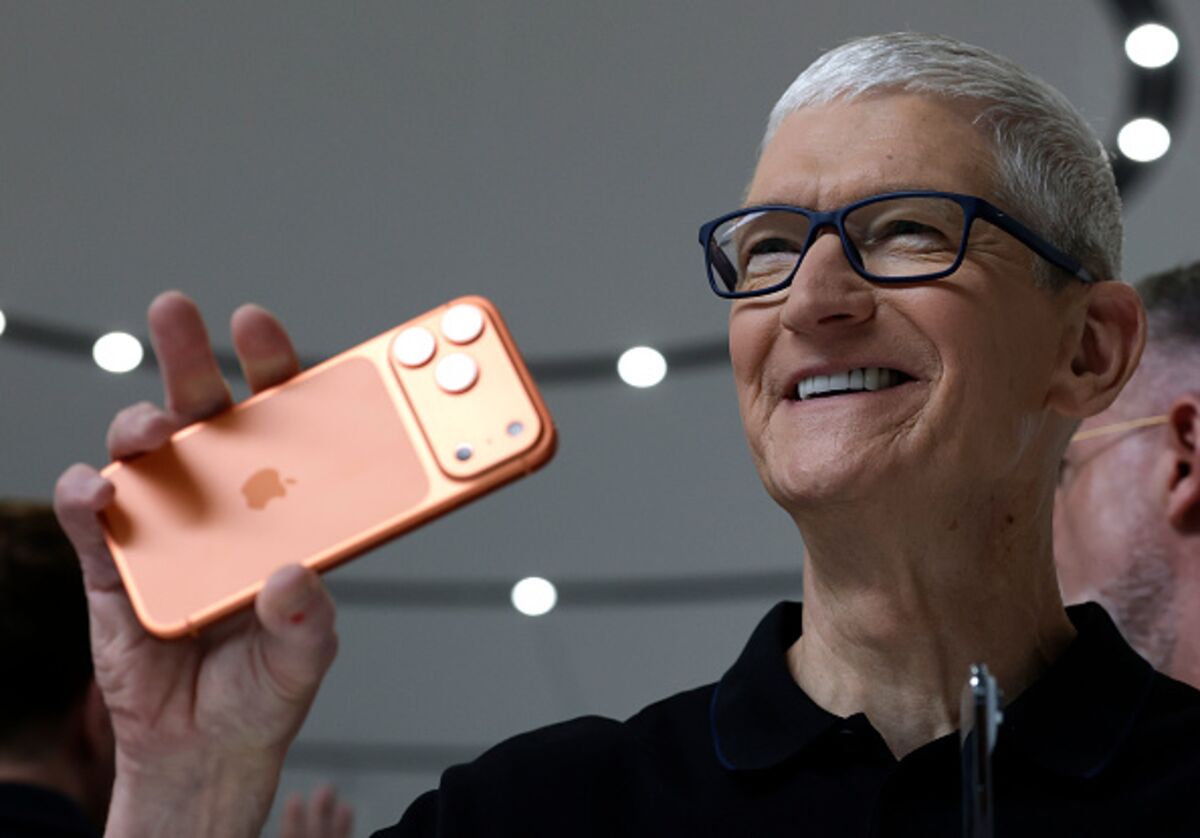
The article argues that Apple is facing renewed scrutiny over its AI execution, citing criticism that promised Siri features have not been delivered and that the company may be lagging in artificial intelligence. It also highlights broader questions about Tim Cook’s leadership and Apple’s preparedness for a future beyond the iPhone. The piece is opinion-driven rather than event-driven, so the immediate market impact appears limited.
The market is likely underpricing the optionality embedded in a management handoff that looks negative only if you assume the AI narrative is the primary equity driver. For AAPL, the bigger issue is not feature timing but whether the company can preserve its pricing power if AI remains a “story stock” gap versus peers; that matters most in the next 2-4 quarters because it influences iPhone upgrade elasticity and gross margin mix rather than near-term revenue. The base case is gradual multiple compression, not a collapse, because the installed base and services annuity still buffer execution slippage.
Second-order beneficiaries are the AI infrastructure and model-layer names, not necessarily the obvious handset competitors. If Apple’s product cadence stays behind, OEMs and cloud providers that can monetize on-device AI alternatives, accessories, or cross-platform workflows should continue to gain share of wallet, while supply-chain leverage shifts toward firms with exposure to memory, advanced packaging, and edge compute. The real risk for Apple is that a prolonged AI gap weakens its ability to command premium pricing just as replacement cycles normalize, creating a slow-burn earnings headwind into FY26 rather than a near-term shock.
The contrarian read is that governance continuity may be more valuable than headline “visionary” disruption: in a large-cap consumer platform, incremental execution often outperforms strategic reinvention. If the market has already discounted a mediocre AI story, the stock could stabilize if management simply avoids further credibility damage and reframes AI as a bundle of latency, privacy, and device-level advantages. Conversely, if competitors ship materially better assistant functionality over the next 6-9 months, the negative sentiment can compound into a valuation gap that is harder to repair than the product miss itself.
AI-powered research, real-time alerts, and portfolio analytics for institutional investors.
Request DemoOverall Sentiment
mildly negative
Sentiment Score
-0.25
Ticker Sentiment
