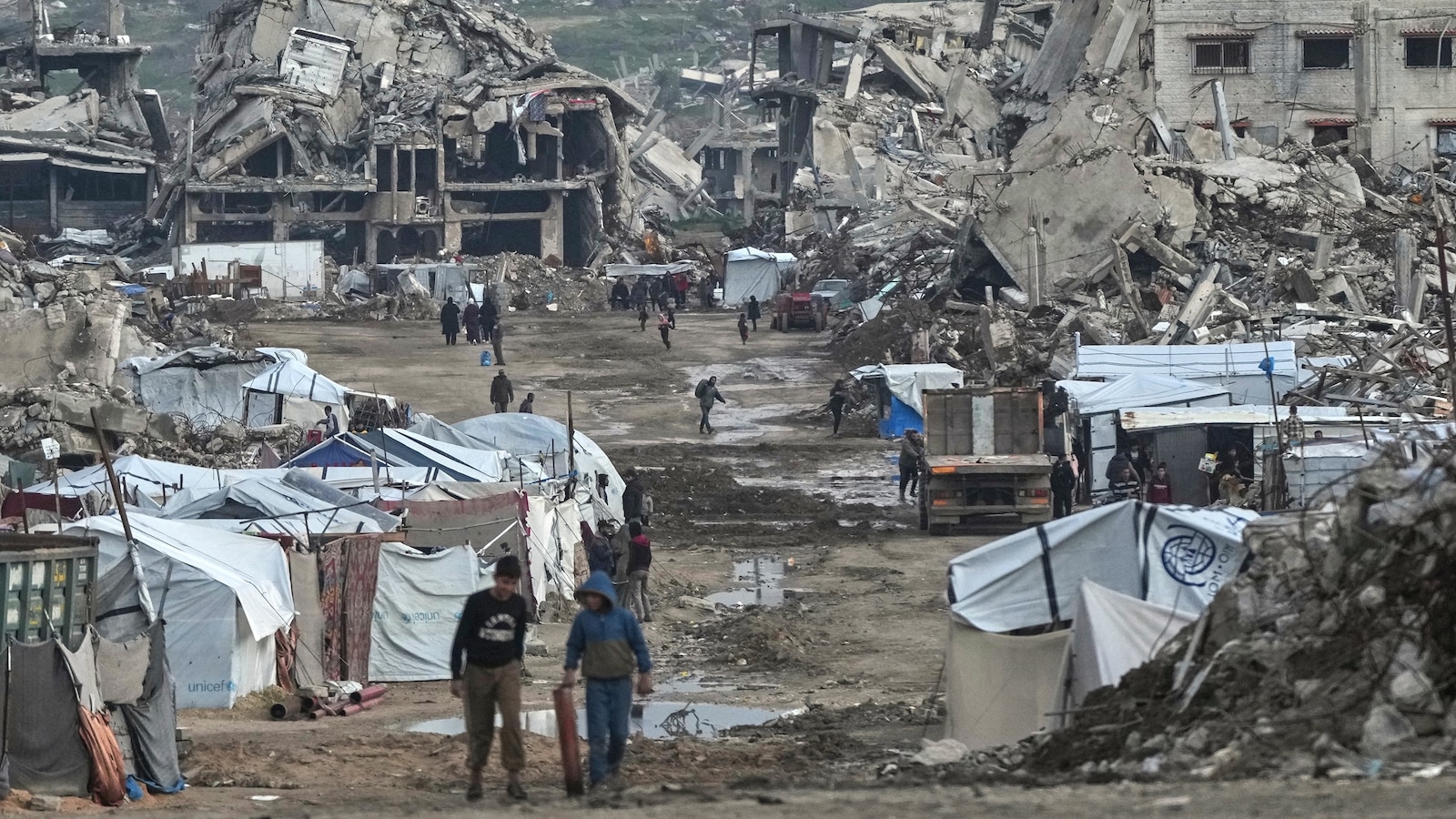
The U.S. administration announced Phase Two of a Gaza peace plan transitioning from ceasefire to demilitarization, technocratic governance and reconstruction, including formation of a 15-member National Committee for the Administration of Gaza (NCAG) and a Board of Peace to oversee it. The plan names Nickolay Mladenov as the senior representative liaising between NCAG and the peace council; it conditions progress on Hamas' compliance, including return of the final deceased hostage, Ran Gvili. Implementation could materially alter regional stability and humanitarian access, with secondary implications for regional risk premia and markets, but significant operational and political risks remain.
Market structure: Phase Two shifts demand from short-term defense spending toward heavy reconstruction: winners include global heavy-equipment and materials suppliers (steel, cement, aggregates) and engineering/PM firms; losers are regional short-duration security plays and any firms pricing in prolonged conflict risk. Expect a multi-quarter reallocation of contracts (>$5–20bn aggregate range guided by past reconstruction analogs) that lifts pricing power for specialty materials and contractors while compressing regional risk premia in equities and sovereign credit.
Risk assessment: Tail risks remain high — a ceasefire breakdown within 0–30 days would spike oil +10–25% and lift defense equities; conversely, successful NCAG implementation and donor pledges within 60–180 days could tighten Israel sovereign spreads by 50–150bps and strengthen ILS. Hidden dependencies: pace of donor funding, Israel’s rules of engagement, and Board-of-Peace credibility (political risk concentrated in U.S./European leadership) are binary catalysts that can flip markets quickly.
Trade implications: Finance flows favor materials/heavy-equipment longs, Israeli equity exposure, select EM credit; shorten near-term pure-play regional defense movers. Volatility across oil, copper and FX should compress if reconstruction proceeds — buy directional exposure with defined-risk options (three-month structures) rather than naked delta. Timing: enter selective positions on confirmation of donor funding or within a 2–8 week window after formal NCAG staffing announcements.
Contrarian: Consensus underweights governance friction — Iraq/Palestine reconstruction analogs show 12–36 month slippage, cost overruns of 30–80%, and corruption risk that will favor large, diversified contractors over small specialized players. That argues for overweighting liquid global suppliers (CAT, NUE) and underweighting smaller regional contractors; also keep a ready hedging allocation (VIX/GLD) to protect against a rapid conflict relapse.
AI-powered research, real-time alerts, and portfolio analytics for institutional investors.
Request DemoOverall Sentiment
neutral
Sentiment Score
0.00
