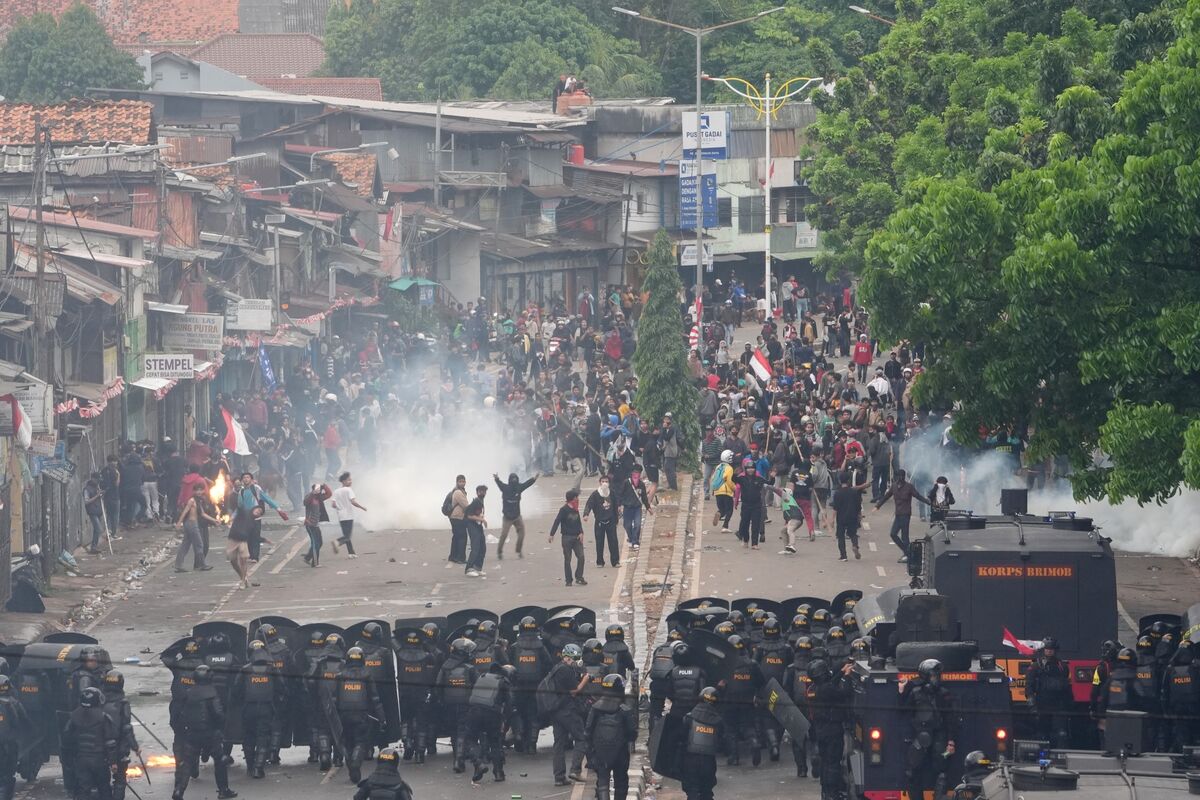
Protest organizers in Jakarta are planning a 'National People's Picnic' outside Indonesia's parliament on Friday, strategically adopting a non-violent, picnic-style gathering in response to police crackdowns on recent demonstrations. This shift in tactics signals an evolving approach to public dissent amidst ongoing political tensions in the capital.
A planned protest in Jakarta, branded as a 'National People's Picnic' outside Indonesia's parliament, represents a significant tactical shift by organizers in response to recent police crackdowns on violent demonstrations. This move toward a non-confrontational format suggests an attempt to sustain public dissent while mitigating the risk of direct conflict with security forces. As of the reporting time of 1:50 p.m. local time, no activity was observed, partly due to heavy rain, indicating the event had yet to materialize. While the immediate market impact is assessed as zero, this development serves as a key data point on the state of domestic political tensions in Indonesia, highlighting an evolution in protest strategies under a stricter security environment.
AI-powered research, real-time alerts, and portfolio analytics for institutional investors.
Request DemoOverall Sentiment
Neutral
Sentiment Score
0.00
