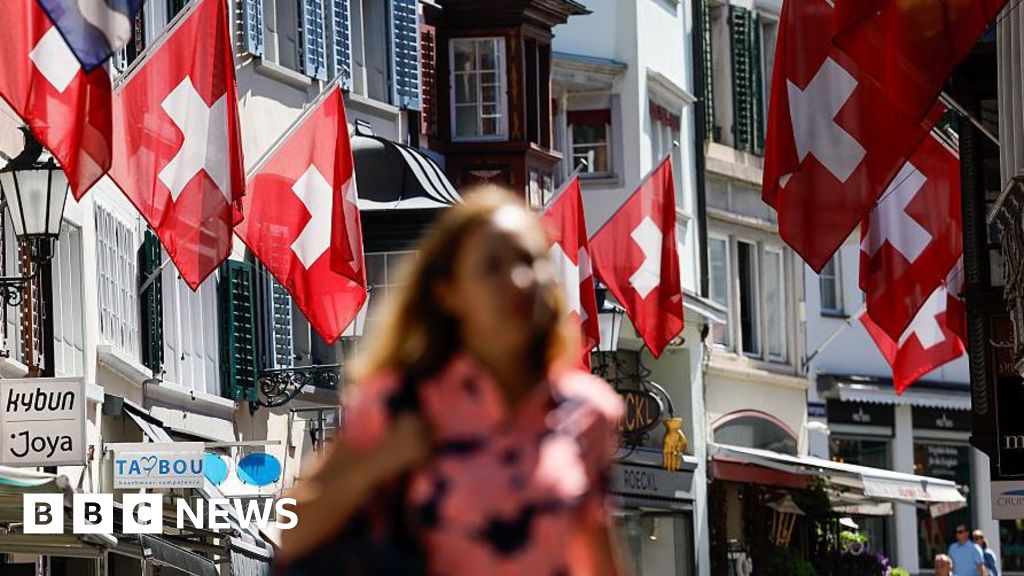
Switzerland will vote on a proposal to cap population at 10 million before 2050, with polls showing a narrow 52% to 45% split against the plan. The measure could limit asylum and family reunification, and if triggered would force termination of agreements including EU free movement rules. Business groups and employers warn of labour shortages across hotels, hospitals and care homes, while supporters say it would ease pressure on housing, schools and public services.
The market implication is less about the referendum outcome itself than about the policy regime it signals: even a narrow rejection still leaves Switzerland with a durable anti-immigration, anti-growth undercurrent that can constrain labor supply and raise the cost of domestic delivery. That matters most for service-heavy franchises that rely on imported labor and for companies exposed to Swiss consumer spending, where wage inflation and staffing bottlenecks can compress margins even if top-line demand holds.
If the cap were ever implemented, the first-order pain would show up in healthcare, hospitality, and logistics, but the second-order effect is broader: reduced labor mobility would make Switzerland a less flexible platform for European operations, pushing incremental investment toward Austria, Germany, and the Nordics. The real medium-term loser is the Swiss “human capital premium” — the country’s ability to offset aging demographics with foreign workers — which would mechanically worsen dependency ratios and force either higher taxes, lower service quality, or faster automation spending.
The near-term catalyst risk is binary and mostly political, but the tradable window is over months, not days, because even a no vote can keep the issue alive ahead of future elections and negotiations with the EU. The bigger tail risk is that Brussels uses the debate as leverage in unrelated file-by-file negotiations, so sectors reliant on frictionless cross-border movement could face a slow-burn valuation discount even without legislation. Consensus is probably underpricing the chance that the referendum functions as a confidence shock for foreign direct investment, particularly for multinational employers comparing Swiss operating optionality versus peer jurisdictions.
Contrarian angle: the market may be overfocused on the legal impossibility of a hard cap and underfocused on the signaling effect to labor and capital. A close no vote would not remove the risk premium; it could actually validate the underlying grievance and preserve policy uncertainty, which is usually worse for cyclicals than a clean rejection. That makes this a good setup for relative-value positioning rather than outright directional bets on Swiss domestic assets.
AI-powered research, real-time alerts, and portfolio analytics for institutional investors.
Request DemoOverall Sentiment
mildly negative
Sentiment Score
-0.25
