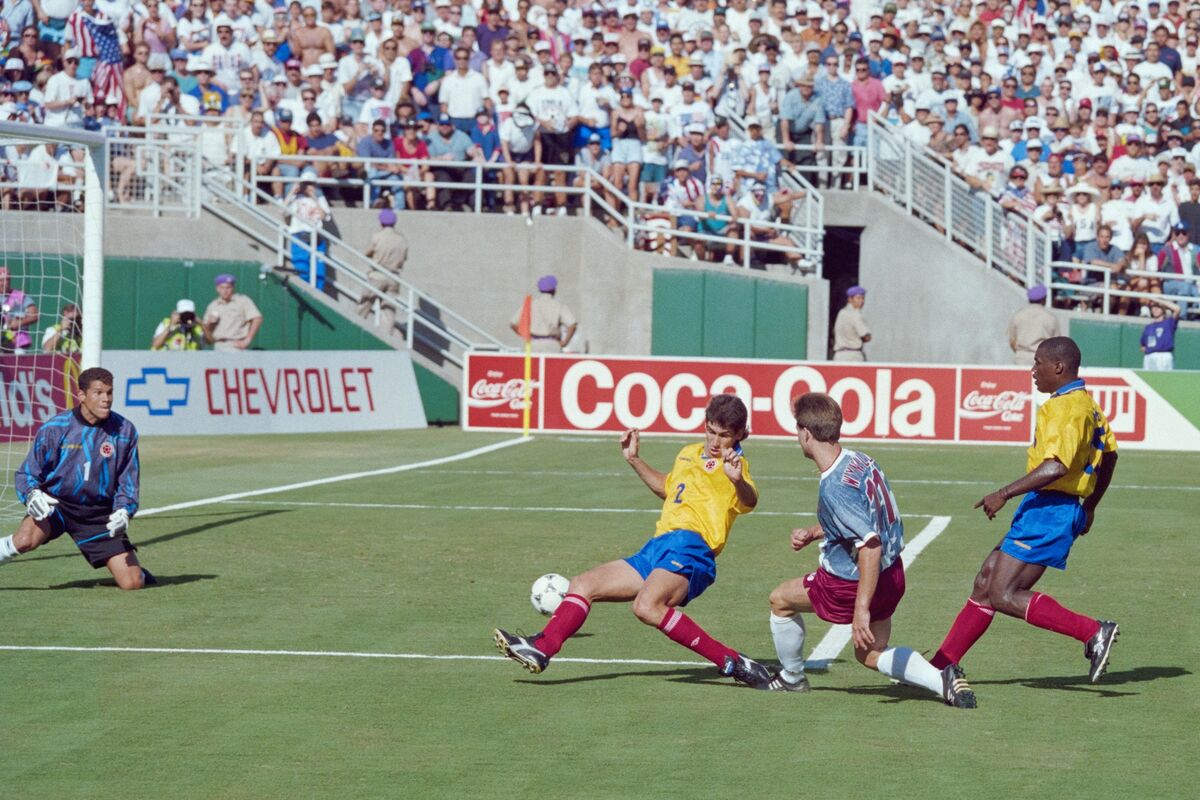
The article examines how the 1994 World Cup changed football’s commercial model, highlighting the rise of U.S. advertising and sponsorship from companies such as McDonald's, Mastercard, and General Motors. It frames the tournament as a turning point in the global monetization of the sport rather than a market-moving event. The piece is largely historical and explanatory, with minimal immediate financial market impact.
The economic significance here is not the tournament itself but the monetization template it created: once US-style sponsorship, ad inventory, and distribution rights became normalized, football stopped being a primarily event-driven asset and became a recurring media/brand platform. That shifts value away from one-off host economics toward the companies that can repeatedly monetize global attention through cross-border advertising, payments, and consumer activation. The second-order effect is that future World Cups increasingly behave like a testbed for premium CPMs, transactional lift, and merchant-funded promotions rather than just a sports viewership event.
Among the named tickers, Mastercard and McDonald’s have the cleanest operating leverage because they can monetize both the emotional peak of the event and the transaction layer around it. The more important point is duration: ad and sponsorship effects are not a single-quarter pop, but they can sustain customer acquisition and card spend improvements for 1-2 quarters after kickoff, especially if travel, dining, and online commerce are layered in. GM’s exposure is more ambiguous; brand lift may accrue, but the auto purchase cycle is long, so any event-driven benefit is likely to be muted unless paired with financing or local-market promotions.
The contrarian angle is that the market may overestimate the durability of sports sponsorship ROI and underestimate the degree to which these deals are now overpriced, especially as inventory gets crowded and fragmented across streaming. That makes the strongest trade not a blanket long on “World Cup beneficiaries,” but a selective long in firms with direct monetization pathways and a short/neutral stance on names relying on vague brand halo effects. Spotify is an incidental beneficiary at best; any uplift is likely to be engagement-driven rather than revenue-meaningful unless it captures exclusive audio or live-adjacent ad inventory.
The geopolitical layer matters because co-hosting broadens the commercial surface area and can accelerate regulatory scrutiny around sponsorship categories, cross-border marketing, and labor/social backlash. If consumer sentiment weakens or if ad budgets tighten, the first thing to compress will be premium sponsorship pricing, making the upside more tactical than structural. In that sense, the best setup is a short-dated catalyst trade rather than a multi-year thematic bet.
AI-powered research, real-time alerts, and portfolio analytics for institutional investors.
Request DemoOverall Sentiment
neutral
Sentiment Score
0.05
Ticker Sentiment
