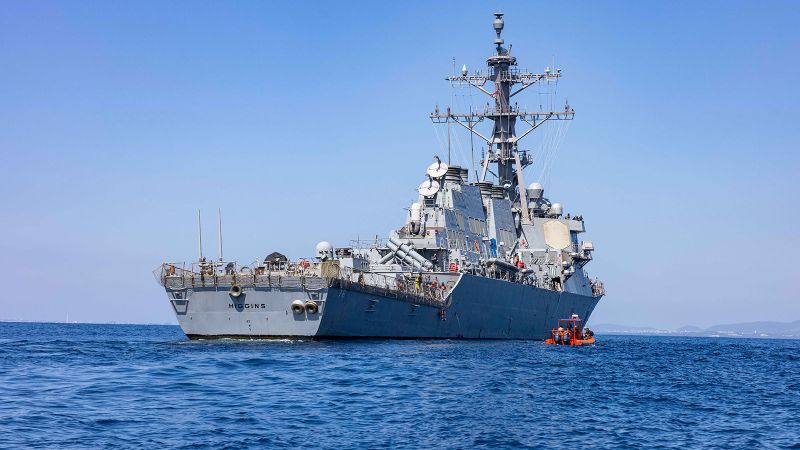
The USS Higgins lost power and propulsion for several hours in the Indo-Pacific after an electrical malfunction, temporarily leaving the guided-missile destroyer without movement or combat systems. No injuries were reported, and power has since been restored, but the incident is under investigation. The event is operationally significant for the Navy, though likely limited immediate market impact.
This is less about one destroyer and more about the fragility premium returning to naval readiness. A several-hour propulsion/electrical failure on an Aegis destroyer highlights a single-point-of-failure risk in legacy surface combatants: when power drops, sensing, fire control, maneuver, and deterrence all degrade together, which is exactly the kind of headline that drives scrutiny over maintenance budgets, shipyard capacity, and spare-parts bottlenecks. The second-order effect is not just higher sustainment spend; it is a stronger argument for accelerating distributed maritime concepts, unmanned adjuncts, and more redundant power architectures across the fleet.
The near-term market implication is a modest but real positive for defense suppliers tied to naval electronics, power management, and ship repair rather than prime contractors broadly. If the incident triggers a broader audit, names exposed to depot maintenance backlogs and electrical modernization work could see incremental orders over the next 6–18 months. Conversely, it is a reputational negative for the Navy’s operational tempo narrative and increases the probability of temporary readiness-driven deployment gaps, which matters if multiple ships are already rotating through maintenance.
The contrarian angle is that the headline may be overread as a ship-design problem when it is more likely a maintenance and execution problem. That means the equity trade should favor service and retrofit beneficiaries over platform-build winners: the budget response to an event like this usually flows into repairs, digital/electrical upgrades, and sustainment contracts, not immediate new-build acceleration. Tail risk is a string of similar incidents across the surface fleet, which would push Congress toward faster recapitalization and potentially higher procurement outlays in the next budget cycle.
AI-powered research, real-time alerts, and portfolio analytics for institutional investors.
Request DemoOverall Sentiment
mildly negative
Sentiment Score
-0.30
