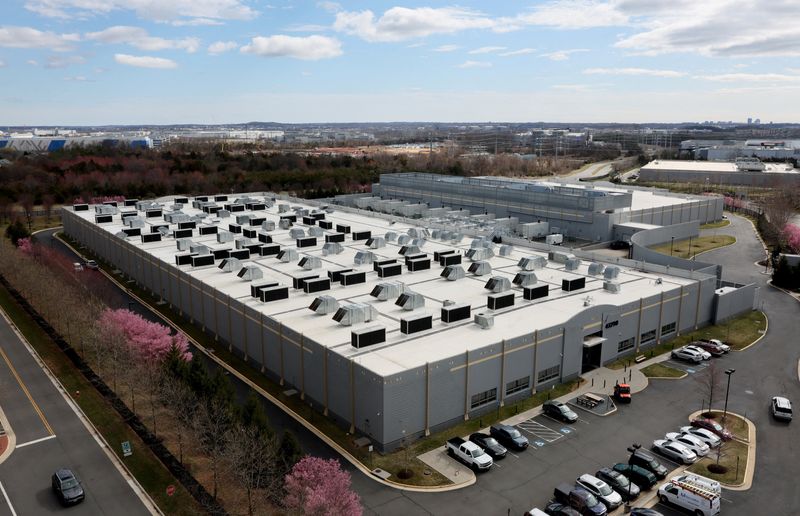
Hyliion said its KARNO Power Module targets 50% fuel-to-electricity efficiency, 800V DC output, and electricity costs under $0.17/kWh versus about $0.22/kWh for a New York retail grid customer. The company has nearly 750 KARNO Cores under non-binding LOIs worth roughly $400 million, expects UL certification for the 200 kW module, and is targeting commercial deployment in late 2026. Management also guided to an additional $40 million to $50 million in military contracts this year, with larger data-center configurations still in development.
The real tradeable insight is not that one small-cap vendor may eventually sell power modules, but that AI infrastructure spend is bifurcating: compute remains scarce, yet the gating item for capacity expansion is increasingly site power and interconnect timing. That shifts value from GPU suppliers toward distributed generation, gas handling, switchgear, and power-optimization layers that can be deployed off-grid or semi-grid while hyperscalers wait on utility queues. If this architecture gains credibility, it also changes procurement behavior: data-center developers may start treating on-site generation as a precondition for land acquisition rather than a contingency plan.
The second-order winner set is broader than HYLN. Midstream gas infrastructure, reciprocating-engine OEMs, transformer and power-electronics suppliers, and EPC firms with behind-the-meter expertise should see higher wallet share if localized power becomes standard. The loser set includes grid-dependent data-center developers in constrained metros and utilities that monetize connection queues; the longer the interconnect backlog persists, the more bargaining power shifts away from regulated power providers toward private supply solutions.
The main risk is timing mismatch. HYLN’s equity can rerate on narrative before commercial scale is real, but the gap between certification, first deployments, and meaningful revenue conversion is still measured in quarters to years. The market may be underappreciating execution risk around unit economics at scale, service reliability, and whether customers will prefer proven turbine/engine solutions over a novel platform when uptime is mission-critical.
Contrarian takeaway: the upside is real, but the stock may already be pricing in a lot of future optionality. The better expression may be to own the enabling infrastructure basket while fading pure-play optimism where revenue visibility is still thin. If multi-megawatt stack deployments slip or ITC economics tighten, the equity could de-rate quickly because the current setup is highly narrative-driven.
AI-powered research, real-time alerts, and portfolio analytics for institutional investors.
Request DemoOverall Sentiment
moderately positive
Sentiment Score
0.58
Ticker Sentiment
