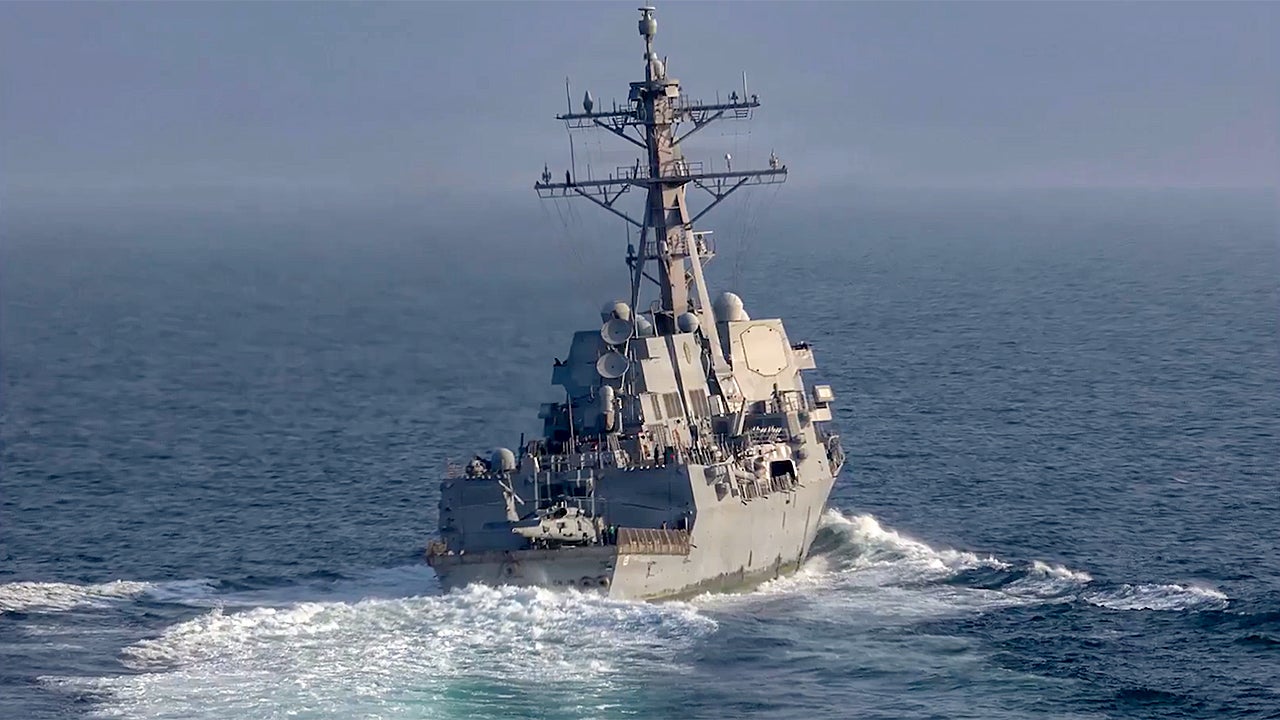
Israel and Lebanon agreed to a 10-day ceasefire, while the U.S. continues enforcing a blockade on Iranian ports that has already turned back 13-14 vessels and broadened to include contraband cargoes. The standoff raises major risks for Middle East shipping and energy flows, with the IEA warning Europe has only about six weeks of jet fuel left if the Strait of Hormuz remains constrained. The article also highlights ongoing military readiness, threats of escalation, and diplomatic efforts involving the U.S., China, and regional partners.
The market-implied message is not just “lower probability of escalation,” but a shift from kinetic risk to coercive maritime risk. That favors the U.S. security-state complex and select logistics/energy-infrastructure suppliers, while pressuring firms with high exposure to Hormuz throughput, Gulf transshipment, and aviation fuel sensitivity. The key second-order effect is that even a short-lived blockade creates inventory hoarding and routing premiums well before any physical shortage shows up; that usually benefits tankers, alternative routing, and defense primes, while punishing airlines, shippers, and refiners with thin working capital.
The most important near-term catalyst is duration: a 1-2 week pause is mostly headline noise, but a 4-6 week disruption starts to matter for jet fuel and distillate balances, which is when margin compression can spread from Middle East assets into Europe and Asia. The blockade also creates a self-reinforcing risk premium because every tanker turnaround increases the perceived credibility of enforcement, making insurance, freight, and charter rates gap higher even if no shots are fired. That dynamic can support energy equities and marine freight while leaving broad equities vulnerable to a higher-for-longer geopolitical volatility discount.
Consensus is probably underpricing how much the conflict broadens from “Iran vs. U.S./Israel” to “global trade discipline versus regional retaliation.” If Tehran cannot win militarily, it can still squeeze shipping, proxy attacks, and cyber disruption; that means the tail risk is not a straight-line ceasefire trade-off but intermittent shock spikes every time enforcement is tested. The reversal trigger is any credible diplomatic channel that restores open access to Hormuz and removes boarding/interdiction authority; absent that, volatility stays bid and energy/logistics assets retain a premium.
AI-powered research, real-time alerts, and portfolio analytics for institutional investors.
Request TrialOverall Sentiment
moderately negative
Sentiment Score
-0.45
