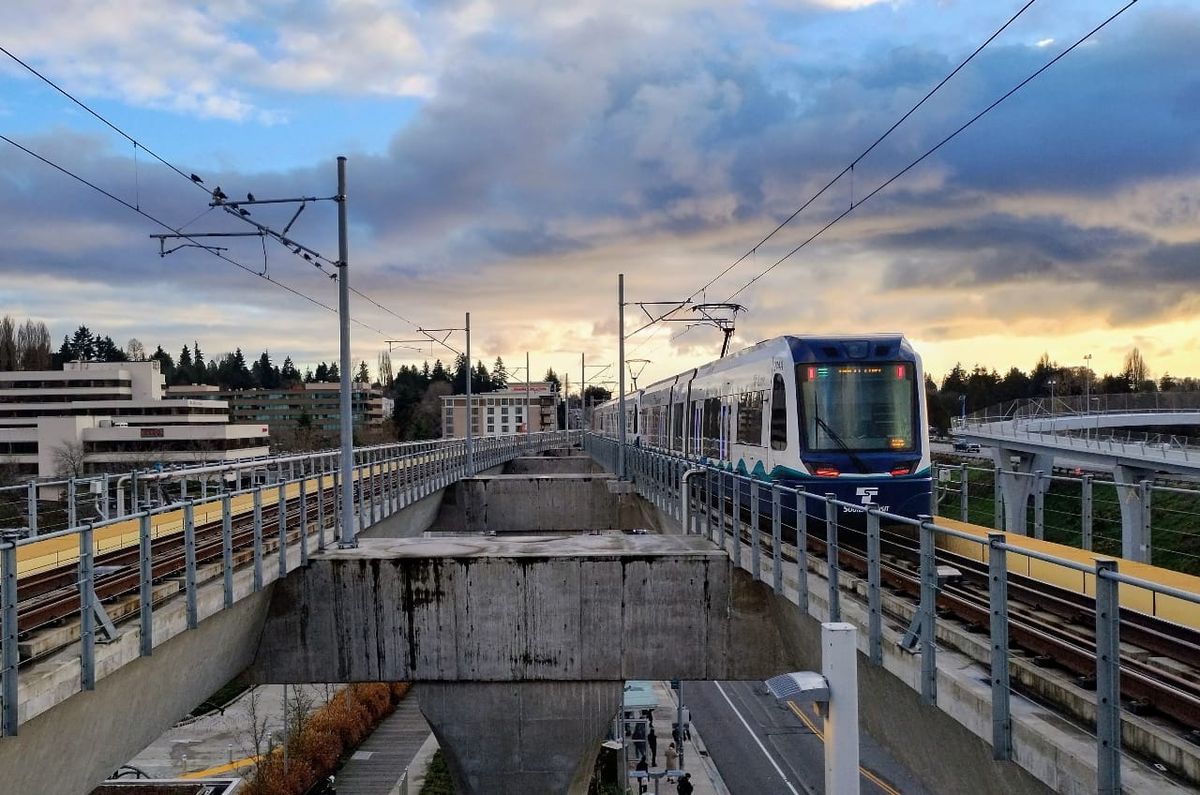
Sound Transit’s Ballard Link Extension remains delayed after the FTA missed the May deadline to approve the project’s Draft Environmental Impact Statement, pushing publication to this summer at the earliest. The holdup is delaying final design, adding costs, and forcing the board to consider truncating the line or consolidating stations to address an estimated $34.5 billion budget shortfall through 2046. Sound Transit also approved another $19.5 million for HNTB as design and environmental review expenses continue to rise.
The immediate market read is not about transit optics; it is about funding slippage and cost inflation compounding into a larger capital-allocation problem. Every month of federal review delay pushes the project farther into the window where construction pricing, interest carry, and redesign risk all move against the sponsor, increasing the probability of scope cuts, phased delivery, or value engineering that destroys network effects. That is a classic negative convexity setup: the longer management waits for perfect information, the less optionality it actually preserves.
The second-order effect is that this is less a single-project story than a governance stress test for the entire regional capital program. If the sponsor is forced to defend a politically visible line while also protecting debt capacity, the likely outcome is prioritizing the least disruptive segments and deferring the highest-transfer-value pieces, which tends to produce lower ridership elasticity and weaker benefit-cost outcomes. In practice, that can raise the risk premium on future municipal issuance tied to the broader program, even if headline federal approvals eventually arrive.
The contrarian angle is that the market may be overpricing the relevance of the current federal delay as a binary stop/go catalyst. The bigger driver is still self-inflicted complexity: late station changes and alternative churn mean even a clean environmental sign-off may not restore the original schedule or scope. So while the near-term headlines are bearish for the sponsor, the more durable thesis is that management is now being forced into a smaller, less ambitious capital plan, which could be positive for bondholders if it preserves coverage but negative for local contractors and engineering vendors reliant on scope growth.
For public-market investors, the cleanest expression is not in the transit sponsor itself but in adjacent engineering, tunneling, and construction names with exposure to West Coast transit capex, where orders can slip 2-4 quarters before revenue impact shows up. The setup favors fading any bounce on approval rumors and waiting for confirmation of either phased delivery or budget reset, because those are the moments when the earnings revisions will actually hit.
AI-powered research, real-time alerts, and portfolio analytics for institutional investors.
Request DemoOverall Sentiment
moderately negative
Sentiment Score
-0.45
Ticker Sentiment
