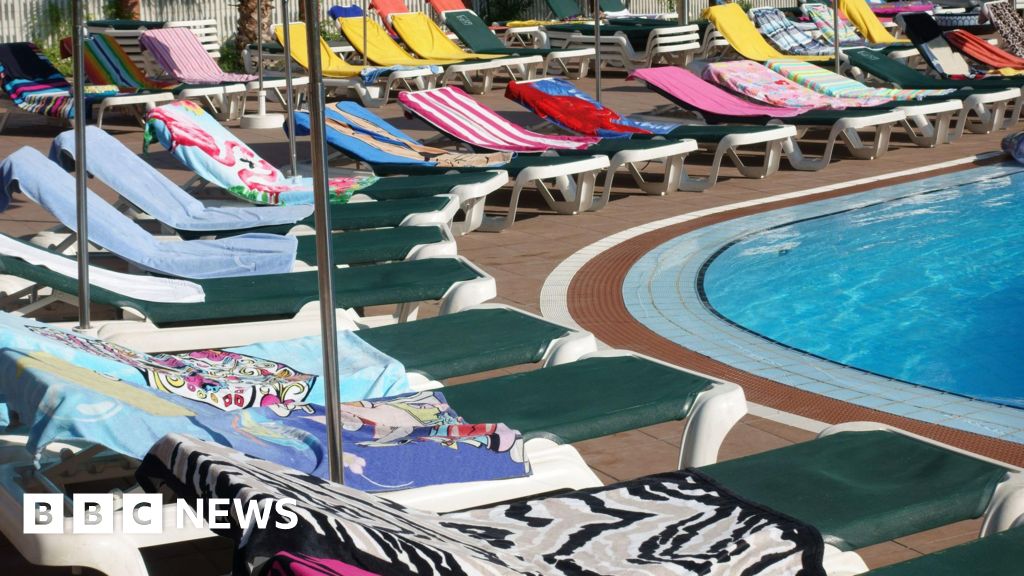
A German court ordered a €986.70 refund for a family after a hotel/tour operator failed to prevent sunbed towel reservations, highlighting growing legal pressure over 'sunbed wars' at resorts. The article centers on holidaymakers' complaints and hotels' enforcement responses, including sunbed allocation systems and towel-removal policies. The issue is notable for the travel sector but is unlikely to have broad market impact.
This is less about a single beach-chair dispute and more about a broadening enforcement regime that raises the cost of operating leisure inventory “as marketed” but not as delivered. The immediate beneficiary is the consumer, but the second-order winner is the operator with better asset control: resorts that pre-assign loungers can increase perceived fairness, reduce staff conflict, and likely improve review scores, which should matter more than the lost optionality of early-morning hoarding. The loser set is fragmented tour operators and weakly managed all-inclusives, where even modest reimbursement rates can become margin-sensitive if this turns into a template claim.
The more interesting catalyst is legal copycat risk. If courts start treating lounge access as part of the contracted package rather than a soft amenity, claims could scale quickly in summer booking seasons, especially in German and UK outbound travel flows where litigation culture and consumer protection are stronger. The financial exposure is probably not existential for a large operator, but the issue can become an earnings overhang through higher claims reserves, hotel contract renegotiations, and incremental staffing/enforcement costs over the next 1-2 peak seasons.
Consensus may be overestimating the direct hit to hotels and underestimating the operating benefits of stricter allocation. Fixed, auditable sunbed systems can actually improve utilization and reduce the deadweight loss of unused reserved inventory; the real margin pressure sits with operators unable to standardize processes across third-party hotels. That suggests this is more of a quality-of-management and contract-enforcement problem than a secular demand problem for travel.
For the listed name tied to the affected destination, the move looks idiosyncratic and likely overdone unless this becomes a wider pattern of package-holiday claims. The better trade is to fade any broad leisure selloff and isolate weaker operators with high exposure to third-party resort inventory and thin contractual control.
AI-powered research, real-time alerts, and portfolio analytics for institutional investors.
Request DemoOverall Sentiment
neutral
Sentiment Score
-0.05
Ticker Sentiment
