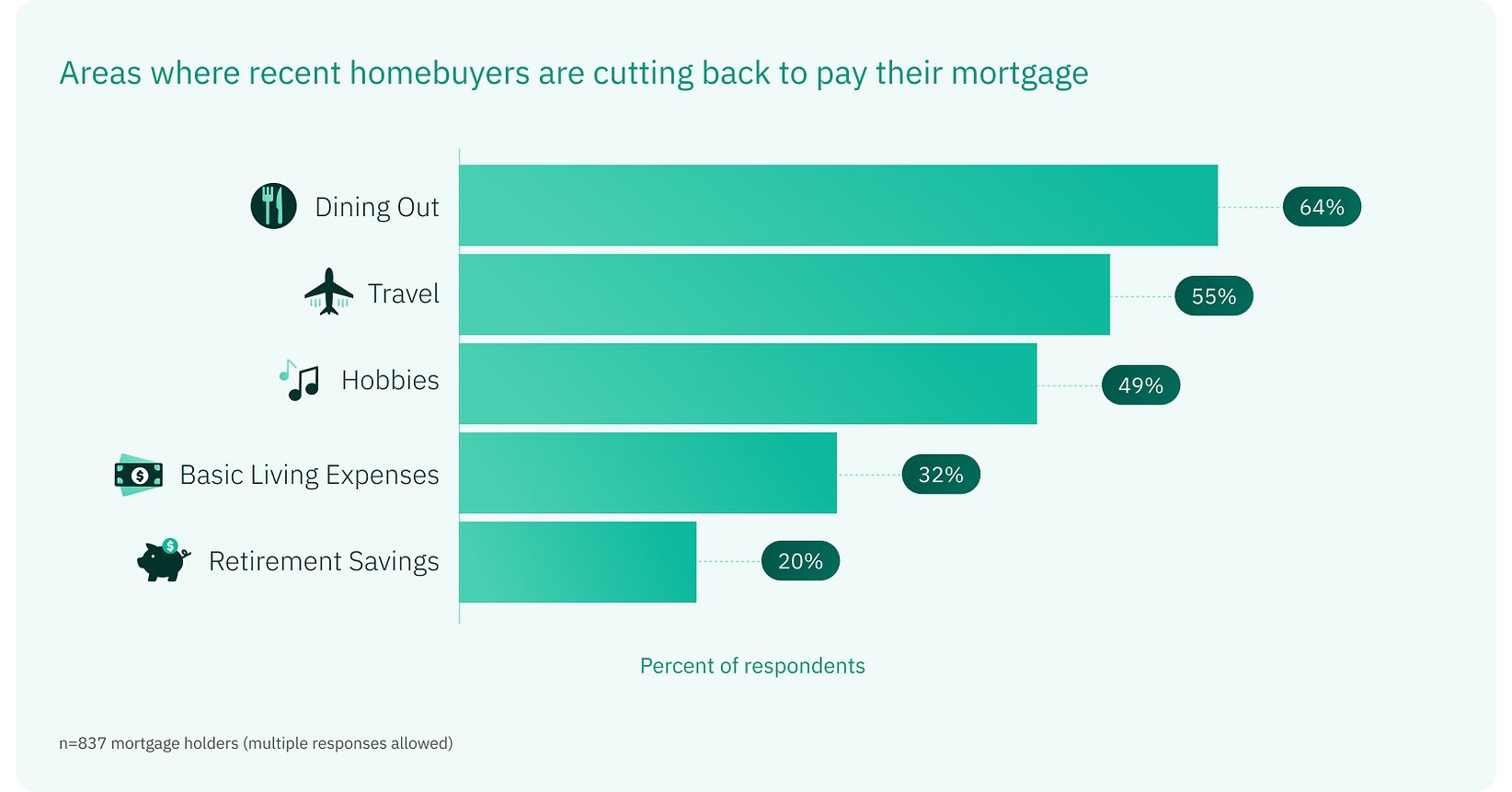
Truework’s 2026 Recent Homebuyers Report finds 85% of recent mortgage buyers say refinancing within 3 years is important, up from 56% in 2025, and 50% say their payment won’t be sustainable without refinancing. Among buyers, 60% expected mortgage rates to fall after purchase (73% planned to refinance), while 32% have cut essential spending and 40% expect to take a second job if refinancing doesn’t happen. The survey also shows high fragility to shocks (67% fear job loss and 44% cite medical expenses), indicating worsening affordability stress if rate cuts don’t materialize.
This is less a housing-demand signal than a balance-sheet stress warning for the marginal buyer cohort. If rates stay high, households will bridge the gap with second jobs, card balances, and retirement withdrawals before they default, which delays the visible housing break but raises loss content in consumer credit with a 2-4 quarter lag. That is the real second-order short: lenders to lower-FICO borrowers, especially subprime auto and unsecured credit, face a deterioration in payment hierarchy before the mortgage delinquency tape fully moves.
The near-term market reaction will be dominated by rate-path expectations, but the more important 6-18 month setup is that recent homebuyers are now a higher-beta consumer cohort. If unemployment ticks up or medical/shock expenses hit, the pressure should show up first in revolving utilization and then in delinquencies, not immediately in forced home sales. Homebuilders and originators only benefit if rates fall enough to unlock mobility; otherwise the affordability freeze remains intact, while mortgage servicers gain only until prepayment speeds re-accelerate.
Consensus is still too reliant on the idea that eventual Fed cuts automatically solve affordability. The missing piece is that many buyers have already spent the refi benefit in advance, so even a modest delay in easing can keep discretionary spend under pressure and make this more of a consumer-credit story than a pure housing story. The thesis is falsified if 30-year mortgage rates drop materially, wage growth stays firm, and early-vintage delinquencies remain contained into the next earnings season.
AI-powered research, real-time alerts, and portfolio analytics for institutional investors.
Request DemoOverall Sentiment
moderately negative
Sentiment Score
-0.45
Ticker Sentiment
