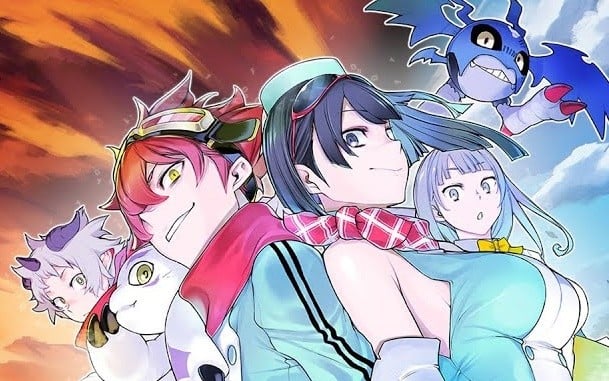
Bandai Namco updated the official site for Digimon Story Time Stranger with Switch and Switch 2 technical specs: the Switch version runs at 1080p docked and 720p handheld at up to 30fps, while Switch 2 Quality Mode targets 4K/30fps and Performance Mode targets 1080p/60fps. Switch owners on Switch 2 can download a free update that upgrades graphics to the equivalent of the Switch 2 version. The article also notes a major DLC update planned for 2027.
This is a small but useful read-through for Nintendo ecosystem monetization rather than a standalone game sell-through story. The important signal is that Switch 2 is being positioned as a meaningful upgrade path with free graphical parity for existing owners, which should reduce friction at launch and improve attach rates for late-cycle buyers who are otherwise waiting for the hardware refresh. In second-order terms, that makes the platform more attractive to mid-tier publishers that rely on catalog longevity: they get a larger addressable base without forcing a hard bifurcation in user experience.
The bigger winner is Nintendo’s install-base transition, not Bandai Namco’s individual SKU. A free upgrade path increases the odds that software demand follows hardware adoption rather than fragmenting across two sub-scale versions, and that supports a higher-quality launch window for third-party software on Switch 2. The loser is any competitor counting on a prolonged “wait-and-see” period for consumers; if upgrades are cheap and seamless, the market can reprice the new console faster than expected, pulling forward accessory, eShop, and first-party spend.
The contrarian issue is that 30fps modes and resolution tradeoffs still leave this as a “good enough” rather than must-have technical leap. That limits the ceiling for hardcore conversion and means the real catalyst is not graphics, but software continuity plus exclusive content cadence over the next 6-18 months. If the pipeline of enhanced legacy titles broadens, the hardware transition becomes self-reinforcing; if it does not, adoption could stall after the early upgrader cohort.
For portfolio construction, the setup favors a modestly bullish stance on Nintendo quality-of-earnings, but not a chase trade. The key risk is that this kind of upgrade parity gets normalized quickly, compressing the novelty premium before meaningful unit uplift shows up in guidance.
AI-powered research, real-time alerts, and portfolio analytics for institutional investors.
Request DemoOverall Sentiment
neutral
Sentiment Score
0.15
