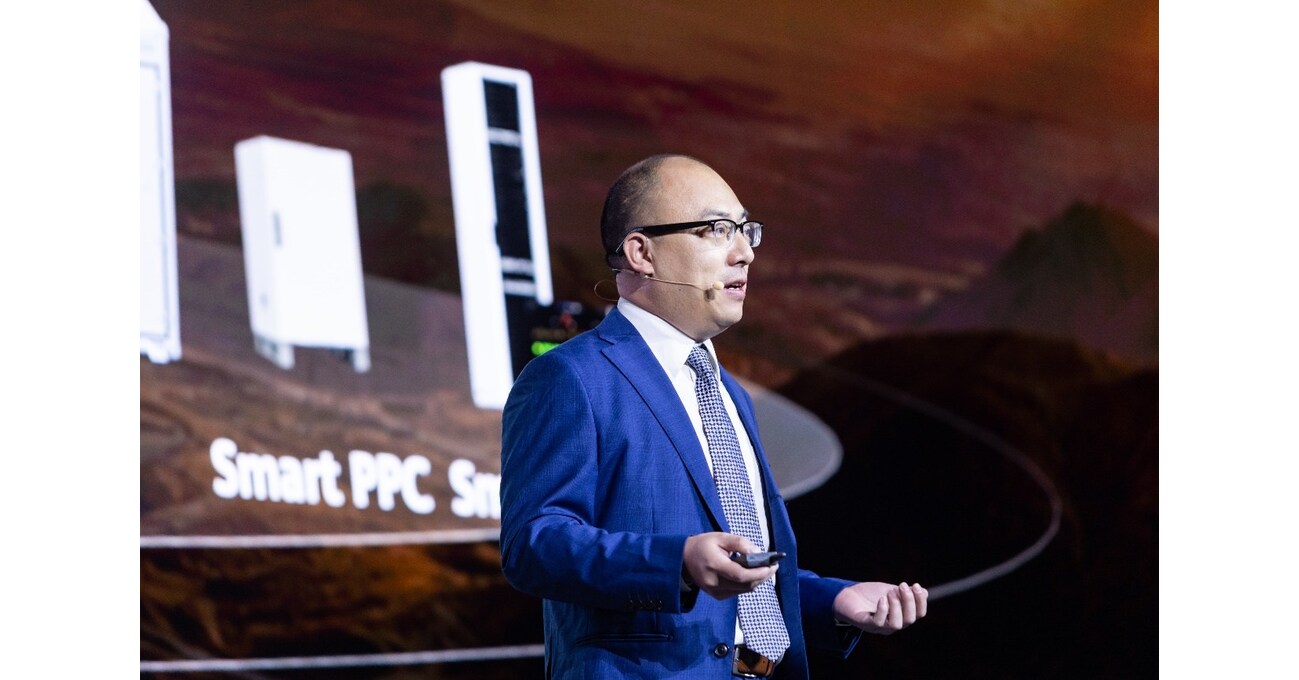
Huawei lanceerde in juli 2026 het LUTERRA Smart String Grid-Forming ESS Platform tijdens Intersolar Europe, gericht op grid-forming op installatieniveau met hoge efficiëntie. Het platform claimt 93,1% round-trip-efficiency aan de laagspanningszijde van de PCS bij 25°C, SOC-nauwkeurigheid van 2,5% (beide uiteinden) en 3% (plateau), plus >10% hogere doorvoer versus conventionele oplossingen. Voor een 1GWh BESS rapporteert Huawei een levertijdreductie van ≥30%, BOP-kosten omlaag ≥20% en ruimtebesparing van 1 m² per geïnstalleerde MWh, ondersteund door referenties zoals het 100% hernieuwbare microgrid ‘The Red Sea’ (Saoedi-Arabië), >2 jaar stabiel in bedrijf.
This is less a single-product story than a signal that utility-scale storage is moving from "capacity" to "grid services + capacity," which should lift demand for systems that can monetize inertia, fast frequency response, and black-start revenue. That is structurally bullish for owners/developers with large pipeline exposure in markets that are actually paying for grid-forming capability over the next 6-18 months; it is less immediately bullish for pure component vendors where better system integration tends to pressure pricing. The second-order effect is margin compression: if platform-level efficiency gains are real, the value pool shifts away from containers/PCS hardware and toward software, controls, and the project balance sheet.
The key risk is that the market may overread a vendor demo as a bankability event. In storage, the gap between lab efficiency and field economics is often filled by warranty reserves, degradation, and financing haircuts; if those frictions remain, the benefit shows up in volume growth, not in supplier profitability. Regulatory friction is another gate: European and U.K. grid-code acceptance, cybersecurity reviews, and local-content politics can keep this from becoming a universal standard, which makes the impact much more regional than the headline implies.
Contrarian angle: the consensus may be underestimating how much cheaper and faster-to-deploy grid-forming BESS can accelerate renewable buildout, but overestimating who captures the upside. The likely winners are utility-scale asset owners and grid-equipment incumbents; the likely losers are storage integrators and inverter-adjacent suppliers facing a tougher pricing environment. If Western peers cannot show comparable installed-field performance within 1-2 quarters, the market will start to haircut multiples on names with weaker service data and lower software attach.
AI-powered research, real-time alerts, and portfolio analytics for institutional investors.
Request TrialOverall Sentiment
mildly positive
Sentiment Score
0.25
