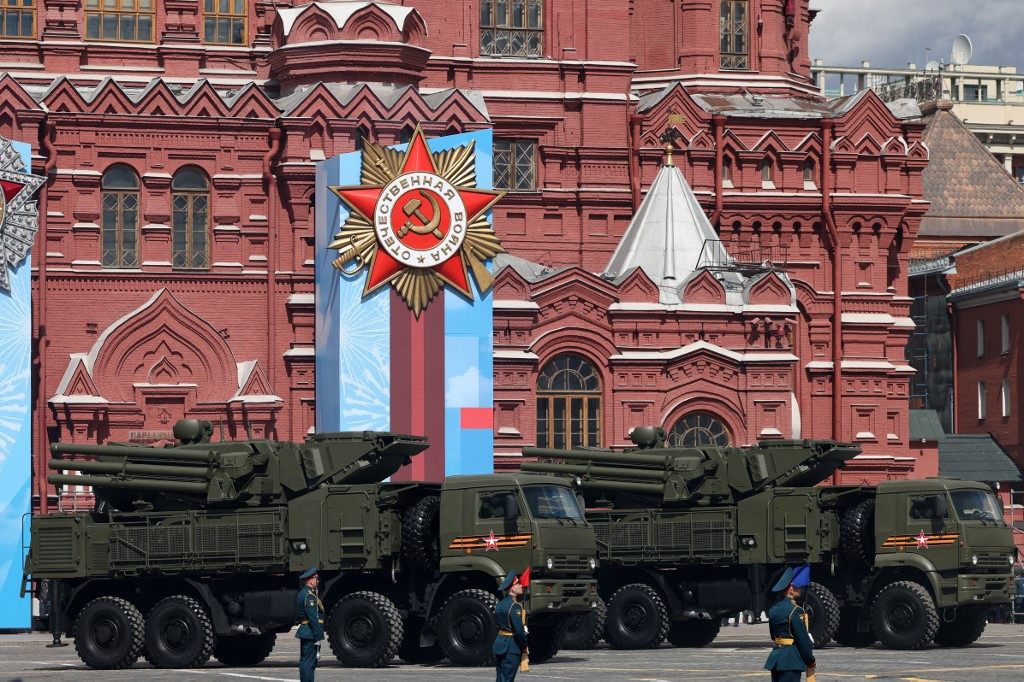
Russia’s May 9 Victory Day parade will for the first time since 1945 omit columns of military equipment, with the Ministry of Defense citing the current operational situation. The event will be scaled back to foot columns, aviation teams and Su-25 aircraft, reflecting heightened security concerns amid continued Ukrainian drone attacks and strain on Moscow’s war effort. The Kremlin has not yet released the foreign leader attendance list, adding uncertainty around the ceremony’s diplomatic signaling.
The signal here is less about pageantry and more about regime stress: when a state starts optimizing a domestic symbolic event for security rather than deterrence, it is usually telling you the rear area is becoming a real operating constraint. That matters for markets because it implies the war is no longer just a front-line attritional story; it is bleeding into homeland protection spend, logistics prioritization, and force presentation, which tends to steepen the fiscal burden without improving battlefield optionality.
The second-order read-through is a modestly bullish setup for Western and regional defense supply chains over the next 3-12 months, especially ISR, counter-UAS, air defense, and electronic warfare. If drone pressure is forcing Russia to de-emphasize visible armored formations, then the marginal procurement dollar shifts toward point defense and dispersion assets, not heavy platforms; that is a favorable mix shift for names with short-cycle production and software-enabled systems rather than legacy steel. It also increases the value of companies exposed to perimeter security, airport/critical infrastructure hardening, and base protection.
The contrarian issue is that market consensus may over-interpret symbolism as capability decay. Russia has repeatedly traded prestige for survivability, and this kind of scaled-back event can be a rational adaptation rather than a leading indicator of immediate escalation risk. The more tradable catalyst is not the parade itself but whether intensified drone activity forces a visible change in budget allocations, conscription pressure, or air-defense redeployment over the next 1-2 quarters; if not, the headline is likely to fade quickly.
AI-powered research, real-time alerts, and portfolio analytics for institutional investors.
Request DemoOverall Sentiment
mildly negative
Sentiment Score
-0.15
