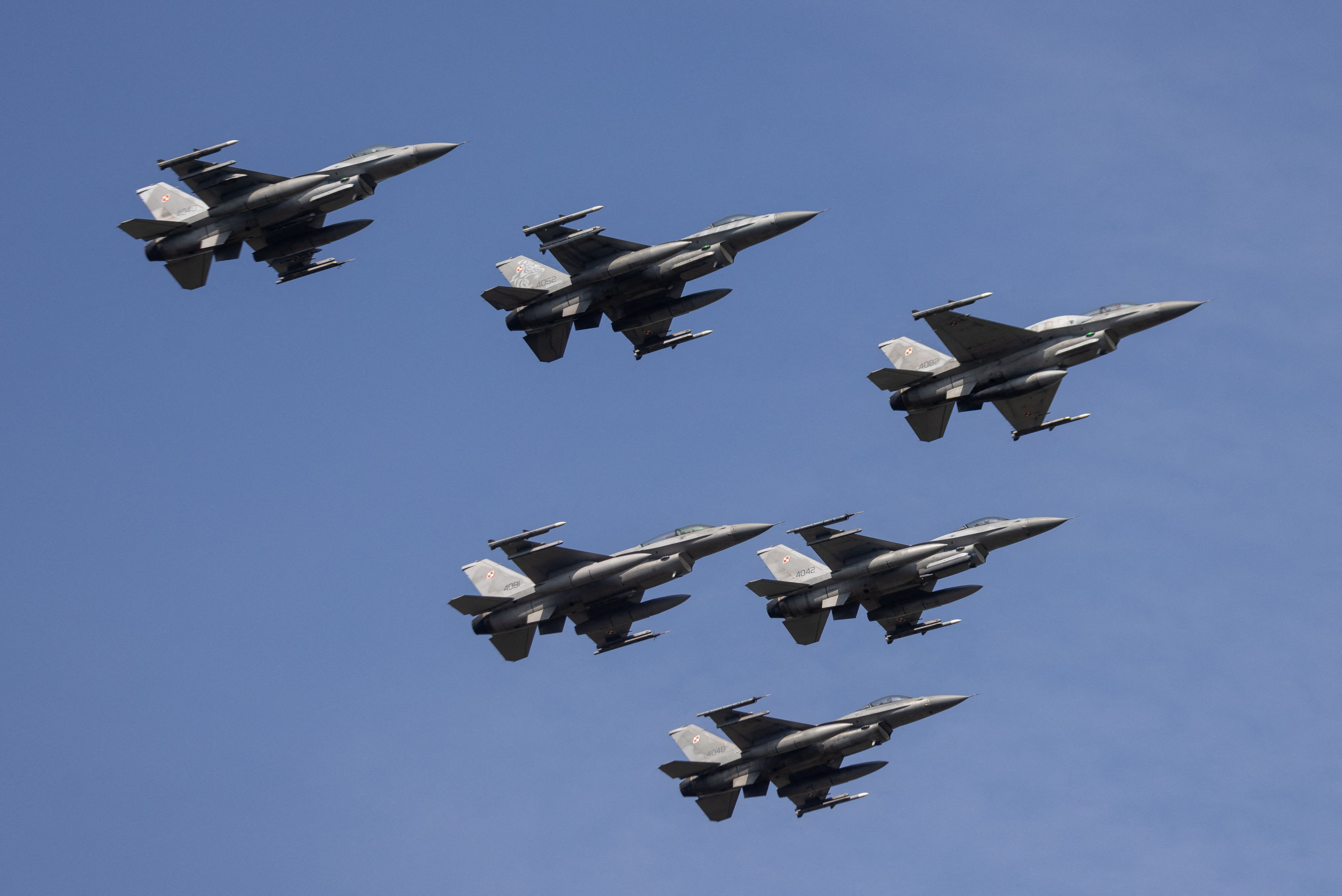
Poland deployed fighter aircraft and activated air defenses to maximum readiness during a Russian bombardment of western Ukraine, following Estonia's accusation of a Russian airspace breach and its invocation of NATO's Article 4. This incident, the second Article 4 invocation this month, signifies a sharp escalation in tensions on NATO's eastern flank, with experts viewing it as a Russian 'stress test' on alliance response and unity, implying potential for further geopolitical instability and requiring a robust, coordinated Western reaction.
Geopolitical tensions on NATO's eastern flank have sharply escalated, evidenced by Poland scrambling fighter jets and placing air-defense systems on "maximum readiness" in response to Russian bombardment near its border with Ukraine. This action follows Estonia's invocation of NATO's Article 4 after accusing Russia of a "brazen" airspace breach by three MiG aircraft. The frequency of these events is increasing, as this marks the second Article 4 invocation this month, with Poland having previously done so on September 10. Expert analysis cited in the report frames these Russian incursions as a deliberate "stress test" designed to probe NATO's response time, unity, and willpower. This suggests a calculated strategy by Moscow to escalate pressure, with analysts warning that without a tough, coordinated sanctions regime, such encroachments are likely to increase, further elevating regional instability and market risk.
AI-powered research, real-time alerts, and portfolio analytics for institutional investors.
Request DemoOverall Sentiment
moderately negative
Sentiment Score
-0.60
