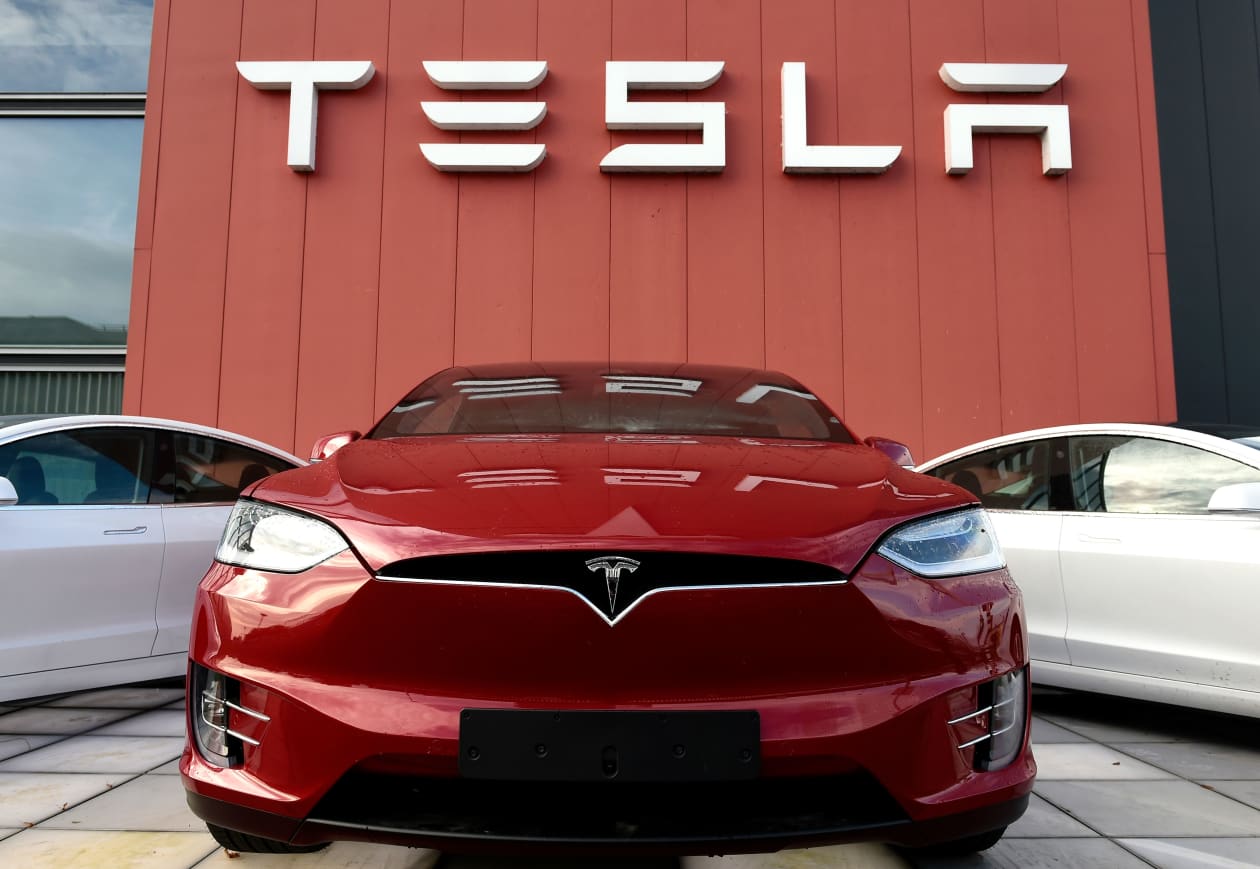
Tesla delivered 480,126 EVs in Q2 2026 (Apr–Jun), an 18% beat versus the 406,000-unit sell-side consensus. The upside was strong enough to lift shares, supported by rising analyst expectations ahead of the print. The article frames the result as a clear demand/execution positive relative to even bullish forecasts.
The immediate read-through is not “better demand” so much as “better operating leverage visibility.” In a name where the market already prices a premium on future margin expansion, a delivery beat matters most if it forces upward revisions to near-term EPS and, more importantly, reduces the odds of another quarter of discounting to defend volume. If the outperformance was driven by incentives, mix-down, or timing rather than true unit acceleration, the equity reaction can be larger than the fundamental improvement.
The competitive signal is more important than the company-specific one. A sustained step-up in Tesla’s volumes tightens the squeeze on weaker EV players such as RIVN and LCID, where financing optionality and brand differentiation are still fragile; it also pressures legacy OEMs like F and GM to keep EV pricing rational, which can cap their already-thin EV profitability. Supplier beneficiaries exist, but the second-order effect is broader industry price discipline: if Tesla is taking share without margin collapse, competitors may have to choose between volume and cash burn.
The next 1-3 month catalyst is not more delivery data; it is whether the market can connect this print to stable ASPs, order health, and gross margin ex-credits. The contrarian risk is that consensus is overextrapolating a quantity beat into a quality beat: if inventory days, incentive intensity, or automotive margins disappoint on the next print, the stock can give back the move quickly. Over 6-18 months, the thesis only compounds if this is evidence of durable share gain rather than a pull-forward against a softer macro backdrop.
AI-powered research, real-time alerts, and portfolio analytics for institutional investors.
Overall Sentiment
strongly positive
Sentiment Score
0.55
Ticker Sentiment
