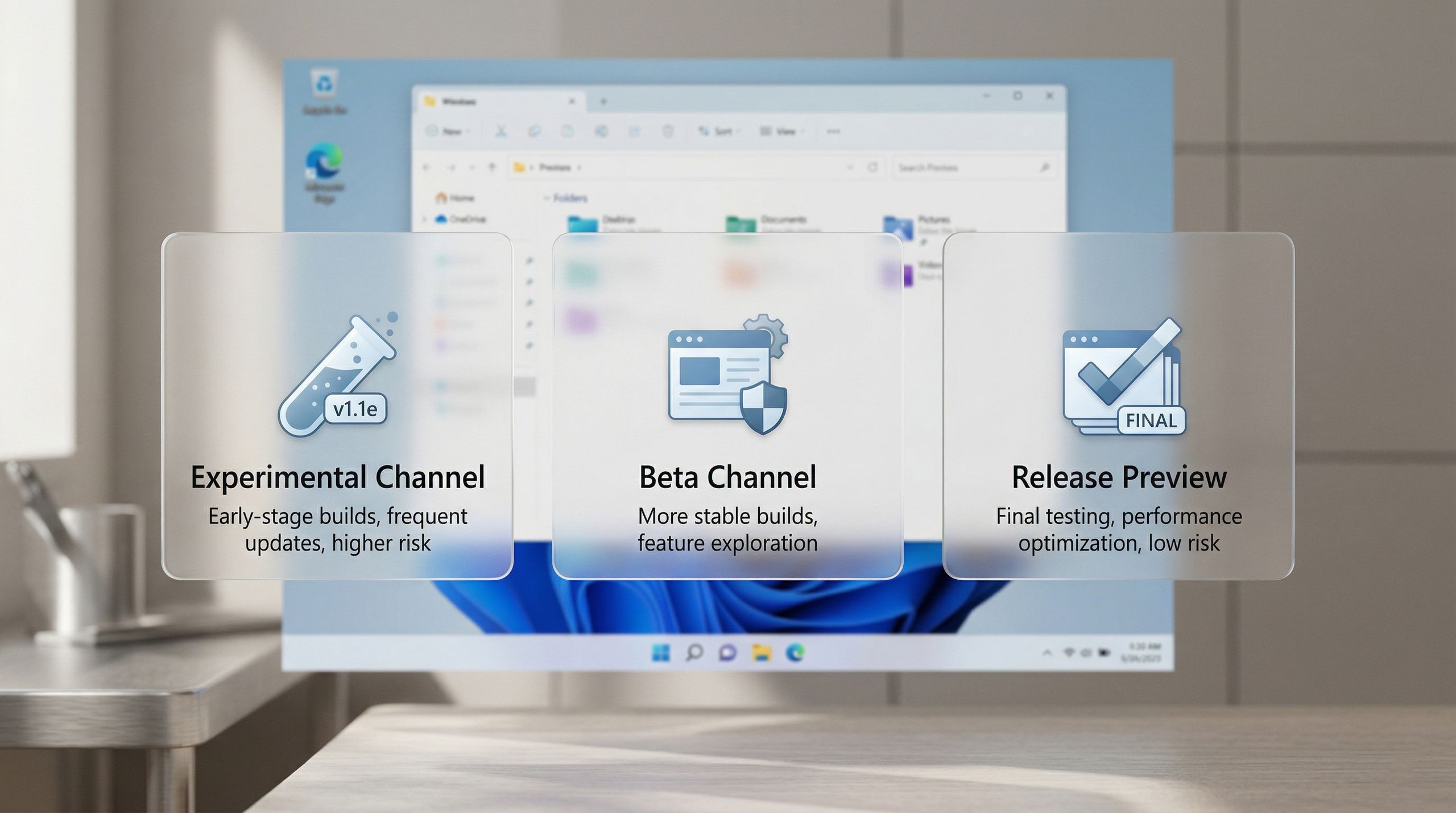
Microsoft is rolling out a new Windows Insider structure, moving Dev users into a new Experimental Channel and revamping Beta, with Canary users to follow over the coming weeks. The main functional update in the first Experimental Preview build, 26300.8289, is the ability to skip updates during Windows setup, alongside more control over update pauses and restart/shutdown options. The changes are incremental but improve user experience and testing flexibility rather than signaling a major product shift.
This is less about the Insider program itself and more about Microsoft tightening the product-development funnel: by reducing friction for feature exposure, the company should shorten feedback loops and lower the cost of iterating on Windows 11/12-era UX changes. That matters because Windows is increasingly a distribution layer for AI, identity, and endpoint-management services; a cleaner release pipeline improves the odds of higher attach rates for Copilot, M365, Intune, and security tooling over the next 2-4 quarters.
The key second-order effect is on enterprise confidence. The ability to defer updates and surface clearer update controls directly addresses one of the biggest reasons IT teams delay rollouts, which can reduce patch lag and support burden over time. If adoption friction falls, Microsoft can ship more aggressively without as much operational backlash, which is mildly positive for gross margin because it lowers the hidden support and regression-testing tax associated with Windows quality issues.
The contrarian read is that this is not a demand catalyst in the near term; it is a governance/process upgrade whose financial impact will mostly show up in lower churn and better enterprise stickiness, not a visible revenue inflection. The main risk is execution: if the new channel structure creates confusion or a wave of regressions, it could temporarily worsen sentiment around Windows reliability and slow PC refresh enthusiasm for 1-2 quarters. That said, the setup favors Microsoft because even a small improvement in update trust compounds across hundreds of millions of endpoints.
AI-powered research, real-time alerts, and portfolio analytics for institutional investors.
Overall Sentiment
mildly positive
Sentiment Score
0.15
Ticker Sentiment
