


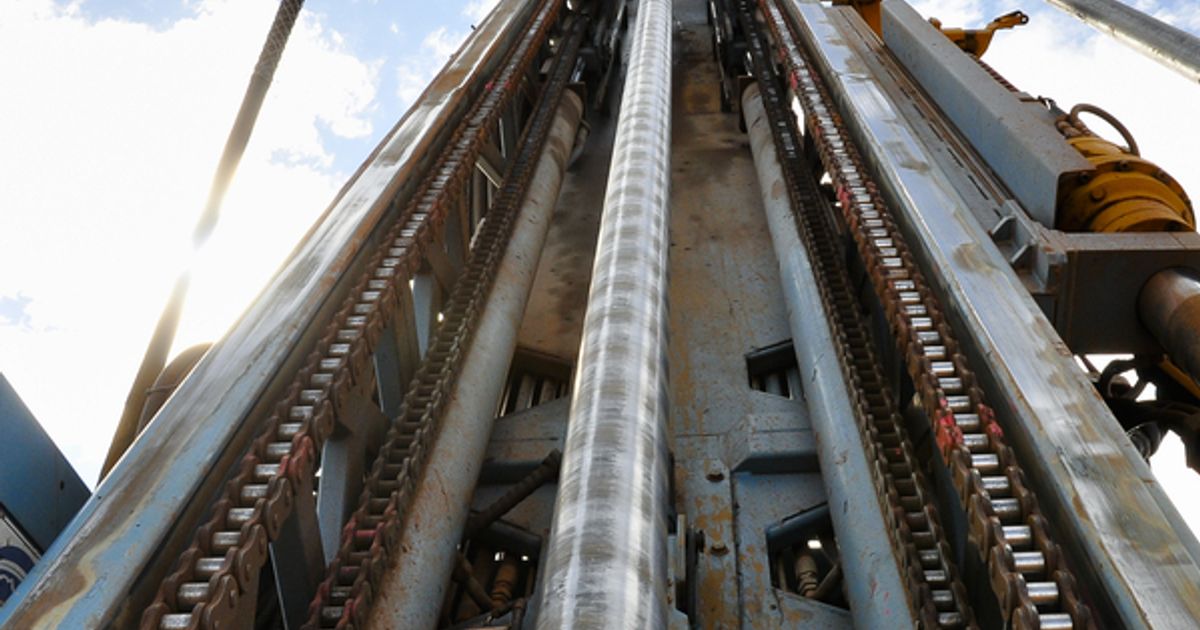
Standard Uranium has finalised a maiden drill program at its Rocas uranium project in the eastern Athabasca Basin comprising ~1,200–1,500 metres of diamond drilling across 6–8 holes targeting shallow basement-hosted uranium 100–200m below surface; targets were refined using 2025 prospecting (radioactivity up to 33,000 cps and ten occurrences over 10,000 cps) and a 2024 high‑resolution ground gravity survey integrated with historical EM corridors. Collective Metals will fund 100% of the phase‑one campaign under a three‑year earn‑in while Standard Uranium remains operator, contractors are secured and crews may mobilise as early as mid‑March; assay results from the 2025 program are pending.
Market structure: Immediate winners are Standard Uranium (TSXV:STND / OTCQB:STTDF) as operator (derisked near-term capex) and Collective Metals as the funder; drill contractors and local service providers also benefit. Unless the program hits a multi-hole, near-surface high-grade discovery (>0.5% U3O8 over meter-scale widths), impacts on global uranium supply, spot price, and majors (e.g., Cameco) are negligible; material market-price effects require discovery sizing in the 10s of Mlbs U3O8 and follow-up delineation over 12–36 months.
Risk assessment: Tail risks include regulatory/First Nations permitting delays, a failed drill campaign, or a high-grade find that triggers aggressive JV dilution and rapid capital raises (10–30% probability each depending on outcomes). Timeline sensitivities: immediate (days) — share move on drill mobilization; short-term (6–12 weeks) — assay outcomes; long-term (6–36 months) — resource definition and financing. Hidden dependencies: assay turnaround, winter ground access, and Collective Metals’ continued funding capacity are single points of failure.
Trade implications: Tactical direct play is a small, size-constrained exploration stake: asymmetric payoff if assays confirm shallow basement mineralization; use tight position sizing (2–3% portfolio) and disciplined exits. Hedged relative ideas: long STND vs short a uranium ETF (URA) to isolate idiosyncratic drill risk; if options/liquidity allow, a low-cost call spread on URA/sector for convex exposure into the assay window (6–12 weeks).
Contrarian angles: The market likely underestimates upside because Collective Metals funding reduces immediate dilution and operator continuity — explorers often rerate 3x–5x on positive Athabasca drill results, but equally often collapse >50% on failure. Consensus may also underprice operational tail risks (permits, assays); the optimal trade is skewed small, event-driven, and conditioned on concrete assay thresholds rather than hype.
AI-powered research, real-time alerts, and portfolio analytics for institutional investors.
Request TrialOverall Sentiment
mildly positive
Sentiment Score
0.28
Ticker Sentiment
