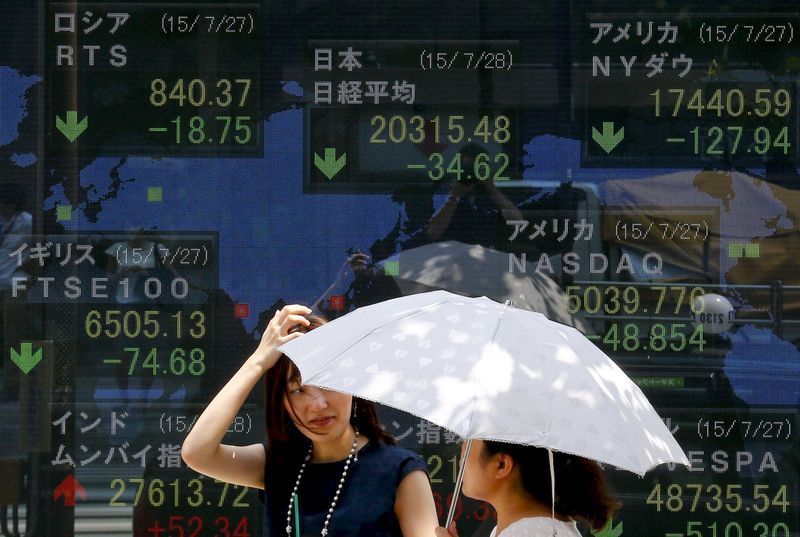
Asian equities surged on an AI-led risk-on rally, with Japan’s Nikkei 225 jumping nearly 3% to a fresh all-time high of 66,449.48 and South Korea’s KOSPI rising 3.4% to a record 8,458.25. Sentiment was also lifted by reports the U.S. and Iran may extend their ceasefire by 60 days, easing Strait of Hormuz tensions and pressuring oil prices lower for a second session. In Japan, Tokyo core CPI slowed to 1.3% in May, while factory output rose 0.9% and retail sales increased 2.1%, reinforcing a cautious BOJ outlook.
This is a classic “macro-confirmation” tape: the market is treating AI leadership, softer geopolitical tail risk, and a still-benign BOJ backdrop as mutually reinforcing rather than independent drivers. The second-order effect is that capital is likely to keep rotating toward the narrowest part of the Asian equity complex — semis, cloud infrastructure, and power/capex beneficiaries — while cyclicals tied to domestic Japan or China consume less incremental inflow. That favors suppliers into the AI buildout more than the hyperscalers themselves in the short run, because the former still have room for estimate revisions while the latter are increasingly crowded.
The Iran headline matters less for oil direction than for variance suppression. Lower implied tail risk around Hormuz compresses the geopolitical premium embedded in energy and shipping, which can free up risk budget for equities and reduce demand for defensive hedges. But this also creates a setup for a fast snapback if the ceasefire framework is delayed or walks back, since positioning has likely shifted quickly into risk assets and away from crude protection.
Japan is the most interesting cross-asset signal: softer inflation with better activity data reduces the odds of a near-term policy accident, which is constructive for rate-sensitive domestic equities and equity-duration winners. The market may be underestimating how much a cautious BOJ can extend the “funding cheap, growth expensive” regime, particularly if wage and inflation data stay uneven into summer. That is supportive for quality tech and exporters, but it also leaves the yen vulnerable to renewed weakness, which can amplify index-level gains.
The contrarian risk is that this is being read as a clean risk-on breakout when it may actually be a crowded extension trade. If U.S. inflation stays sticky, the next leg could be higher real yields and a factor unwind in high-multiple AI names even if the secular theme remains intact. In that case, the best risk/reward is not chasing index highs, but owning relative strength through pairs and using volatility to add on dips rather than breakouts.
AI-powered research, real-time alerts, and portfolio analytics for institutional investors.
Request DemoOverall Sentiment
moderately positive
Sentiment Score
0.55
