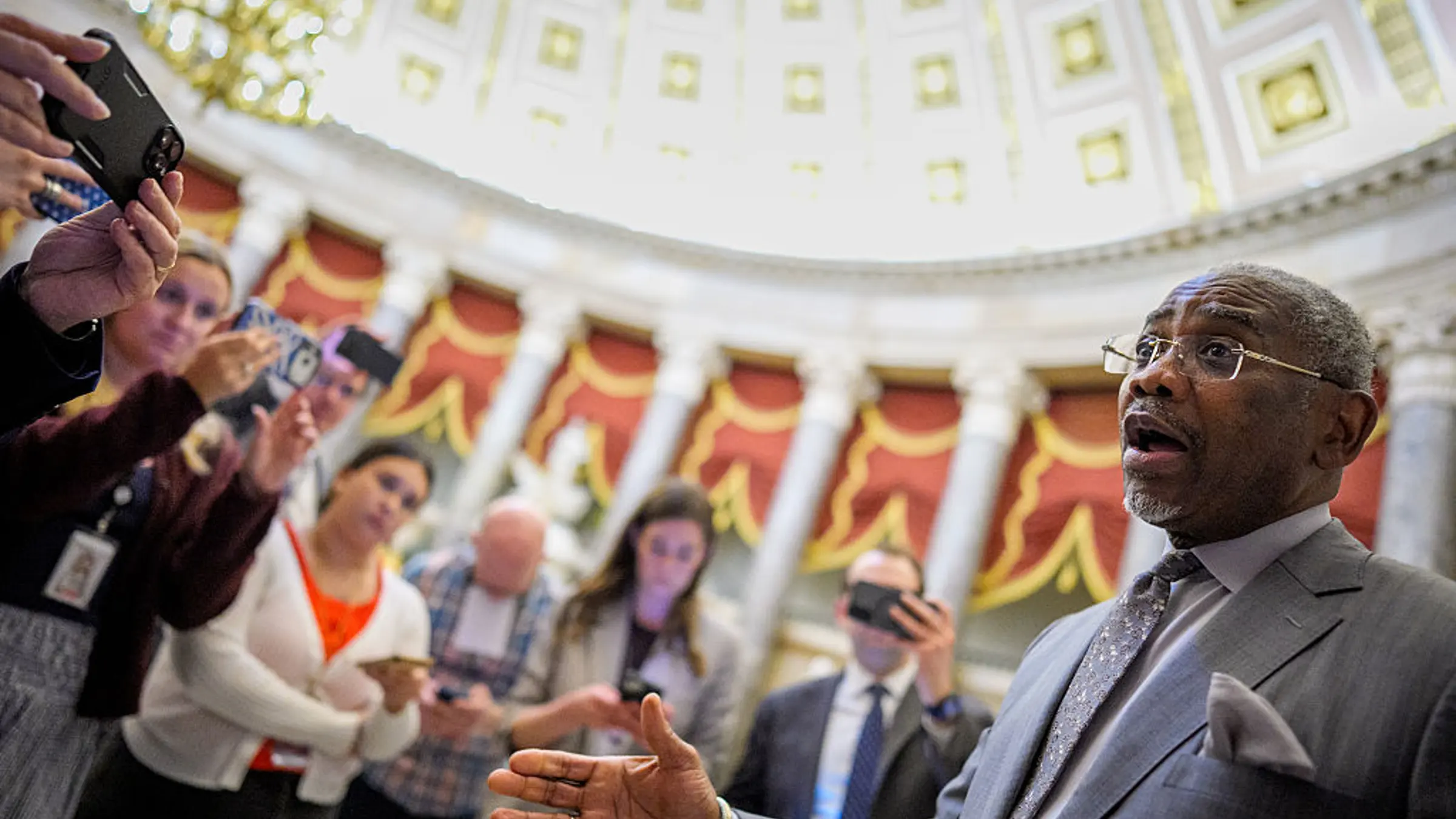
House Republicans delayed a war powers vote that Democrats said would likely have passed, extending uncertainty around U.S. policy on Iran as Washington and Tehran remain at an impasse. The article highlights rising bipartisan fractures, a possible presidential veto, and a conflict already linked to higher gas prices amid a worsening global energy crisis. AP-NORC and NYT/Siena polling cited in the piece shows 64%-65% disapproval of Trump’s handling of Iran.
The immediate market read is not about Congress itself; it is about the probability distribution of Iran risk shifting from a near-certainty of escalation toward a more politically constrained, stop-start path. That matters because energy and defense names are being priced off a regime of sustained disruption, but a procedural delay increases the odds of a tactical de-escalation headline before the next vote window, which can compress the geopolitical premium quickly. In other words, the next move is less about “war or peace” and more about whether the administration is forced to buy time, which tends to mean lower realized volatility in crude even if headline risk stays high.
The second-order loser is not just broad risk assets; it is any trade premised on persistent Strait of Hormuz disruption. If Congressional resistance hardens, Washington’s leverage shifts from military signaling to diplomacy, which historically narrows the tail of extreme oil outcomes faster than consensus expects. That is bearish for the front end of the crude curve and for refiners with high prompt inventory exposure, while being relatively less harmful to integrated majors that can absorb a range-bound price environment.
The contrarian angle is that the market may be overweighting the political theater and underweighting the energy-price transmission already embedded in consumer sentiment and inflation expectations. If the conflict loses momentum, the biggest beneficiary may be rate-sensitive equities via lower breakeven inflation rather than obvious geopolitical names. The key catalyst window is the first week back in June: a successful vote there would reprice war odds immediately; another procedural delay or softer language from the White House could trigger a fast unwind in the embedded risk premium.
AI-powered research, real-time alerts, and portfolio analytics for institutional investors.
Request DemoOverall Sentiment
mildly negative
Sentiment Score
-0.35
Ticker Sentiment
