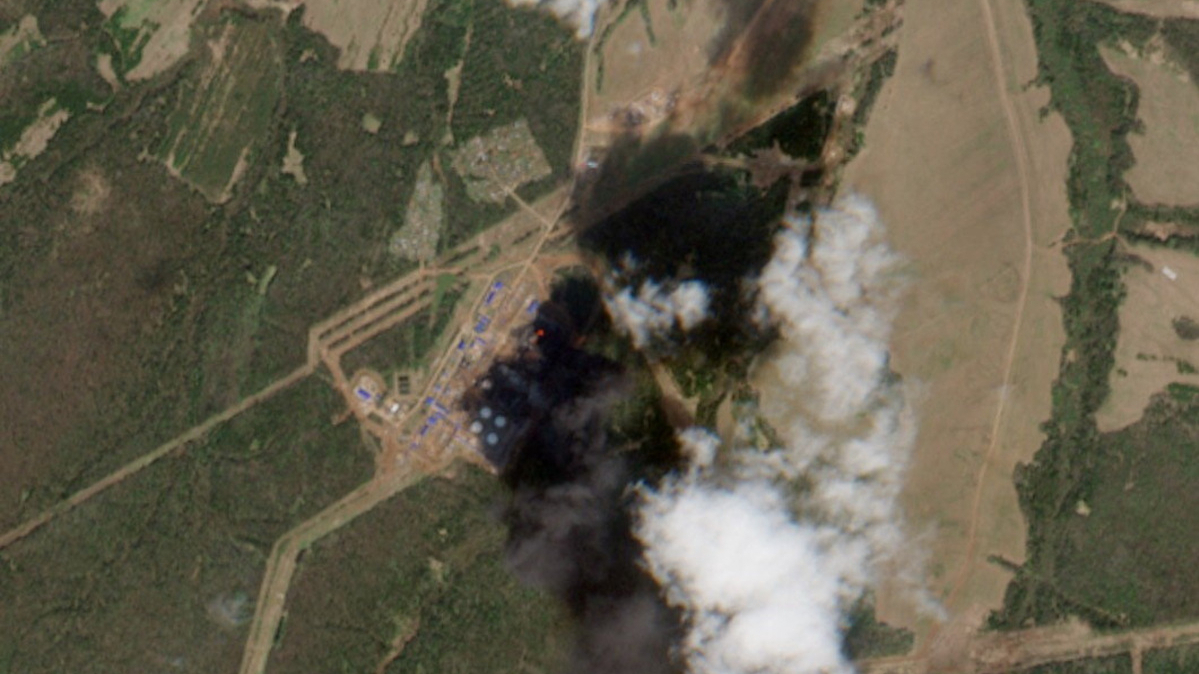
Ukraine’s continued drone campaign has forced repeated shutdowns and fires across Russia’s refining and export infrastructure, including the 250,000 bpd Perm refinery, the Tuapse refinery, and the 320,000 bpd NORSI facility. The attacks have disrupted gasoline, diesel, and gas condensate production, while also targeting Baltic and Black Sea export routes such as Primorsk and Sheskharis. The escalation adds significant pressure to Russia’s energy logistics and raises broader geopolitical risk around the Iran conflict and U.S.-China diplomacy.
The market should treat this less as a one-off supply shock and more as a rolling degradation of Russia’s refining system. Repeated hits on conversion assets matter more than headline crude volumes because they force a shift from exporting higher-margin products to moving crude in a constrained logistics network, which is structurally less efficient and more vulnerable to congestion, sanctions enforcement, and discounting. That setup tends to widen regional product spreads first, then filter into freight, storage, and insurance pricing before fully showing up in benchmark crude.
The second-order winner is not just “oil” but non-Russian middle distillate suppliers with Atlantic Basin access. Europe in particular becomes more exposed to diesel and gasoil tightness if Russian product exports remain impaired for several weeks, while Asian buyers see more opportunistic rerouting and barrel-length risk as Russia defends outlet markets with discounting. The loser set includes tanker operators with older tonnage if sanctions-linked rerouting lengthens voyages but also raises compliance risk; the more durable beneficiaries are companies tied to U.S. Gulf, Middle East, and Indian Ocean refining and shipping corridors.
The key catalyst is whether outage duration starts compounding inventory draws rather than simply shifting product between plants. If partial restarts keep only 50–60% of capacity online across multiple sites, the real risk is not crude price spike but domestic fuel rationing, which would force Moscow to choose between export revenue and internal stability. That scenario would likely intensify retaliatory strikes and raise the probability of further infrastructure damage over the next 2–6 weeks, keeping the market in a persistent risk-off regime rather than a single-event move.
Consensus is probably underpricing how quickly refining outages become a macro political problem in Russia before they become a global crude problem. The headline crude market can stay relatively contained if excess OPEC+ capacity and SPR flexibility absorb it, but product markets can gap violently when diesel availability tightens. That makes the trade more attractive in crack spreads and logistics than in outright Brent exposure.
AI-powered research, real-time alerts, and portfolio analytics for institutional investors.
Request DemoOverall Sentiment
strongly negative
Sentiment Score
-0.72
