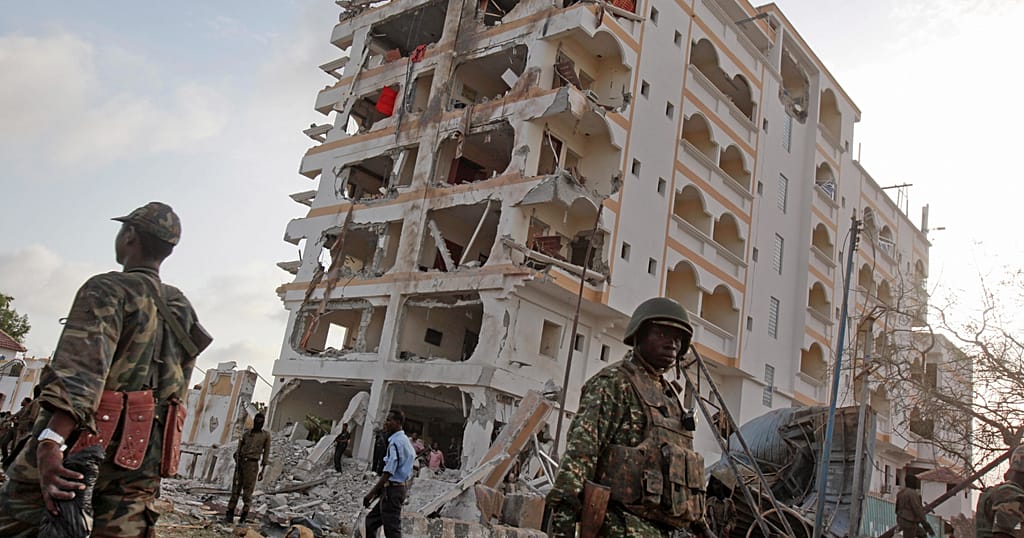
The UN Security Council extended the mandate of the African Union Support and Stabilization Mission in Somalia (AUSSOM) through the end of 2026 to continue assisting Somali forces against al-Shabaab. China flagged an "unsustainable" funding gap and a liquidity shortfall at UNSOS, calling on traditional donors to fulfill commitments; despite gains in major cities since 2007, al-Shabaab still controls rural areas and has retaken some zones, leaving persistent security and financing risks for the region and for donor exposures.
Market structure: The UN extension crystallises a persistent, low-intensity security demand shock rather than a sudden military procurement cycle. Winners: aerospace & defense primes with ISR/drones, private security/logistics contractors and reinsurers; losers: fragile frontier EM sovereign debt and regional commercial insurers who face higher claims/credit costs. Expect modest revenue tailwinds for large defense names (roughly +1–3% revenue upside over 12–24 months if contracts scale) and wider risk premia on East African sovereigns and shipping insurance.
Risk assessment: Immediate (days) reaction is risk-off in EM FX and sovereign spreads; short-term (weeks–months) depends on donor funding announcements and major attacks; long-term (quarters–years) is chronic financing shortfall driving privatized security solutions. Tail risks include a regional spillover (Kenya/Tanzania incursions), a major maritime incident in Gulf of Aden, or a sudden withdrawal of key donor funding — each would widen EM sovereign spreads by 200–500bps in stressed scenarios. Hidden dependency: operational capacity depends on UNSOS liquidity and bilateral pledges (China/UK/US) — not military posture alone.
Trade implications: Cross-asset impacts: safer-haven flows into USTs and gold, short-term pressure on EMB/EMFX and freight/war-risk insurance pricing. Tactical plays: overweight large, liquid defense names and select reinsurers; hedge via long-duration Treasuries and EM sovereign protection (EMB puts or CDS) to capture risk-off. Options are preferable to cap downside: 3–6 month call spreads on defense, 3–6 month put spreads on EMB or buy CDS on select East African sovereigns.
Contrarian: The market underestimates structural growth in outsourced security/logistics spending if donor funding stays thin — private contracts will substitute for UN funding, benefiting niche contractors and brokers. Conversely, broad EM panic is likely overdone: set-buy triggers to add selective frontier exposure when EMB spreads spike >100–150bps. Historical parallel: protracted peacekeeping in Somalia-like theatres tends to reallocate spending to private contractors over 2–4 years, not immediate sovereign recoveries.
AI-powered research, real-time alerts, and portfolio analytics for institutional investors.
Request DemoOverall Sentiment
mildly negative
Sentiment Score
-0.25
