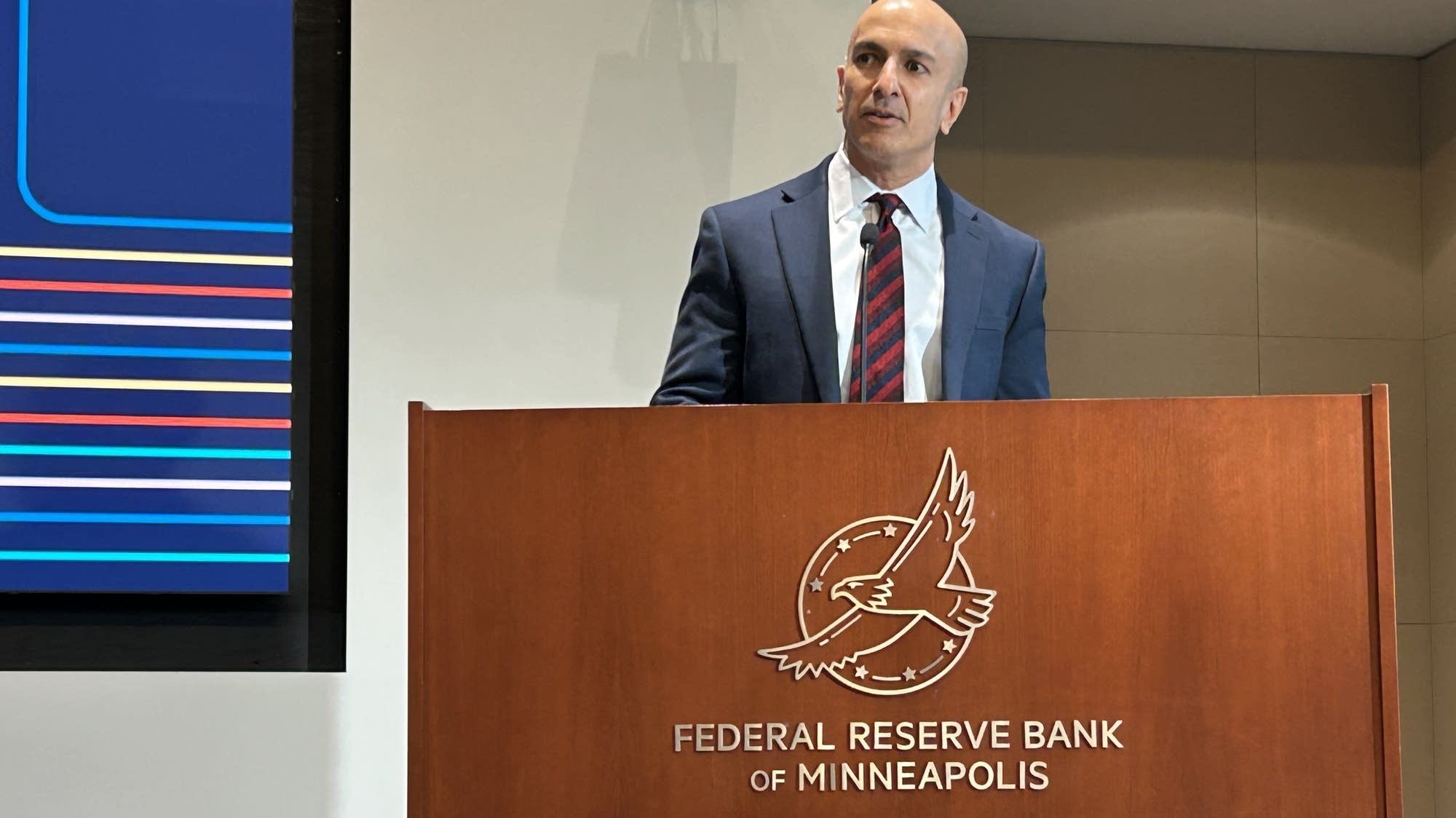
Minneapolis Fed President Neel Kashkari said the economy remains too uncertain to signal rate cuts, citing the backdrop of war and related macro uncertainty. The comments reinforce a wait-and-see stance on monetary policy and leave rate-cut expectations dependent on incoming data and geopolitical developments. The message is broadly neutral but supports a cautious, higher-for-longer rates narrative.
The key market implication is not the headline itself but the Fed’s incentive to keep real rates restrictive until exogenous uncertainty clears. That raises the odds of a longer pause, which tends to pressure the front end, steepen recession hedges, and keep rate-cut-sensitive equities from sustaining multiple expansion. In other words, the market should treat this as a higher-for-longer signal with a geopolitical risk premium layered on top, not as a one-off hawkish comment.
Second-order winners are assets that benefit from delayed easing and elevated term premiums: cash-rich quality value, financials with stable deposit franchises, and short-duration credit. The losers are duration-heavy growth, small caps reliant on refinancing, and housing-adjacent names where mortgage rates remain the transmission channel. If the uncertainty is war-driven, energy and defense also gain relative support because geopolitics becomes a macro input rather than a sector-only theme.
The catalyst path is asymmetric over the next 2-8 weeks: a de-escalation headline or a soft inflation print can rapidly reprice cuts back in, while any escalation would reinforce the Fed’s caution and keep yields pinned higher. The market may be underestimating how quickly one data release can dominate the narrative, so positioning should favor optionality over outright duration risk. The contrarian view is that the absence of guidance may actually be constructive for risk assets if it prevents premature easing expectations from becoming crowded and vulnerable.
This is a tactically bearish environment for Treasury duration but not necessarily a crash signal for equities. The better expression is relative-value: own sectors with pricing power and balance-sheet flexibility, and avoid the most rate-sensitive beta. If uncertainty persists into the next FOMC cycle, the market may have to reprice the entire cut path lower, which would be more powerful than the current language suggests.
AI-powered research, real-time alerts, and portfolio analytics for institutional investors.
Request DemoOverall Sentiment
neutral
Sentiment Score
-0.10
