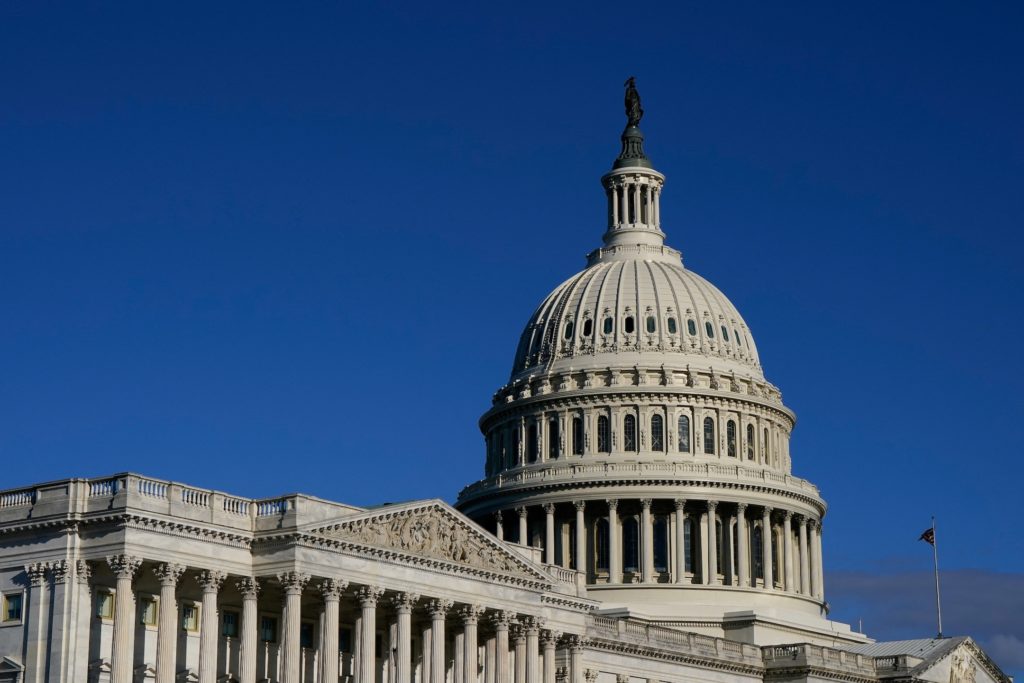
A fifth Senate attempt failed to fund the Department of Homeland Security, leaving TSA operations disrupted at airports. The DOJ sued Harvard seeking to recover billions in federal grants amid alleged antisemitism, CBS News announced layoffs equal to ~6% of staff and will close CBS News Radio in May, and over 4,000 Oahu residents were ordered to evacuate ahead of potential dam failure. Geopolitical tensions with Iran have pushed oil prices higher and pressured markets—Dow posted a fourth straight weekly loss, Nasdaq fell >2% and the S&P 500 dropped >1%, signaling a risk-off market environment.
Rising policy, legal and geopolitical uncertainty has two offsetting effects on market infrastructure: a near-term lift to trading volumes and volatility-driven revenues, and a medium-term hit to listing activity and fee-dependent corporate services. If realized volatility moves up 25-40% over a 1-3 month window, expect trading-related revenue to rise ~5-8% quarter-on-quarter for exchange operators, but a protracted risk-off environment (3-12 months) historically compresses listings and corporate advisory flows by 10-20%, disproportionately hurting firms with high listing/IB fee exposure.
Nasdaq (NDAQ) sits in a vulnerable spot because its business mixes recurring trading fees with lumpy listing and market-structure revenue; a persistent slowdown in capital markets will flip any short-term volume gains into net revenue downside over two quarters. Conversely, equity in streaming platforms that can convert event-driven viewership into durable ARPU (subscriber + ad yield) capture are asymmetric winners: a successful high-engagement live event can boost cohort retention and ad CPMs in APAC by multiples for a quarter, but the upside is binary and execution-sensitive.
Key catalysts to watch are: 1) resolution of major policy/legal noise (days–weeks) which would collapse volatility and snap back exchange multiples; 2) quarterly subscriber and ad yield prints for streaming (weeks–months) that confirm whether live-event engagement translates into recurring revenue; and 3) any escalation that meaningfully lifts oil/commodities (days–months), which will rerate cyclicals and squeeze consumer discretionary. Tail risks include a sudden regulatory regime change that increases compliance burdens on exchanges or a live-event failure that spikes churn; both would materially revise the trade math within 30–90 days.
AI-powered research, real-time alerts, and portfolio analytics for institutional investors.
Request DemoOverall Sentiment
mildly negative
Sentiment Score
-0.25
Ticker Sentiment
