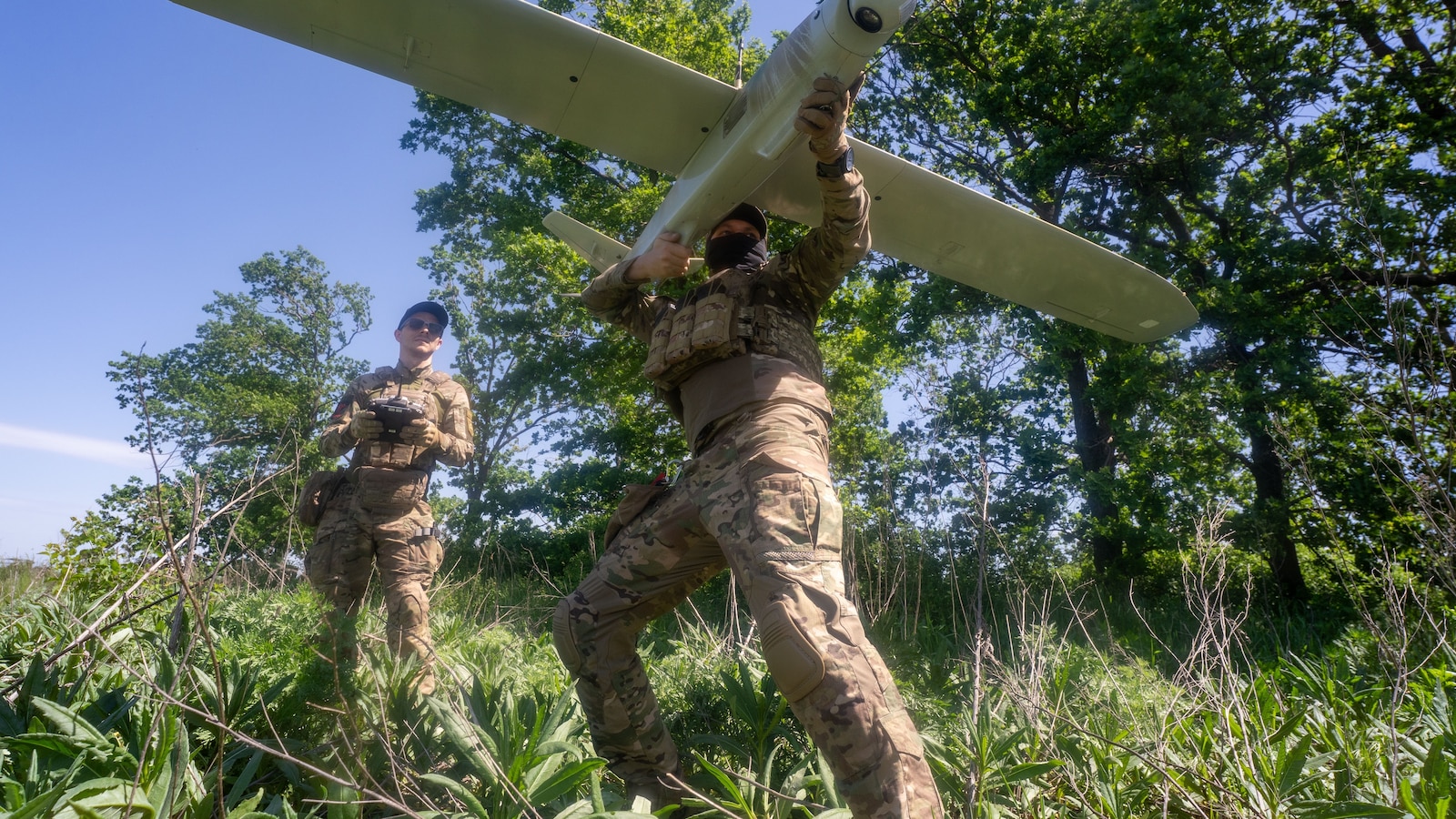
Russia’s lower house approved a bill requiring banks to fund electronic jamming systems and allow selected staff to help intercept Ukrainian drones, pending upper-house approval and President Putin’s signature. The plan would apply to the central bank and major institutions such as Sberbank, but the draft contains limited operational detail and could create significant implementation burdens. The move underscores escalating wartime pressure on Russian infrastructure and defense posture.
The market implication is not the headline optics; it is the operational drag being pushed from the state onto large financial institutions. For a bank like SBER, the direct P&L hit from jamming hardware and training is likely manageable, but the second-order effect is more important: recurring capex and compliance burdens now become quasi-defense spending with no revenue offset, which should widen the discount investors apply to Russian banks’ long-duration earnings streams. The bigger issue is balance-sheet and franchise risk from normalization of wartime exposure. If branches are treated as active defense nodes, the probability of physical disruption, employee injury, and localized service interruptions rises materially, even if drones are not intentionally targeting banks today. That creates a subtle deposit-franchise headwind: households and SMEs may prefer digital channels or move balances toward institutions perceived as more state-protected, which favors the largest state-linked names in the short run but increases systemic concentration risk over months. For SBER specifically, this is less about near-term credit losses and more about multiple compression. The market already prices in a politically constrained, low-growth asset; adding defense-adjacent obligations reinforces the view that capital allocation is subordinated to policy, which typically caps rerating catalysts. A counterintuitive risk is that successful implementation reduces headline drone damage, which could mute the market impact after an initial knee-jerk selloff; so the trade is better expressed tactically rather than as a long-dated structural short. The contrarian angle is that this may be a symbolically hawkish but economically shallow measure unless it scales quickly. If implementation is slow or uneven, the real effect is reputational rather than financial, and the stock could recover once investors realize the cost is a rounding error versus SBER's earnings power. The more meaningful catalyst would be evidence of broader privatized air-defense obligations extending beyond banks into other blue-chip sectors, which would signal a deeper regime shift in Russian corporate governance and capital formation.
AI-powered research, real-time alerts, and portfolio analytics for institutional investors.
Request DemoOverall Sentiment
mildly negative
Sentiment Score
-0.20
Ticker Sentiment
