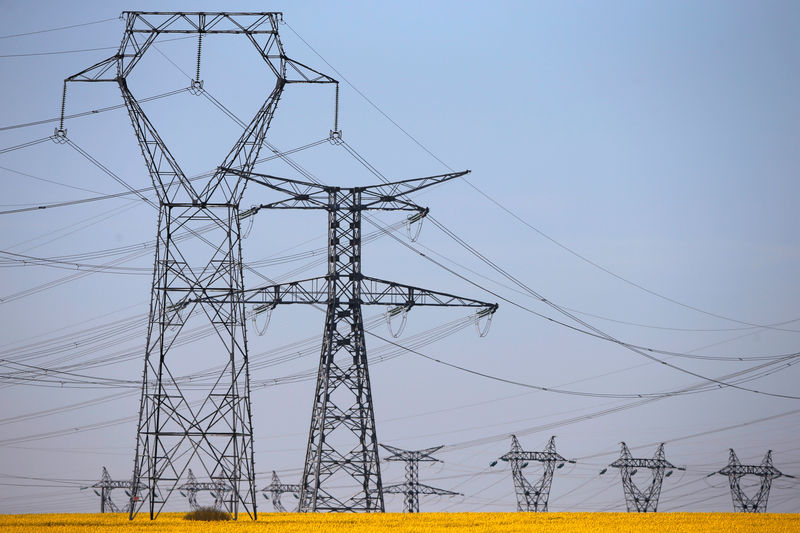
Gold is heading for its largest quarterly drop since 2013 as rate-hike jitters persist, while the UK’s grid operator (NESO) says Britain needs about £89B ($118B) of power-grid investment during the 2030s—up 53% from a 2024 plan—to avoid inefficiencies and higher consumer costs. NESO cites a £15B Celtic Sea offshore wind grid link and expects electricity demand to grow more than 30% by the mid-2030s, driven by EVs, housing, industry, and AI-enabled data centres; network fees already make up ~25% of a typical domestic bill and regulator-approved upgrades are set to raise costs amid inflation and clean-power target pressure.
This is less a pure capex-positive for UK utilities than a slow-burn tax on the domestic economy. Regulated network owners should still benefit if Ofgem allows the higher asset base into tariff recovery, but the real economic transfer is from households and energy-intensive SMEs into the grid complex, which likely compresses consumption elasticity and leaves UK retail, leisure, and property names with a harder operating backdrop. The second-order winner is the infrastructure supply chain—subsea cable, transformers, switchgear, and engineering contractors—because the bottleneck is now execution capacity, not demand for electrons.
The market is probably underestimating the political friction path. A 53% step-up in the investment plan raises the odds of bill-payer backlash and a more activist Ofgem stance, especially if inflation stays sticky and the government needs to defend real incomes. That creates a timing mismatch: the capex narrative is 2030s growth, while the equity pain shows up over the next 1-3 years through higher network charges, slower household demand, and potentially more rate-sensitive UK multiples. If data-center demand disappoints or offshore connections slip, the investment case weakens fast because the payback relies on load growth, not just regulated spending.
Contrarian angle: the headline looks inflationary, but for listed utilities the bigger risk may be allowed-return compression rather than capex size. If regulators lean on affordability, the incremental RAB could be funded at lower returns or slower recovery, making the nominal spend less valuable than bulls assume. That would favor trading the regulatory winners very selectively and only after seeing Ofgem’s treatment; absent that, this is more a macro headwind for UK domestic demand than a clean long for the utility sector.
AI-powered research, real-time alerts, and portfolio analytics for institutional investors.
Request DemoOverall Sentiment
mildly negative
Sentiment Score
-0.18
Ticker Sentiment
