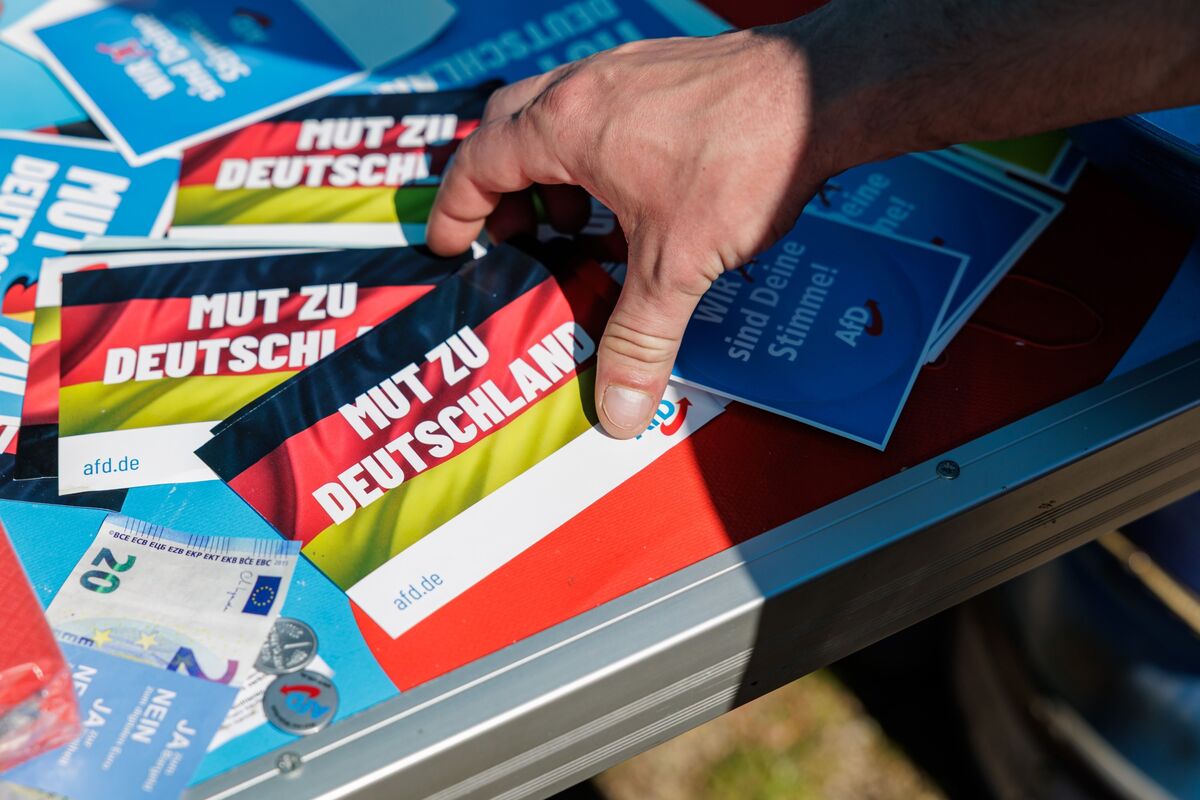
Germany’s far-right Alternative for Germany is reportedly vetting public workers ahead of a possible purge of civil servants if it wins control in Saxony-Anhalt, with plans that could affect as many as 200 administrative posts. The move raises political and governance risks ahead of this year’s eastern state election. Market impact is likely limited, but the story underscores heightened domestic political uncertainty in Germany.
This is less a single-state political story than a signaling event for German institutional credibility risk. Even without an immediate policy change, the market should think about the second-order cost of state capture: if a populist party can pre-screen and potentially replace civil servants, the expected value of bureaucratic continuity falls, which raises the risk premium on local procurement, permitting, and any regulated cash flows tied to state execution. The initial hit is likely to show up first in sentiment-sensitive assets rather than in direct fundamentals.
The clearest losers are businesses with exposure to public contracts, infrastructure buildout, education/administration services, and regulated regional utilities where approval velocity matters more than absolute demand. The practical transmission mechanism is slower decision-making and higher employee turnover risk across agencies, which can delay capex disbursements, licensing, and subsidy processing by quarters rather than days. That tends to compress local economic activity in a way investors often underestimate until project backlogs start to widen.
The contrarian angle is that markets may overprice immediate implementation risk. In Germany, federal law, courts, and civil-service protections constrain any wholesale purge, so the gap between rhetoric and executable policy is material; this is more likely a months-to-years governance erosion story than a near-term regime shift. The real catalyst is the election outcome and coalition math, not the headline itself. If the party polls well but falls short of governing leverage, the trade should fade quickly; if it gets blocking power, the repricing could persist into 2026 budget cycles.
For Europe, the bigger issue is contagion: if investors conclude that state-level administration can become politicized, the discount rate on periphery public-sector-dependent assets rises modestly, and labor mobility in eastern Germany could worsen as skilled administrators exit. That can deepen regional divergence and create a self-reinforcing tax base deterioration cycle, but only over multiple quarters. Near term, the opportunity is to own national champions with low domestic permitting dependence and avoid firms whose project pipeline is hostage to local bureaucracy.
AI-powered research, real-time alerts, and portfolio analytics for institutional investors.
Request DemoOverall Sentiment
moderately negative
Sentiment Score
-0.30
