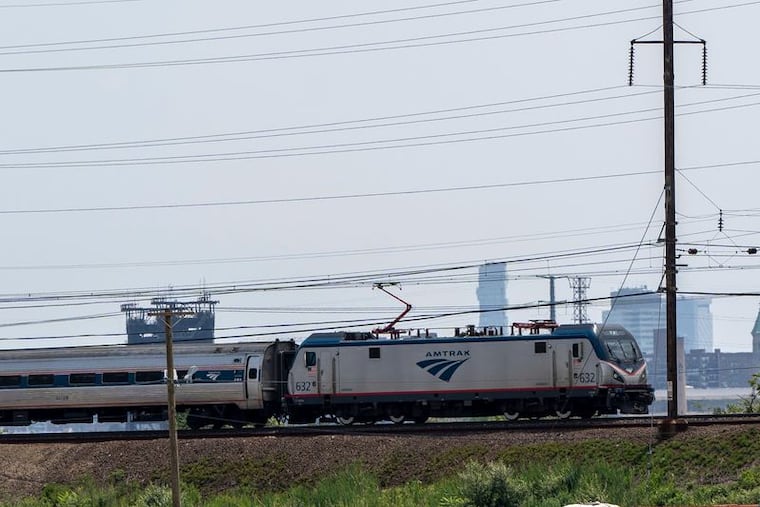
Amtrak and NJ Transit service into New York was suspended after a maintenance train fire in Penn Station injured five rail workers, including two serious injuries. Amtrak said service should return to normal by noon, while NJ Transit remains suspended between New York and Newark until further notice, with cancellations and delays expected. The incident is operationally disruptive but likely transitory rather than a lasting fundamental shock.
This is a short-duration operational shock, but the market impact is asymmetrical because rail disruption around Penn Station tends to cascade into broader Northeast mobility, not just one corridor. The immediate beneficiaries are the usual substitutes: ride-hail, airport shuttles, intercity bus operators, and any lodging tied to stranded travelers; the more interesting second-order effect is a same-day lift in airport throughput and last-mile pricing power as commuters re-route. For transport equities, the event is more noise than fundamentals unless it exposes a structural maintenance issue or prompts regulatory scrutiny on asset condition.
The key risk is persistence beyond the initial restoration window. If service normalization slips from hours into days, the drag compounds through missed business travel, employee absenteeism, and retail footfall in Manhattan/NJ urban nodes, which can modestly pressure transit-adjacent consumer activity and weaken near-term booking patterns in the region. A one-off fire is manageable; repeated incidents would shift the narrative toward deferred capex and operational reliability, which could matter over months for transit operators and contractors exposed to rail infrastructure remediation.
Consensus may underappreciate how quickly the event can reverse: transit systems are operationally fragile but demand is highly substitutable over short horizons. That makes any knee-jerk selloff in travel/leisure or urban retail names likely overdone unless the outage extends into the afternoon commute and spills into the weekend. The better trade is to express the disruption through temporary alternatives rather than shorting the rail ecosystem outright, since the revenue hit to rail is likely partially deferred rather than lost.
For infrastructure names, the right read-through is not damage, but procurement optionality: any elevated attention to station/tunnel resilience can accelerate maintenance spend and favor contractors with emergency repair, ventilation, and signaling exposure over pure-play operators. If management commentary over the next 24-72 hours emphasizes inspection or remediation, that is the point where the event becomes a catalyst for small but real capex acceleration rather than just an operational headline.
AI-powered research, real-time alerts, and portfolio analytics for institutional investors.
Request DemoOverall Sentiment
mildly negative
Sentiment Score
-0.35
