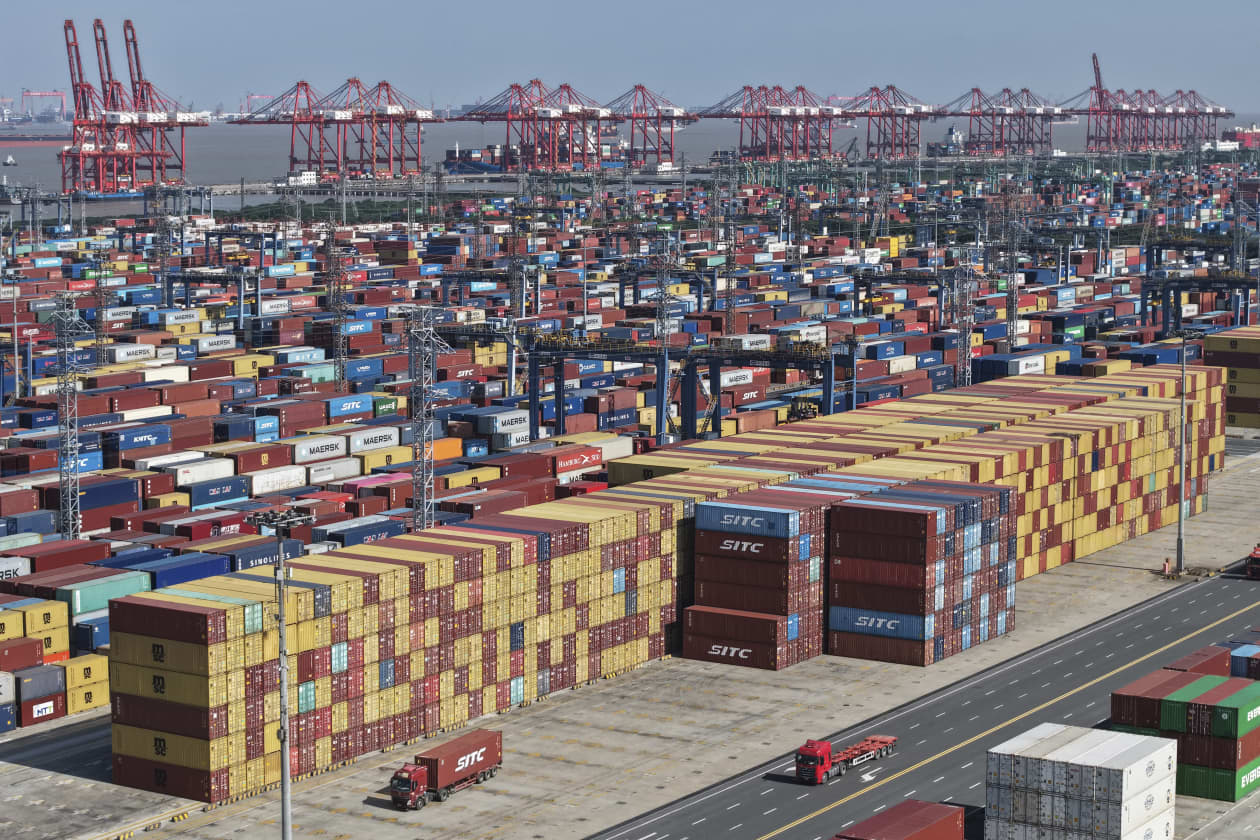
A composite index of spot global container-shipping prices is up 8% this week and nearly 12% since the Iran conflict began. Iranian strikes on cargo ships and on Oman's largest port have materially raised the risk of supply-chain disruptions, threatening higher prices for food, AI chips and other goods. The situation extends the conflict's economic impact beyond energy markets and creates sector- and potentially market-wide inflationary pressure.
Winners are those that capture stretched freight margins and the insurance premia that follow concentrated maritime risk: asset-light container carriers and owners able to reprice spot cargo quickly, bunker/refining nodes that sell heavy fuel oil, and Bermuda reinsurers/pricing desks that can widen underwriting spreads. A realistic mechanical effect is route-length inflation (reroutes adding ~7–10 days on long-haul voyages) which raises per-voyage fuel burn 8–12% and pushes a mid-sized boxship’s marginal voyage cost into the tens of thousands of dollars — a structural uplift to time-charter and spot revenue per ship in the near term. Ship-repair yards and component suppliers (engines, gear) see a 2–4 quarter uplift in demand from damaged/inspected tonnage, a cadence that is investible but lumpy.
Key catalysts and timelines: tactical escalation or a single high-profile naval interdiction can spike war-risk premiums in days, while diplomatic de-escalation, sanctioned corridor agreements, or deployed convoy operations can compress those premiums back within 2–8 weeks. Over 3–12 months, durable effects bifurcate: continued insecurity accelerates nearshoring and airfreight substitution for high-value goods (shrinking container volume growth) while also increasing CAPEX for domestic logistics and smaller, faster vessels. The primary reversal risks are (1) rapid normalization of insurance pricing through naval escorts/coalitions, (2) a pronounced global demand slowdown that eases spot rates, or (3) a coordinated carrier capacity release that waterfills the market within one to three quarters.
Contrarian angle: the market is pricing a long tail of permanent rerouting and chronic capacity loss, but history shows war-risk premiums and spot dislocations often mean-revert quickly once visible mitigation is activated. That makes outsized near-term alpha available from idiosyncratic owners/leasers and re-insurers who can reprice contracts ahead of consensus. Conversely, businesses that accelerate expensive airfreight or domestic inventory expansion now will suffer margin compression initially but could be the winners in a 12–36 month structural reallocation of supply chains — tradeable on a timeline, not as a binary permanent shock.
AI-powered research, real-time alerts, and portfolio analytics for institutional investors.
Request DemoOverall Sentiment
moderately negative
Sentiment Score
-0.60
