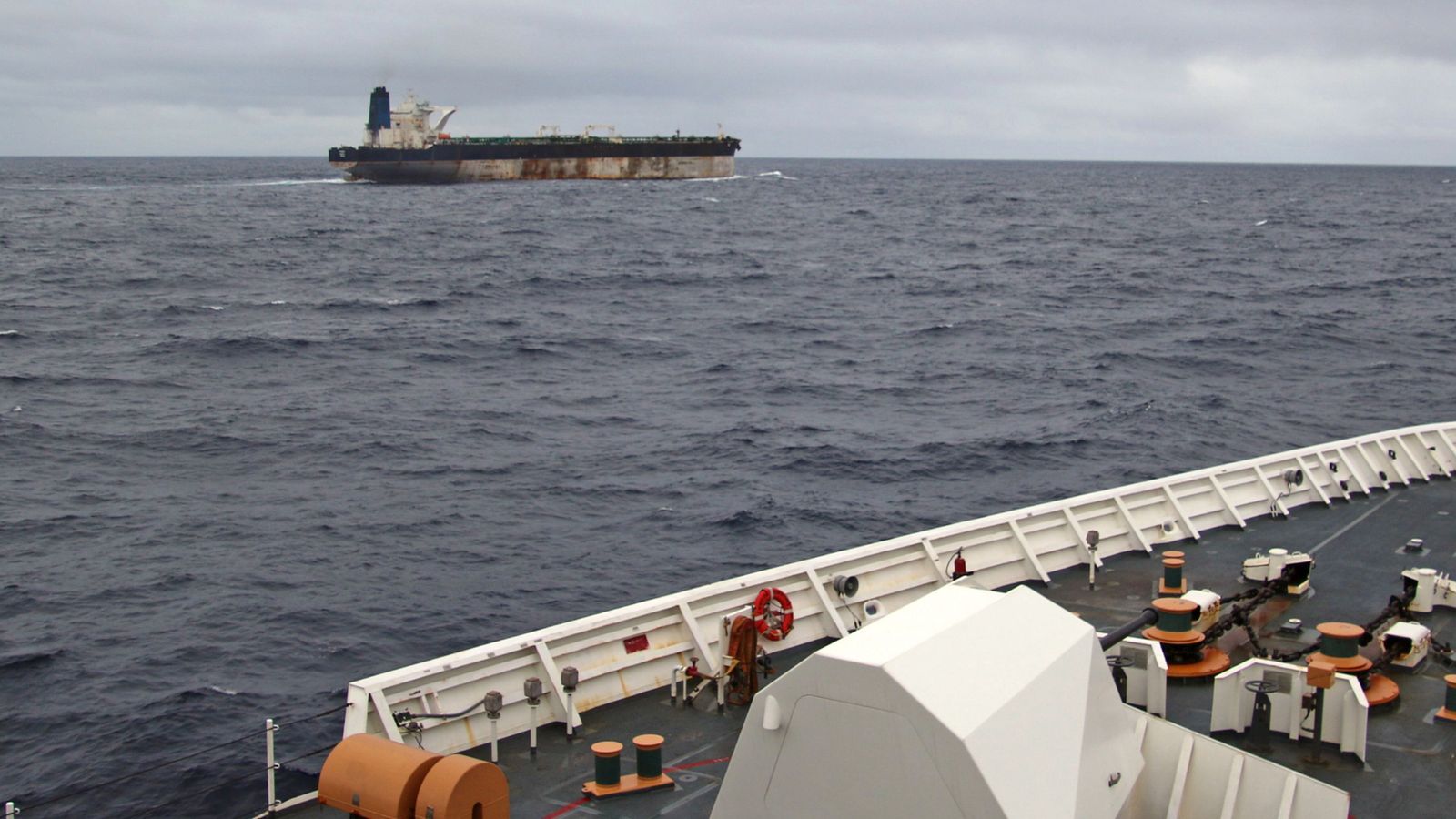
U.S. forces seized the sanctioned tanker Marinera (formerly Bella 1) in the North Atlantic between Iceland and Scotland after a two-week pursuit; the vessel was sanctioned in 2024 for allegedly smuggling cargo for a firm linked to Hezbollah and recently reflagged from Guyana to Russia. The Coast Guard handed control to law enforcement amid nearby Russian naval assets and a Russian protest that the seizure occurred in international waters; the action follows heightened U.S. pressure on Venezuela, including a separate operation to capture President Nicolás Maduro. For investors, the incident modestly raises geopolitical risk around oil shipments, sanctions enforcement and maritime transit in the North Atlantic, but is unlikely to materially move broad markets absent further escalation.
Market structure: The seizure raises the political risk premium on tanker shipping and sanctioned-Venezuela crude flows, advantaging integrated majors (XOM, CVX) with diversified logistics and disadvantaging specialist tanker owners (FRO, EURN, NAT) and niche traders that rely on gray-market cargoes. Expect spot tanker freight spreads for LR/ULCC routes tied to Venezuela to widen 10–30% in the next 2–8 weeks as insurers and charterers re-price risk and avoid sanctioned counterparties. Risk assessment: Tail risks include escalation with Russia (low probability, high impact) that could cause a >5% move in Brent and a sharp widening of EM sovereign CDS; conversely, legal containment and quick resale of custodyed cargo could normalize markets in 2–6 weeks. Hidden dependencies: reflagging vessels and AIS spoofing are common — enforcement success may push more trade into opaque swaps/derivatives, increasing counterparty credit risk for physical traders and commodity financers. Trade implications: Tactical trades favor long defense contractors (LMT, NOC) and integrated oil (XOM, CVX) on a 3–9 month horizon; short or buy downside protection on tanker equities (FRO, EURN, NAT) sized 1–3% of portfolio and use 3-month puts or put spreads to limit capital. Cross-asset: long USD and USTs as risk-off hedges if escalation occurs, and buy 1–3% allocation to 3-month Brent call spreads if Brent > +5% within 14 days. Contrarian angle: The market may overshoot on permanent de-risking of tanker equities; historical parallels (2019 Gulf incidents) show oil spikes faded within weeks and shipping stocks mean-reverted over 2–3 months. If no legal precedent for broad seizure is set within 30–60 days, consider covering shorts and buying selective distressed tanker exposure at 20–40% haircut levels.
AI-powered research, real-time alerts, and portfolio analytics for institutional investors.
Request DemoOverall Sentiment
moderately negative
Sentiment Score
-0.30
