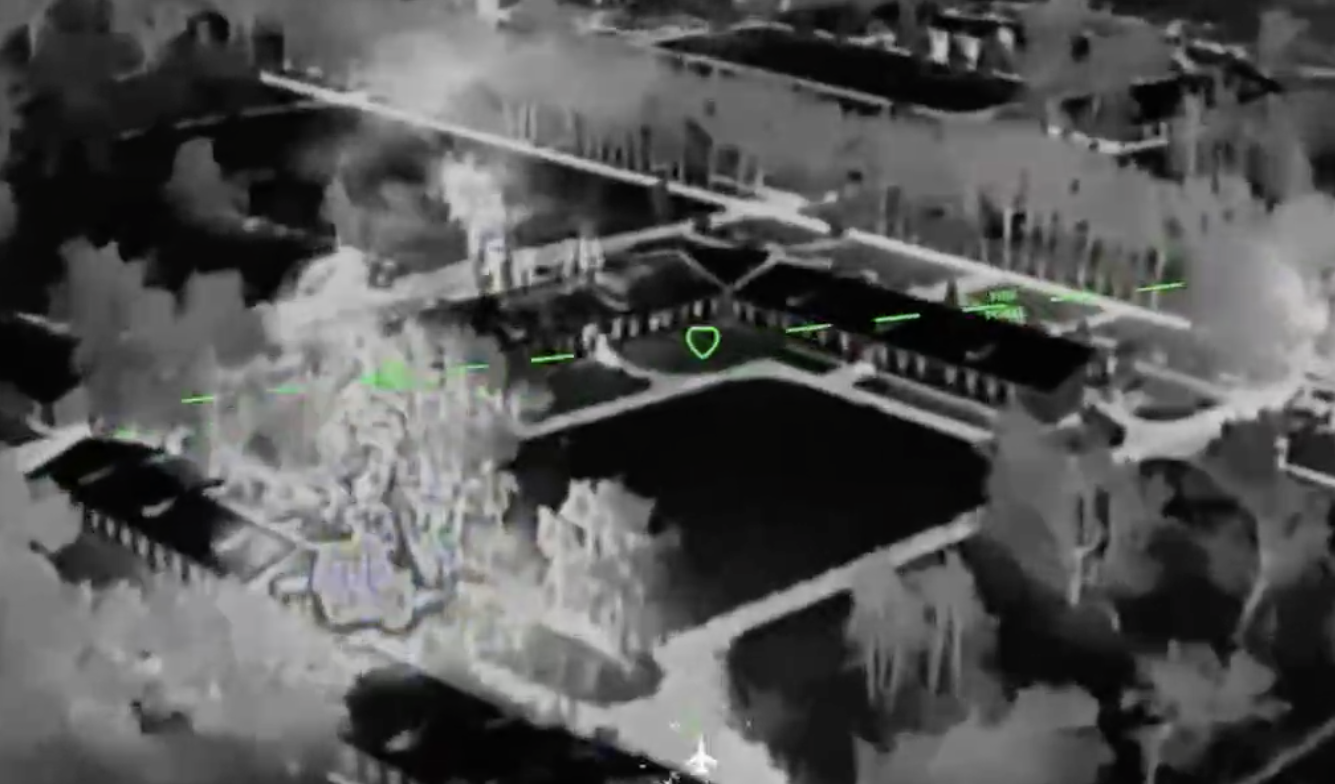
Ukraine reported a series of drone strikes hitting Russian military training sites, oil infrastructure, and logistics assets, including the Saratov oil refinery, a pipeline node in Kirov Oblast, and facilities in Taganrog and occupied Crimea. Russia said it intercepted 216 Ukrainian drones over 10 regions, underscoring the scale of the attack. The strikes reinforce elevated risks to Russian energy infrastructure and wartime logistics, with potential implications for oil supply and regional security.
The market implication is not the headline damage itself but the compression of Russia’s logistics elasticity. Repeated hits on fuel nodes, depots, and pipeline dispatch points force longer-haul routing, larger safety stocks, and more convoy miles, which raises the marginal cost of sustaining frontline tempo even if headline refinery capacity is still intact. That creates a slow-burn degradation trade: fewer acute shortages than in a clean outage, but a persistent increase in wartime logistics friction that compounds over weeks rather than days.
Energy is the most immediate spillover, but the second-order effect is on Russian product exports and domestic diesel availability. When refining and dispatch infrastructure are repeatedly stressed, the system tends to prioritize military and domestic supply over seaborne product exports, which can tighten regional middle-distillate balances without necessarily moving Brent in a straight line. The more interesting read is that Ukraine is increasingly targeting the transport layer of the oil system, not just the processing layer, which is more disruptive because it slows substitution and rerouting.
For defense, this reinforces the scaling value of counter-UAS, electronic warfare, and point defense rather than classic heavy armor narratives. The risk to Russia is cumulative attrition in rear-area hubs: as depth increases, the cost to defend each node rises faster than the cost to attack it, especially if Ukraine can sustain sortie rates. The key reversal catalyst would be either a step-up in Russian air defense density around energy nodes or a meaningful Ukrainian drone production bottleneck; absent that, the campaign can remain effective for months.
The contrarian point is that the market may overestimate immediate global oil upside while underestimating the medium-term benefit to non-Russian refiners and logistics-adjacent defense suppliers. This is less a bullish crude shock than a relative-value reshaping of regional fuel flows and military supply chains. If anything, the cleaner trade is long resilience and counter-drone capability, not outright long energy beta.
AI-powered research, real-time alerts, and portfolio analytics for institutional investors.
Request TrialOverall Sentiment
moderately negative
Sentiment Score
-0.35
