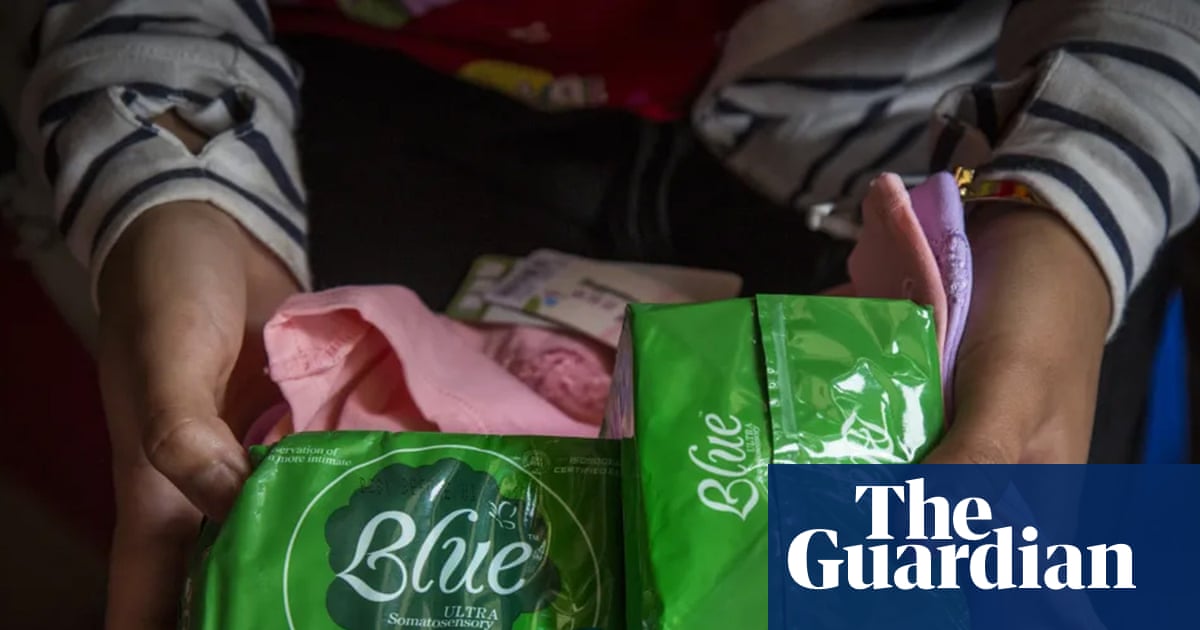
Myanmar’s military is reportedly expanding a ban on menstrual products in opposition-held areas, with transport across the Sagaing-Mandalay bridge completely prohibited and prices in the hidden market rising from 3,000 kyat to 9,000 kyat per pack. The move is being framed by activists as part of the regime’s broader "four cuts" strategy to deprive insurgents of supplies, while women face higher infection risk and reduced participation in daily and political activity. The report highlights worsening humanitarian conditions in a civil war that has displaced more than 3.5 million people.
This is not just a humanitarian issue; it is a coercive logistics tactic that raises the cost of organizing in opposition-controlled areas while remaining cheap for the regime to enforce. The second-order effect is a widening of informal-market spreads: when a basic consumable becomes politically controlled, the scarcity rent accrues to smugglers, local fixers, and any transport nodes that can still move goods through adjacent corridors. That kind of micro-blockade also tends to be sticky because it is operationally easy to maintain and hard to verify, so the economic damage compounds over months rather than days.
The more important market implication is for aid-dependent infrastructure and conflict-adjacent distribution networks. Any NGO, cross-border logistics operator, or last-mile distributor with exposure to Myanmar/Thailand/India routing faces higher working-capital needs, higher spoilage/loss risk, and greater probability of sudden permit revocations. Over a 3-12 month horizon, these frictions typically push more activity into cash-only, fragmented channels, which compresses margins for formal retailers while benefiting black-market intermediaries and border transporters with low transparency.
The contrarian read is that the immediate macro impact is limited, but the signaling value is high: this is a template for broader household-goods rationing that can be extended to medicines, hygiene products, or infant supplies without much incremental enforcement cost. If the regime is testing how much civilian discomfort it can impose without triggering international escalation, the key catalyst is whether humanitarian agencies can document a measurable health or displacement spike that forces donor governments to react. Absent that, the policy likely persists and normalizes, making the tradable edge more about indirect beneficiaries of scarcity than any headline-driven rebound.
AI-powered research, real-time alerts, and portfolio analytics for institutional investors.
Request DemoOverall Sentiment
strongly negative
Sentiment Score
-0.75
