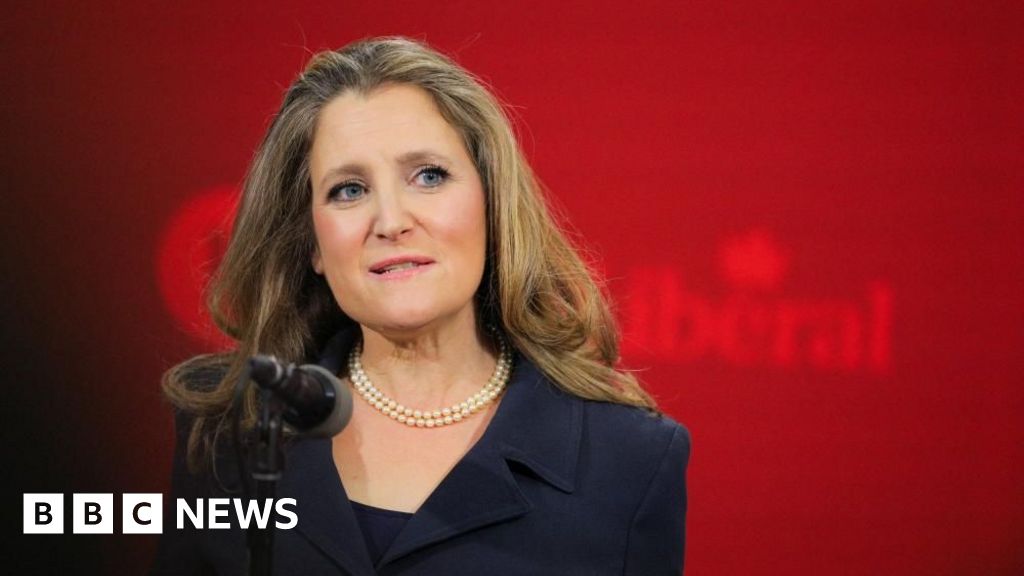
Chrystia Freeland — Canada's former deputy prime minister and long-serving MP for Toronto's University–Rosedale — will resign her parliamentary seat to become an unpaid economic development adviser to Ukrainian President Volodymyr Zelensky and will also take on the role of CEO of the Rhodes Trust this summer. A former finance minister credited with helping renegotiate the USMCA (which helped avert steep Trump-era tariffs) and a vocal supporter of Kyiv, Freeland is also stepping down as Canada’s special representative for Ukraine reconstruction; her appointment has drawn domestic criticism over potential conflicts of holding an advisory role to a foreign government during ongoing trade renegotiations.
Market structure: Freeland’s move materially raises the probability the West sustains political and financial support for Ukraine and reconstruction spending, boosting discretionary demand for defense contractors, heavy equipment and construction materials over 6–24 months. Winners: LMT, RTX, GD, CAT, XLE and steel/copper producers; losers: Russian commodity exporters and firms directly reliant on access to Russian markets. At the margin Canadian trade/tariff policy becomes less predictable ahead of USMCA renegotiation, creating short-term volatility in autos and resource exporters.
Risk assessment: Tail risks include a rapid escalation of hostilities or expanded sanctions causing a >$15–25/barrel oil spike within 30 days and a flight-to-safety widening 2s10s by 15–30bp; domestic Canadian political backlash could weaken CAD 0.5–1% in weeks. Short-term (days–weeks) expect idiosyncratic FX and small equity moves; medium-term (3–12 months) procurement and reconstruction budgets drive real demand; long-term (1–3 years) depends on congressional/EU approvals and delivery lead times (6–18 months). Hidden dependency: procurement requires multi-lateral funding commitments — pledges do not equal order books.
Trade implications: Tactical: favor defense and industrial names into a sustained aid/reconstruction cadence — target 6–12 month holding periods. Use directional FX exposure to USDCAD as a hedge to Canadian political/tariff risk. Options should be used to express skewed upside in defense stocks with defined downside through spreads (3–6 month tenors).
Contrarian: Consensus may under-price the near-term reduction in Canadian trade hawkishness after Freeland’s exit, which could transiently strengthen CAD and relieve tariff risk for exporters; that would compress a quick defensive rally. Historical parallels (post-2008 security shocks) show defense stocks can outperform general markets by 15–30% over 12 months, but reconstruction can crowd out new weapons procurement — monitor funding authorization timelines.
AI-powered research, real-time alerts, and portfolio analytics for institutional investors.
Request DemoOverall Sentiment
neutral
Sentiment Score
0.00
