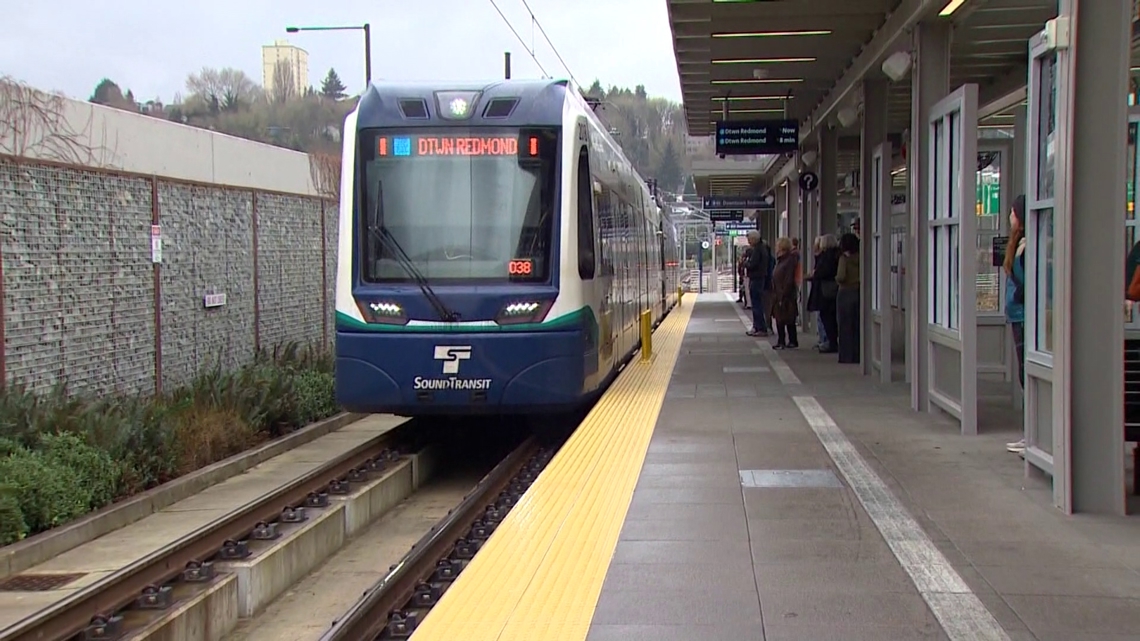
Sound Transit approved a major overhaul of its ST3 expansion plan after identifying a $34.5 billion funding gap that makes the original delivery schedule unaffordable. Several projects are now deferred or only partially funded, including Ballard, Everett and Tacoma-related work, while the agency said some milestones such as Ballard station timing must be disclosed by Aug. 1, 2026. The revisions reflect higher construction costs, inflation, weaker revenues and rising operating expenses.
The meaningful read-through is not “transit delay” but a repricing of public-capex credibility. Once a voter-approved megaproject is forced into triage, contractors, engineering firms, and land speculators along the outer phases lose optionality while the near-term, fully funded segments become the only bankable workstream; that tends to concentrate labor, equipment, and permitting attention into fewer corridors, improving execution odds for the first wave but raising inflation pressure there as displaced demand crowds in.
Second-order, this is a warning signal for every infrastructure backlog in the region: if financing assumptions are already breaking in the mid-2030s, then projects with weaker political sponsorship or lower ridership density will face a higher hurdle rate, longer preconstruction timelines, and a greater probability of redesign. The consequence is a bifurcation between “must-build” urban nodes and exurban park-and-ride and access projects, which are the first to be trimmed when revenue assumptions slip; that should matter for local land values, suburban retail traffic expectations, and any municipal issuers relying on transit adjacency as a development catalyst.
The contrarian angle is that this may be less bearish for the broader transportation complex than it looks, because delay itself can create a later catch-up cycle: inflation indexing, tighter labor markets, and deferred projects usually re-enter the queue at meaningfully higher nominal budgets. So while near-term sentiment is negative, the embedded option value on future funding fixes, carbon-credit revenues, or political intervention is not zero; the market may be underestimating how quickly a new fiscal package can re-rate the most visible corridors if public frustration rises.
Catalyst timing is more important than headline risk here. The next 3-6 months are about governance and list-management, but the real inflection is the 2026 date commitment and the mid-2030s funding wall; until then, the trade is less about immediate construction volume and more about which assets can survive the pruning process with minimal scope loss.
AI-powered research, real-time alerts, and portfolio analytics for institutional investors.
Request DemoOverall Sentiment
mildly negative
Sentiment Score
-0.35
