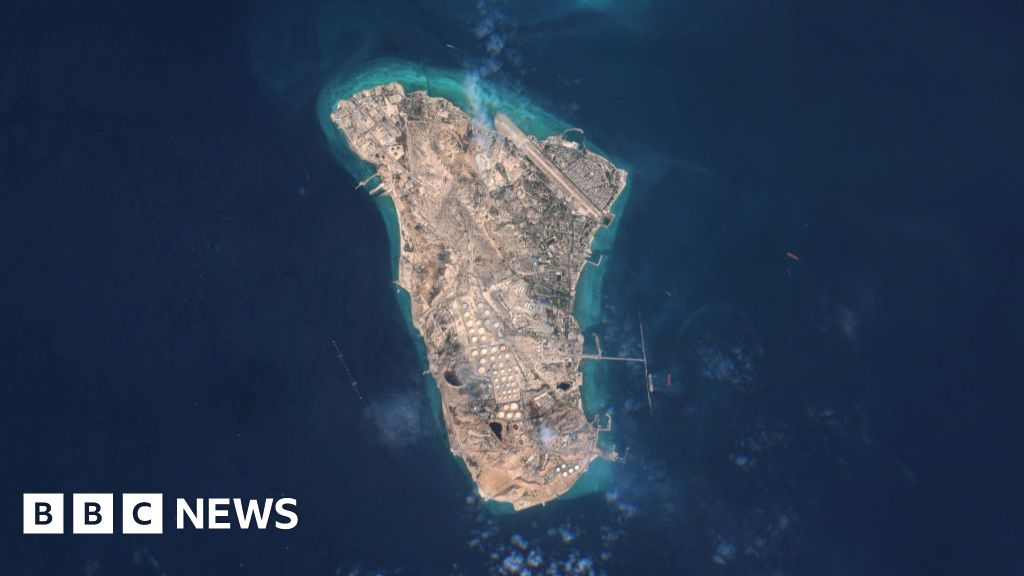
The US reports it bombed military facilities on Kharg Island — the terminal through which ~90% of Iran's crude is exported — while claiming it held off from striking the island's oil infrastructure. Tehran warned it would immediately destroy energy assets tied to firms working with the US; amphibious ships reportedly carrying up to 5,000 Marines are en route, raising seizure speculation. The action risks materially disrupting flows through the Strait of Hormuz and could push global oil prices significantly higher and escalate regional conflict.
The strike signals a US strategy of calibrated economic coercion: holding Iran’s hydrocarbon export capability as a latent escalation lever rather than destroying it outright preserves short-term market access while maximizing deterrence. That creates a binary payoff structure for markets — a high-probability volatility event (days–weeks) centered on shipping/insurance frictions and a low-probability, high-impact tail if oil infrastructure is hit (weeks–months).
Second-order winners are participants who monetize persistence of disrupted flows rather than pure directional oil exposure: crude tanker owners (spot tanker earnings via STS transfers and longer haul routing), re/insurers and P&I clubs who can widen premia, and US onshore producers who can step into lost Iranian barrels quickly. Losers include Asian refiners calibrated to Iranian blends (margin compression if they must buy heavier or higher-cost substitutes), regional utilities reliant on imported feedstocks, and sovereign balance sheets of small Gulf states if spillover attacks raise security costs.
Key risk paths and catalysts: near-term spikes from insurance-led shipping slowdowns or announced IRGC asymmetric strikes (48–72 hours); medium-term (1–6 months) realized supply loss if damage to terminals forces protracted repairs and prompts strategic stock releases or Chinese barter workarounds; reversals come from credible diplomacy, large SPR releases, or a rapid normalization of marine insurance rates.
Contrarian view: markets may be overpaying for perpetual shut-off risk. Physical re-routing, increased use of STS, and Chinese willingness to absorb Iranian barrels via nontraditional structures suggest that a prolonged structural shortage is less likely than episodic price shocks. That argues for time-limited, convex option exposure rather than large outright directional positions in equities.
AI-powered research, real-time alerts, and portfolio analytics for institutional investors.
Request DemoOverall Sentiment
strongly negative
Sentiment Score
-0.60
