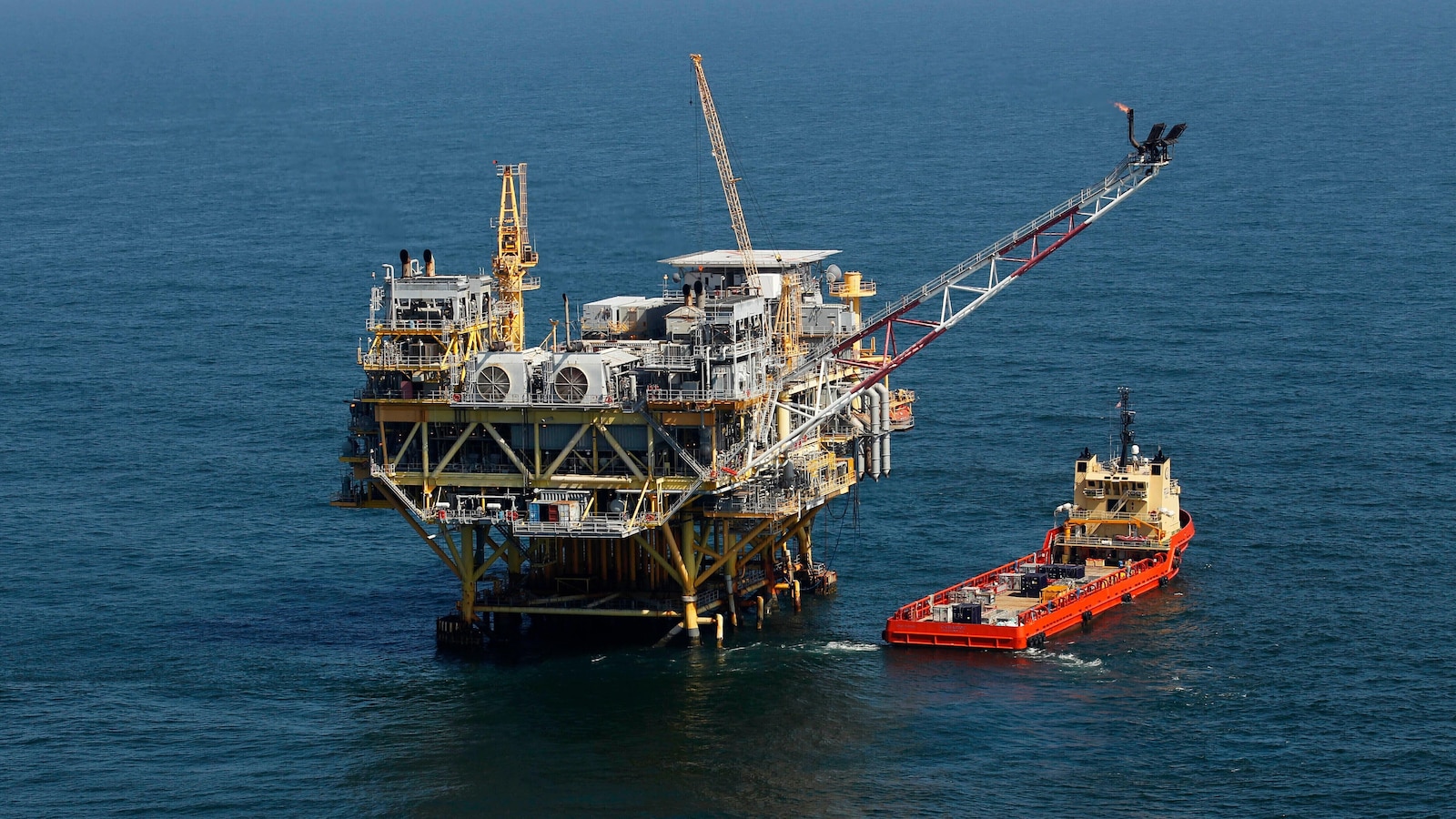
A group within the OPEC+ alliance has agreed to increase oil production by 137,000 barrels per day in November, citing a steady global economic outlook and healthy market fundamentals. This modest boost continues a pattern of gradual output increases throughout the year, signaling the group's current assessment of demand while retaining the flexibility to adjust production based on evolving market conditions.
OPEC+ to raise oil production by 137,000 barrels per day in November A group of countries in the OPEC+ alliance has agreed to a small boost in oil production, citing a steady global economic outlook NEW YORK -- NEW YORK (AP) — A group of countries that are part of the OPEC+ alliance of oil-exporting countries has agreed to a small boost in oil production, citing a steady global economic outlook. The group said after a virtual meeting on Sunday that it will raise oil production by 137,000 barrels per day in November, they same amount it announced for October. The group has been raising output slightly in a series of boosts all year, after announcing cuts in 2023 and 2024. In a statement the group said the move was due to “a steady global economic outlook and current healthy market fundamentals.” It added the production adjustments may be paused or reversed as market conditions evolve. Saudi Arabia holds significant influence in OPEC+ as the dominant member of the OPEC producers’ cartel, and Russia is the leading non-OPEC member in the 22-country alliance. Along with Saudi Arabia and Russia, the group that met Sunday is made up of Iraq, the United Arab Emirates, Kuwait, Kazakhstan, Algeria and Oman. Their next meeting is scheduled for Nov. 2. A key subgroup of the OPEC+ alliance has committed to a modest oil production increase of 137,000 barrels per day for November, a decision that mirrors the volume added in October and extends a pattern of gradual supply restoration throughout the year. The group's justification rests on their assessment of a "steady global economic outlook and current healthy market fundamentals," signaling confidence in near-term demand. This controlled increase, following previously announced cuts for 2023 and 2024, demonstrates a strategy of cautious market management. Crucially, the alliance has retained flexibility, stating that production adjustments may be paused or reversed depending on market conditions. This posture, led by influential members Saudi Arabia and Russia, suggests a commitment to preventing significant price volatility, with the next policy review scheduled for November 2nd.
AI-powered research, real-time alerts, and portfolio analytics for institutional investors.
Request DemoOverall Sentiment
mildly positive
Sentiment Score
0.25
