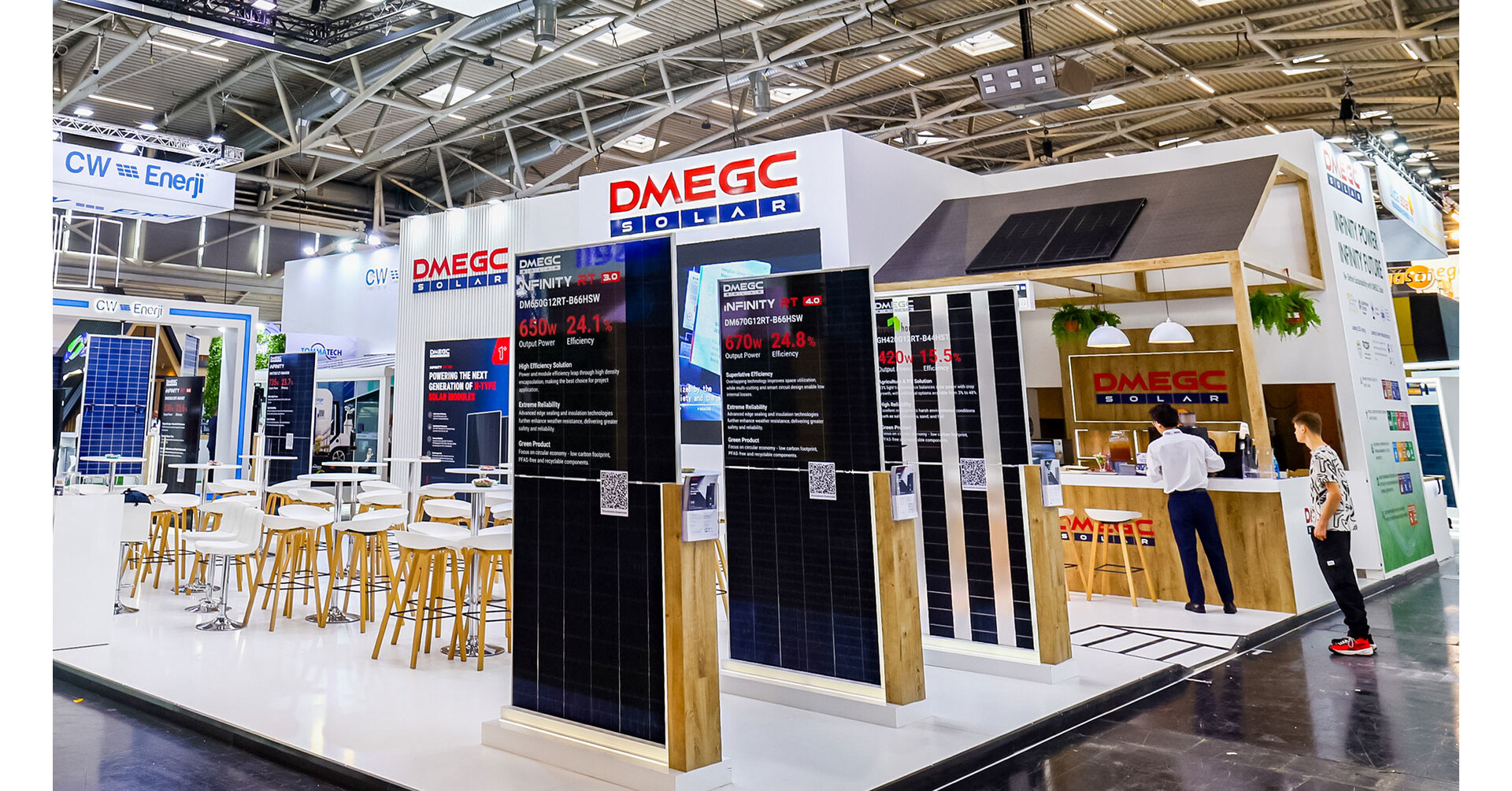
DMEGC Solar presentó en Intersolar Europe 2026 su serie fotovoltaica INFINITY RT 3.0 y soluciones de almacenamiento (ESS), destacando módulos de utilidad con potencia de producción en masa de 650W (G12RT-B66) y opciones residenciales de hasta 485W (G12RT-G48HBB) con resistencia al granizo HW5. También mostró productos C&I de hasta 530W y una variante Agro-PV con transmitancia de luz del 33% (G12RT-B44HST). El artículo es principalmente de posicionamiento de producto y no reporta resultados financieros, con señal positiva para la adopción de sistemas solares integrados FV+ESS.
This is not a near-term stock catalyst so much as a read-through on pricing pressure in the solar hardware stack. When a major manufacturer is publicly pairing higher-wattage modules with ESS, the strategic message is that the industry is moving from component sales toward bundled system economics — which usually means lower gross margins for pure-play module vendors and more working-capital intensity for the whole channel.
The second-order implication is competitive, not celebratory: if the product claims are commercially real, installers and EPCs can push for better all-in system pricing, which tends to compress ASPs before it expands volumes. That is bullish for downstream deployment and potentially for project developers, but negative for commodity-exposed suppliers and for stand-alone storage/inverter names that rely on differentiation to defend pricing. Any benefit to demand is likely a months-out effect; the immediate market impact of a trade-show showcase is usually negligible unless it is followed by order backlog data or distributor commentary.
The contrarian read is that investors often treat higher module wattage as a moat, when in practice it is frequently a sign of faster commoditization. The real question is whether this translates into share gain or just industry-wide margin deflation. In Europe, that tension is amplified by policy friction, financing costs, and periodic channel destocking; if module pricing weakens 5-10% from here, the winners are developers and installers, not necessarily the manufacturers advertising innovation.
Risk-wise, the thesis reverses if European procurement tightens around non-China supply, or if ESS attach rates and service revenue prove sticky enough to offset lower hardware margins. The timing matters: days = no trade; 1-3 months = channel checks and pricing trends; 6-18 months = consolidation and margin normalization across solar hardware.
AI-powered research, real-time alerts, and portfolio analytics for institutional investors.
Request DemoOverall Sentiment
mildly positive
Sentiment Score
0.20
