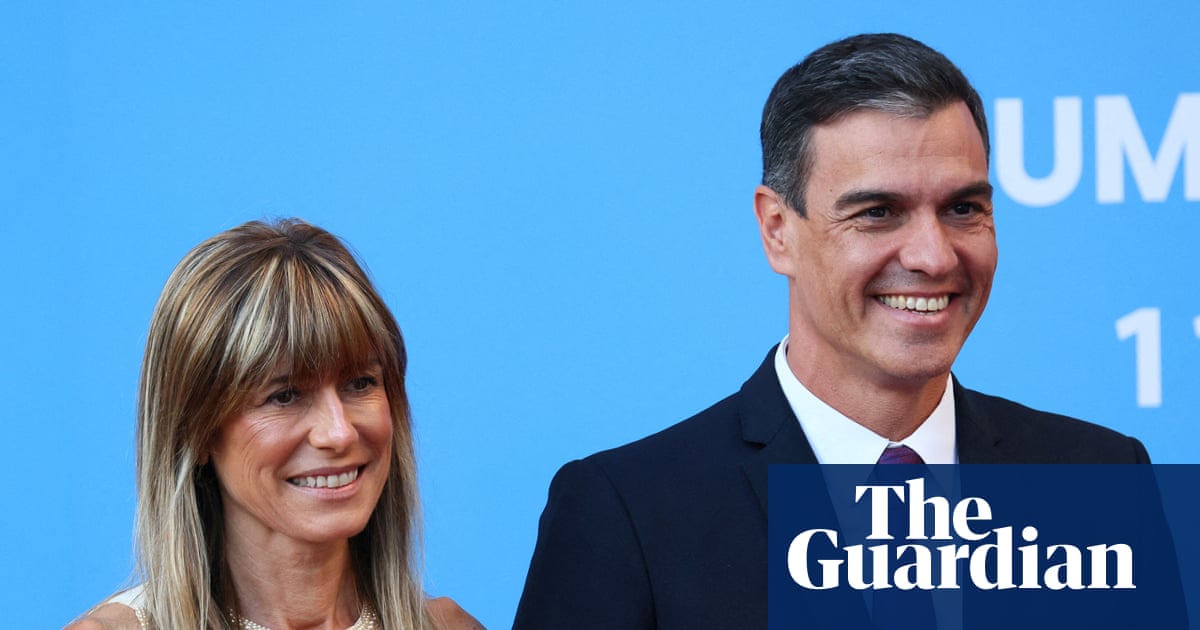
Spain’s prime minister’s wife, Begoña Gómez, has been formally charged with embezzlement, influence peddling, corruption in business dealings and misappropriation of funds after a two-year judicial investigation. The case also implicates her personal assistant and a businessman, while Sánchez’s younger brother and a former senior minister are separately facing corruption-related proceedings. The news raises political and governance pressure on Sánchez’s government, but it is primarily a domestic legal and political development rather than a direct market-moving event.
This is less a binary legal event than an incremental credibility shock for the governing coalition. The market-relevant channel is not direct fiscal or policy collapse, but the slow erosion of executive bandwidth: each new judicial step raises the probability that Sánchez spends more time in defensive coalition management and less in delivering budget, labor, and EU-fund execution. That matters because Spanish assets are already priced on relative political stability versus the rest of Europe; a sustained governance discount can compress domestic banks, utilities, and mid-cap cyclicals even without any immediate change in macro data. The second-order effect is a widening of the “institutional premium” embedded in Spanish risk. If the narrative hardens into a long-running legitimacy fight between the executive and judiciary, foreign capital is more likely to demand a higher discount rate for Spain-specific exposure, especially names whose valuation depends on regulatory goodwill or public-sector throughput. The near-term risk window is the next 1-6 weeks as procedural milestones stack up; the longer tail is the brother’s trial and any evidence that expands the family-enterprise narrative into a broader party-corruption frame. Consensus may be overestimating the probability of a clean political break. In fragmented parliaments, scandal often hurts governing parties in opinion polls without immediately changing policy output, which can mean headline risk outpaces market impact. The key tell is whether coalition partners start extracting concessions or distance themselves; if that happens, the asset-price effect becomes more durable because legislative paralysis, not the scandal itself, becomes the true macro driver.
AI-powered research, real-time alerts, and portfolio analytics for institutional investors.
Request DemoOverall Sentiment
moderately negative
Sentiment Score
-0.35
