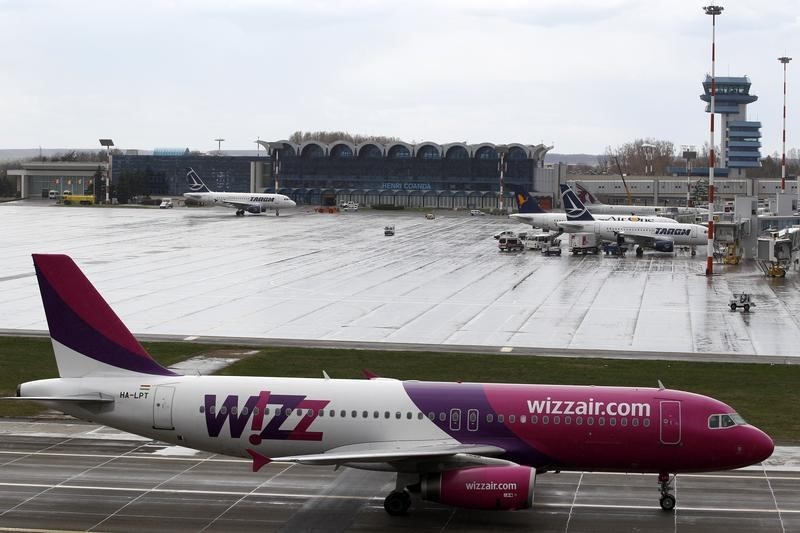
Brent crude surged 8% to $102.78 a barrel, with WTI up 7.2% to $96.03, after the U.S. ordered a Navy blockade of Iranian ports following failed ceasefire talks. The move threatens maritime traffic tied to the Strait of Hormuz and has already hit European airline stocks, which fell 2.7% to 7.7% as fuel-cost pressure intensified. The market is pricing a broad geopolitical shock to oil supply and transport costs.
The first-order move is straightforward: airlines are the cleanest short on an oil shock, but the more interesting trade is relative pain across the sector. Ultra-low-cost carriers and short-haul operators with weaker fuel pass-through and tighter balance sheets should underperform legacy network carriers that can reprice fares and lean on premium cabins; the market often sells them together initially, then discriminates over 2-6 weeks as guidance risk emerges. Energy is not just a directional winner; it is a volatility winner. A Hormuz-related supply scare raises prompt crude far more than deferred contracts, steepening backwardation and improving cash conversion for producers and refiners with inventory exposure. That creates a second-order benefit for short-cycle E&Ps and integrateds with trading arms, while airline hedging programs become a liability if they are caught under-hedged into the spike. The key risk is policy reversal, not physical fundamentals. If talks re-open or the blockade scope narrows, crude can give back the geopolitical premium quickly, but airline equities may not recover in lockstep because pricing actions and consumer demand damage lag the headline. Conversely, if the disruption persists beyond several weeks, the market will start pricing demand destruction and macro slowdown, which caps further upside in oil but deepens the downside for travel, transport, and cyclicals. Consensus is likely underestimating how much this hits European carriers versus U.S. peers. Europe has less domestic substitution, weaker FX support, and more exposure to leisure demand that is highly elastic once ticket prices re-rate; that makes the earnings impact larger than the index-level move suggests. The overreaction risk is in crude: if this remains a blockade rather than a broad regional supply loss, the rally may be tactically tradable rather than a new structural oil regime.
AI-powered research, real-time alerts, and portfolio analytics for institutional investors.
Overall Sentiment
strongly negative
Sentiment Score
-0.72
Ticker Sentiment
