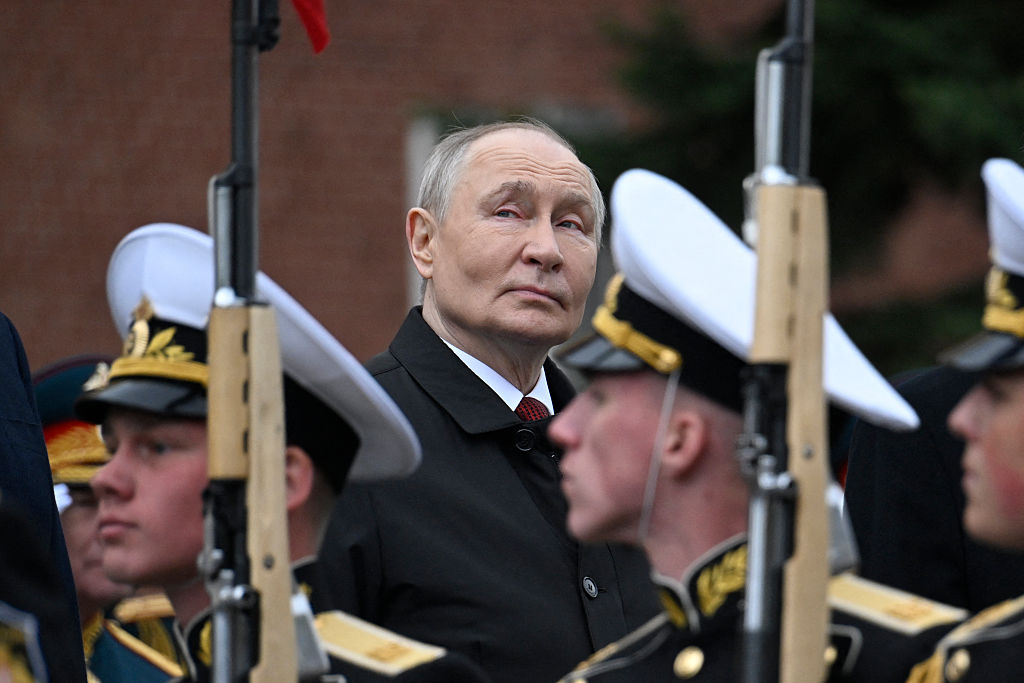
Russia's war economy is showing severe strain, with a federal budget deficit of 5.9 trillion rubles in the first four months of 2026, already above the full-year 2025 shortfall of 5.6 trillion rubles and far above the government's 3.9 trillion ruble target. The economy reportedly contracted 1.8% year to date, while higher VAT, elevated interest rates, labor shortages, and rising desertion/recruitment problems are eroding both the civilian economy and battlefield capacity. The article argues that mounting fiscal pressure and social noncooperation could destabilize Putin's war machine and political control ahead of September elections.
The market-relevant signal is not simply “Russia is weaker,” but that the war model is shifting from a growth engine to a fiscal squeeze, and that transition is usually non-linear. Once war spending stops generating enough labor/productivity uplift, higher taxes and rates start cannibalizing the civilian base that funds the war, creating a self-reinforcing drag on consumption, bank lending, construction, and regional balance sheets. That matters for any sanction-sensitive EM/carry complex because a stronger administrative clampdown often masks, rather than solves, widening funding stress.
The more important second-order effect is capacity degradation at the front: if recruitment is slowing while desertion and communication asymmetries rise, Moscow’s marginal gains become more expensive in men, electronics, and logistics. That tends to push the system toward coercion, which is inefficient and brittle; coercion can raise near-term enlistment, but it also increases hidden noncompliance, falsified reporting, and procurement leakage. Over the next 3-6 months, the key risk is not an immediate regime break but a gradual reduction in operational tempo that forces the Kremlin to choose between domestic austerity and battlefield escalation.
The contrarian read is that consensus may be overestimating the probability of a clean political rupture and underestimating the regime’s ability to finance repression by further compressing the private sector. In the near term, harsher controls can actually support the ruble, keep headline inflation contained, and delay crisis recognition. The bigger tradable issue is rising state fragility rather than imminent collapse: as more economic activity moves off-book, official data become less reliable and policy errors more likely, which is bearish for Russia-linked risk premia and for any asset dependent on stable Eurasian logistics.
AI-powered research, real-time alerts, and portfolio analytics for institutional investors.
Request TrialOverall Sentiment
strongly negative
Sentiment Score
-0.85
