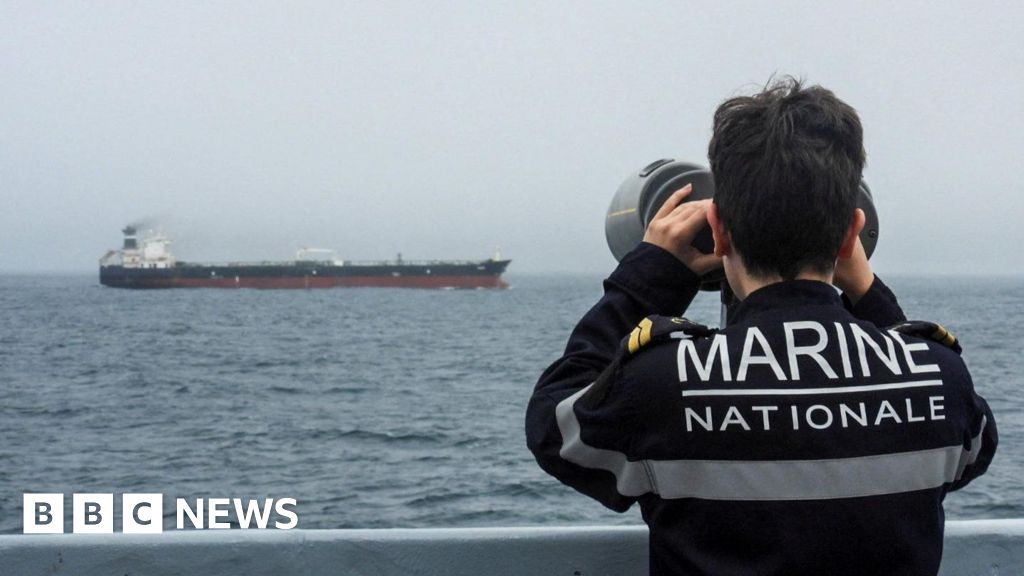
France seized the sanctioned Russian tanker Tagor in international waters around 400 nautical miles west of Brittany, with UK support, after authorities said it was flying a false flag. The action underscores tighter enforcement of sanctions on Russia's oil 'shadow fleet' and raises operational risk for illicit shipping, but the immediate market impact is likely limited. Macron said France has now boarded four such ships since September 2025.
This is less about one tanker than about enforcement moving from symbolic to operational. The market implication is a higher probability that the West starts creating real friction for the shadow-fleet logistics stack: insurers, ship managers, bunker suppliers, port services, and intermediaries that have tolerated gray-zone volumes. That raises the probability of higher delivered-costs for Russian crude over the next 1-3 months, even if headline export barrels do not fall immediately.
The second-order effect is tighter implied tanker availability outside the sanctioned cohort. Once boardings become more frequent, some owners will de-risk by avoiding Baltic/North Sea routing and longer-haul fixtures, which can lift ton-mile demand for compliant fleets. That is supportive for product and crude tanker rates with a lag of weeks, not days, because cargoes still need to move and the clean fleet becomes the marginal capacity.
The bigger risk is escalation without volume disruption: if Russia reroutes through more opaque intermediaries, the market may see a persistent discount on Russian grades rather than a sudden supply shock. In that case, the clearest loser is not global crude supply but refiners with exposure to Russian feedstock blends and insurers tied to marine war-risk / sanctions exposure. Conversely, a hard clampdown that actually seizes cargoes would be a near-term bullish catalyst for front-end oil and clean tanker rates, but the political threshold for that remains high.
Contrarian view: the market may be underestimating how quickly enforcement can become self-financing. If a few more vessels are detained, the compliance cost curve steepens abruptly, and shadow-fleet economics can deteriorate nonlinearly. That would favor a measured long in legitimate tanker capacity rather than a blunt long-energy trade, because the marginal benefit accrues first to shipping bottlenecks before it shows up in broad crude prices.
AI-powered research, real-time alerts, and portfolio analytics for institutional investors.
Request TrialOverall Sentiment
mildly negative
Sentiment Score
-0.15
