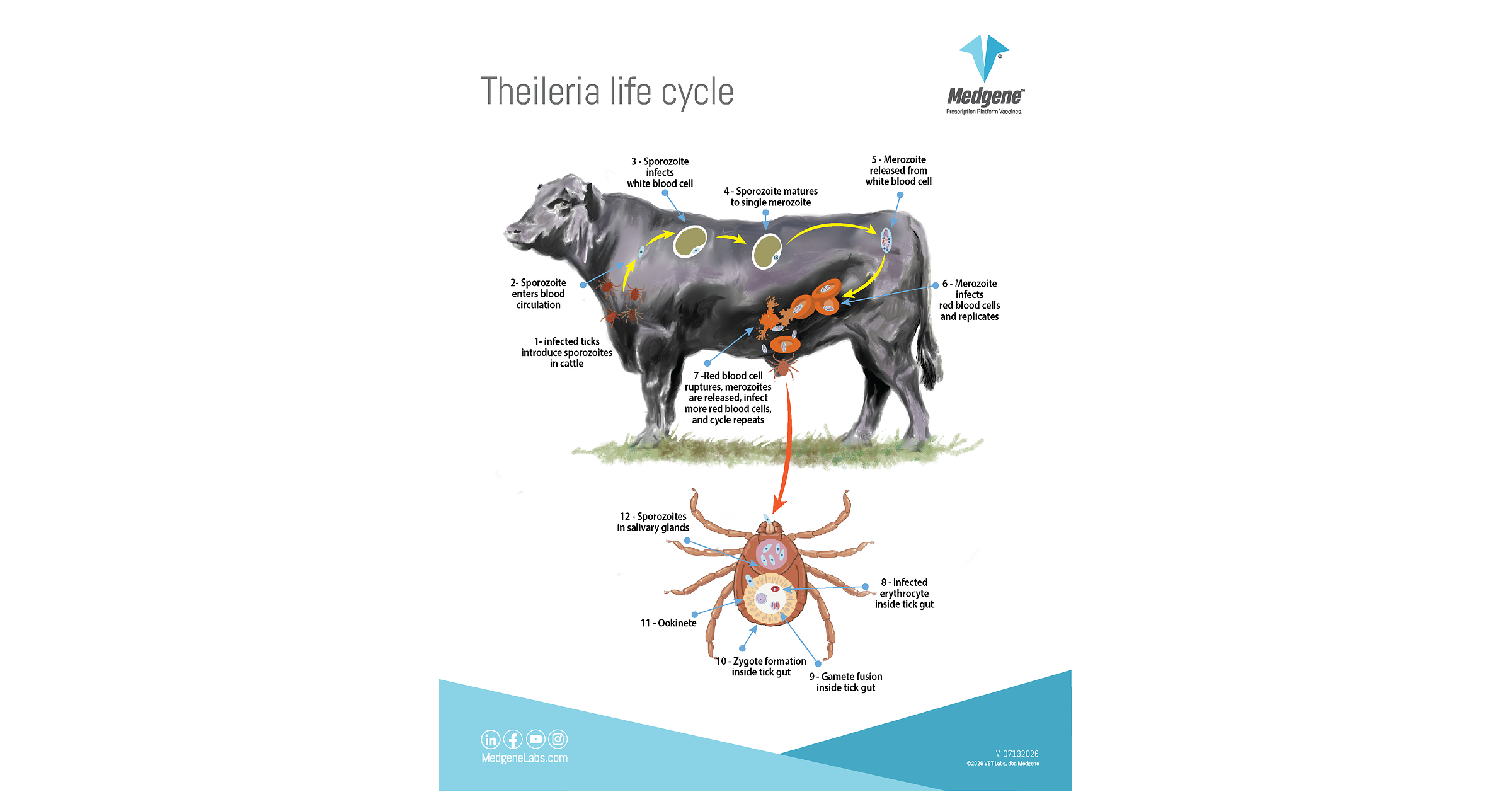
Medgene’s new prescription platform vaccine for Theileria orientalis Ikeda is now available in the U.S. as a two-shot series (initial dose plus booster), targeting a tick-borne parasite responsible for bovine infectious anemia. The article cites severe disease risk—USDA notes up to 50% mortality—and substantial economic losses from tick-borne pathogens ($13.9B). The launch is a positive company development, though the piece notes vaccine potency/efficacy have not been established.
This is more of a validation event for the animal-health budget than a direct earnings catalyst. For public equities, the first-order effect is negligible because the launch is private-company specific; the second-order effect is that it confirms producers will pay for prevention when the economic loss is visible, which modestly supports pricing power across the broader cattle-health stack.
The most plausible public-market read-through is to diagnostics and vet workflow names, not vaccine incumbents. If herd managers respond the way they have with other endemic livestock risks, early spend usually shows up first in testing, herd segmentation, and veterinary consult volume before broad prophylaxis adoption; that argues for a small positive bias to IDXX and, to a lesser extent, ZTS/ELAN, but only if case incidence continues to rise.
The bigger risk is adoption friction: prescription-only products, a two-dose regimen, and unproven field efficacy can keep this as a regional tool rather than a national revenue pool. Over days, the market should ignore it; over 1-3 months, watch spring/summer tick data and USDA/extension commentary; over 6-18 months, sustained geographic spread would matter. If disease incidence plateaus or real-world efficacy disappoints, any optimism in animal-health names should fade quickly.
AI-powered research, real-time alerts, and portfolio analytics for institutional investors.
Request DemoOverall Sentiment
mildly positive
Sentiment Score
0.25
