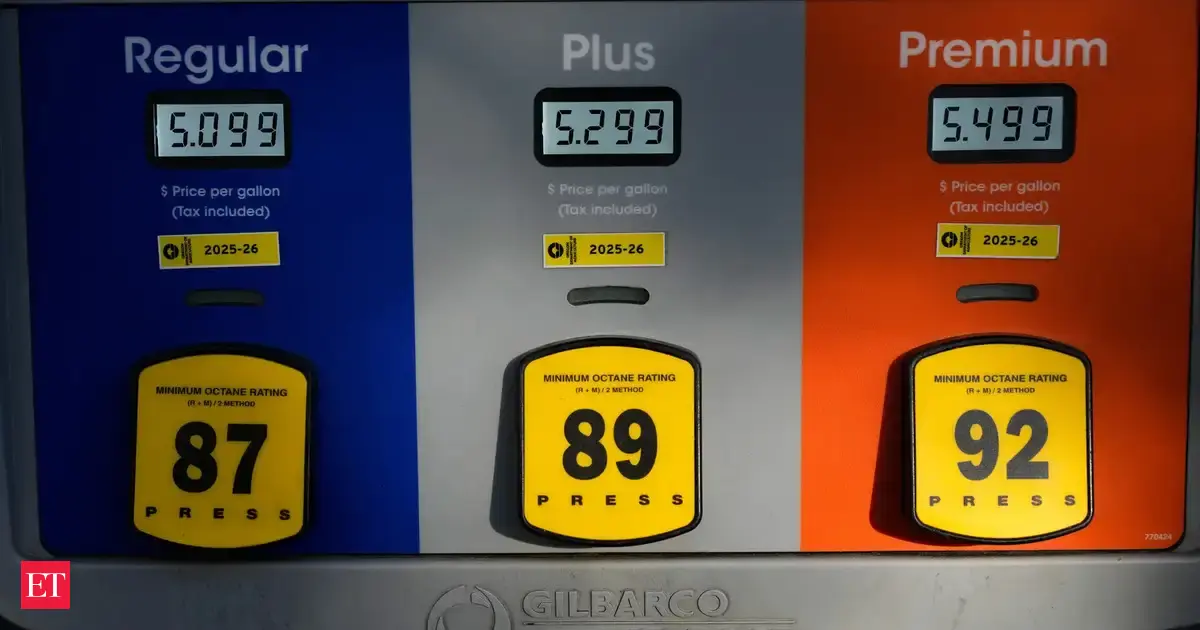
US national regular gasoline averaged $4.020 per gallon on April 22, 2026, down modestly as spring pricing eased. Prices remain highly regional: California leads at $5.829 for regular while Oklahoma is lowest at $3.381, reflecting taxes, refining access, logistics, and regulatory differences. The data is broadly neutral for markets, with limited direct price impact beyond fuel-sensitive sectors and consumer spending.
The near-term macro read-through is not “cheap gas,” but a modest reprieve from a late-winter squeeze that mainly helps lower-income discretionary spenders and transport-heavy households. The biggest second-order beneficiary is not oil demand itself but consumer confidence in the lowest-income cohorts, which should support wallet-share for value retail, QSR, and mass merchants over the next 4-8 weeks. Because the national move is small and regionally uneven, the inflation impulse is more of a baseline drag reset than a regime shift, so headline CPI sensitivity is limited unless gasoline re-accelerates into the summer driving season.
The dispersion matters more than the average. High-cost states with structural fuel penalties effectively tax local consumption and create a persistent headwind for West Coast and Northeast freight, while Gulf-linked states retain a relative logistics advantage that should preserve margin for regional distributors and parcel networks. That also means the beneficiaries of lower pump prices are likely to be import-dependent consumers and air travel demand, while refiners with constrained regional footprints retain pricing power because the market is still segmented by policy and transport bottlenecks.
The contrarian angle is that low national volatility can hide a tightening setup into peak driving season if refining outages, hurricane risk, or ethanol-blend disruptions hit in late spring. The market may be underpricing the lagged effect of lower gasoline on demand elasticity: even a modest drop can lift miles driven and convenience-store traffic faster than it shows up in aggregate fuel demand data. Conversely, if crude softens further, the benefit to consumers becomes self-limiting for upstream equities before it materially changes inflation expectations, creating a narrow window where consumer-facing cyclicals outperform energy for several weeks.
From a cross-asset perspective, this is a better consumer-support trade than a direct energy beta trade. The spread between expensive and cheap states also reinforces the case for logistics and distribution winners over pure commodity exposure: transportation networks that can arbitrage regional fuel and inventory imbalances should see cleaner margin stability than refiners or exploration names in a flat crude tape.
AI-powered research, real-time alerts, and portfolio analytics for institutional investors.
Request TrialOverall Sentiment
neutral
Sentiment Score
0.05
