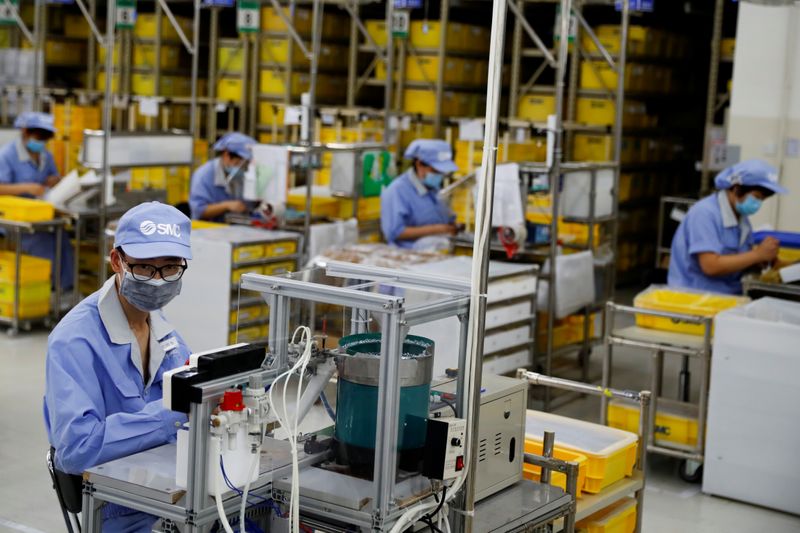
China’s Q1 2026 GDP grew 5.0% year on year, but labor market weakness is worsening, with 16–24 unemployment at 16.9% and the 25–29 cohort at a record 7.7%. Citi warns AI-driven displacement could push youth unemployment toward 20% by mid-year, weighing on household confidence, retail sales, and consumption. The article expects Beijing to consider stimulus at the mid-year Politburo meeting, including service vouchers and support for younger workers.
The important tradeable signal is not China’s growth print; it is the widening gap between nominal activity and household cash-flow confidence. If labor absorption keeps deteriorating into the summer graduate intake, the policy response is likely to pivot from broad credit easing to consumption-transfer tools and stability measures, which tends to favor domestic services, education, and low-ticket discretionary names before it helps heavy industry. That also implies a weaker impulse for bank loan growth and a lower-quality rebound in cyclicals, because stimulus aimed at jobs and confidence usually leaks slower into capex than into retail volume.
The second-order winner set is the policy-sensitive consumer ecosystem: voucher-recipient merchants, online food delivery, travel, and small-ticket leisure should see the earliest elasticity if Beijing moves. The losers are labor-intensive service operators with thin margins and any supplier base exposed to young-consumer spending, because underemployment drives both lower frequency and smaller basket sizes. AI-related displacement creates a paradox: software and automation vendors may get a policy halo, but the macro effect is deflationary for wages first, which delays a broad earnings uplift and pressures incremental demand for semis tied to end-market consumption rather than capex.
For markets, the near-term catalyst is the mid-year policy meeting, but the bigger risk is a two-quarter rolling deterioration in youth employment that forces larger fiscal transfers by late summer. The article’s consensus is probably too linear on “more stimulus = better growth”; in practice, social-stability spending can be equity-positive for consumer names while remaining margin-negative for banks, brokers, and industrials. If Beijing under-delivers, the downside is not just weaker sales — it is a renewed repricing of China cyclicals on the expectation of prolonged balance-sheet repair among households.
The most attractive setup is relative rather than outright beta: own names levered to voucher-driven consumption while fading banks and broad China cyclicals that need a durable credit impulse. There is also an underappreciated short-vol angle if policy expectations are high into the meeting: implieds in China-sensitive ADRs can stay bid until the announcement, then mean-revert if the package is cosmetic. The key is to avoid chasing headline stimulus and instead position for what actually transmits fastest into earnings over the next 1-3 months.
AI-powered research, real-time alerts, and portfolio analytics for institutional investors.
Request DemoOverall Sentiment
moderately negative
Sentiment Score
-0.35
Ticker Sentiment
