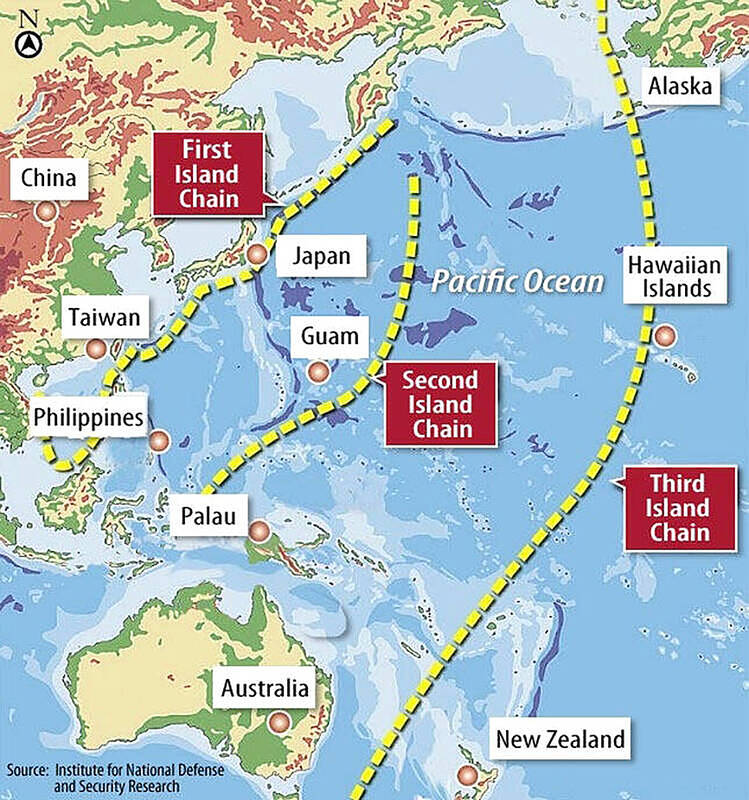
Taiwan-triggered tensions have prompted Japan’s National Security Bureau to recommend that Prime Minister Sanae Takaichi prioritize deterrence and security reforms — including deeper US-Japan integration of forces, enhanced deployments in the first-island chain and Nansei Islands, and expanded coordination with South Korea, the Philippines, Australia, the EU and NATO — after eight joint exercises since Oct. 26 and a recent bilateral drill involving nearly 30 aircraft including F-35As and B-1Bs demonstrated alliance capabilities. The recommendations follow a diplomatic spat after Takaichi’s Nov. 7 remark on a Taiwan contingency that drew angry Chinese retaliation — threatening rhetoric, live-fire drills in the Yellow Sea, China Coast Guard patrols within 12 nautical miles of the Senkaku/Diaoyutai islands, canceled cultural exchanges, travel advisories and suspended seafood imports — which the NSB characterizes as part of a broader CCP “hybrid” coercion campaign including information operations and economic pressure. The bureau warns the dispute is unlikely to be quickly resolved, elevating risks of prolonged regional militarization, trade and supply-chain disruptions from economic coercion, and prompting Japan to further harden alliance-based deterrence; it also flagged cybersecurity and content-bias risks in five China-developed AI models (DeepSeek, Doubao, Yiyan, Tongyi and Yuanbao).
Japan’s National Security Bureau (NSB) advises that Prime Minister Sanae Takaichi prioritize deterrence-focused security reforms, specifically deeper US-Japan force integration, integrated JSDF–US command and operations, and enhanced deployments along the first-island chain and the Nansei Islands, plus expanded coordination with South Korea, the Philippines, Australia, the EU and NATO to construct a regional collective-defense network. The NSB cited eight joint exercises since Oct. 26 and a bilateral drill near Okinawa involving nearly 30 aircraft, including F-35A stealth jets and B-1B bombers, as demonstrations of alliance capability and deterrence.
Takaichi’s Nov. 7 remark that a Taiwan contingency could threaten Japan’s survival prompted a series of Chinese retaliatory measures the NSB labels “hybrid” coercion: threatening rhetoric, a comment interpreted as a beheading threat, live-fire drills in the Yellow Sea, China Coast Guard patrols within 12 nautical miles of the Senkaku/Diaoyutai islands, canceled cultural meetings, travel advisories and suspended seafood imports. The NSB highlights concurrent information-manipulation campaigns (accusations of Japanese espionage and narratives on Ryukyu status) and warns Beijing may press Japan domestically by courting opposition parties and business groups.
The NSB assesses the dispute is unlikely to be resolved soon and that Tokyo will both harden deterrence and seek communication, implying prolonged regional militarization and potential trade/supply-chain disruption. G7 and US statements reaffirming the status quo bolster alliance support but signal sustained geopolitical risk for markets; the NSB also flagged five China-developed AI models (DeepSeek, Doubao, Yiyan, Tongyi and Yuanbao) for cybersecurity and content-bias risks, adding an operational layer of risk for firms using those platforms.
AI-powered research, real-time alerts, and portfolio analytics for institutional investors.
Request DemoOverall Sentiment
moderately negative
Sentiment Score
-0.50
