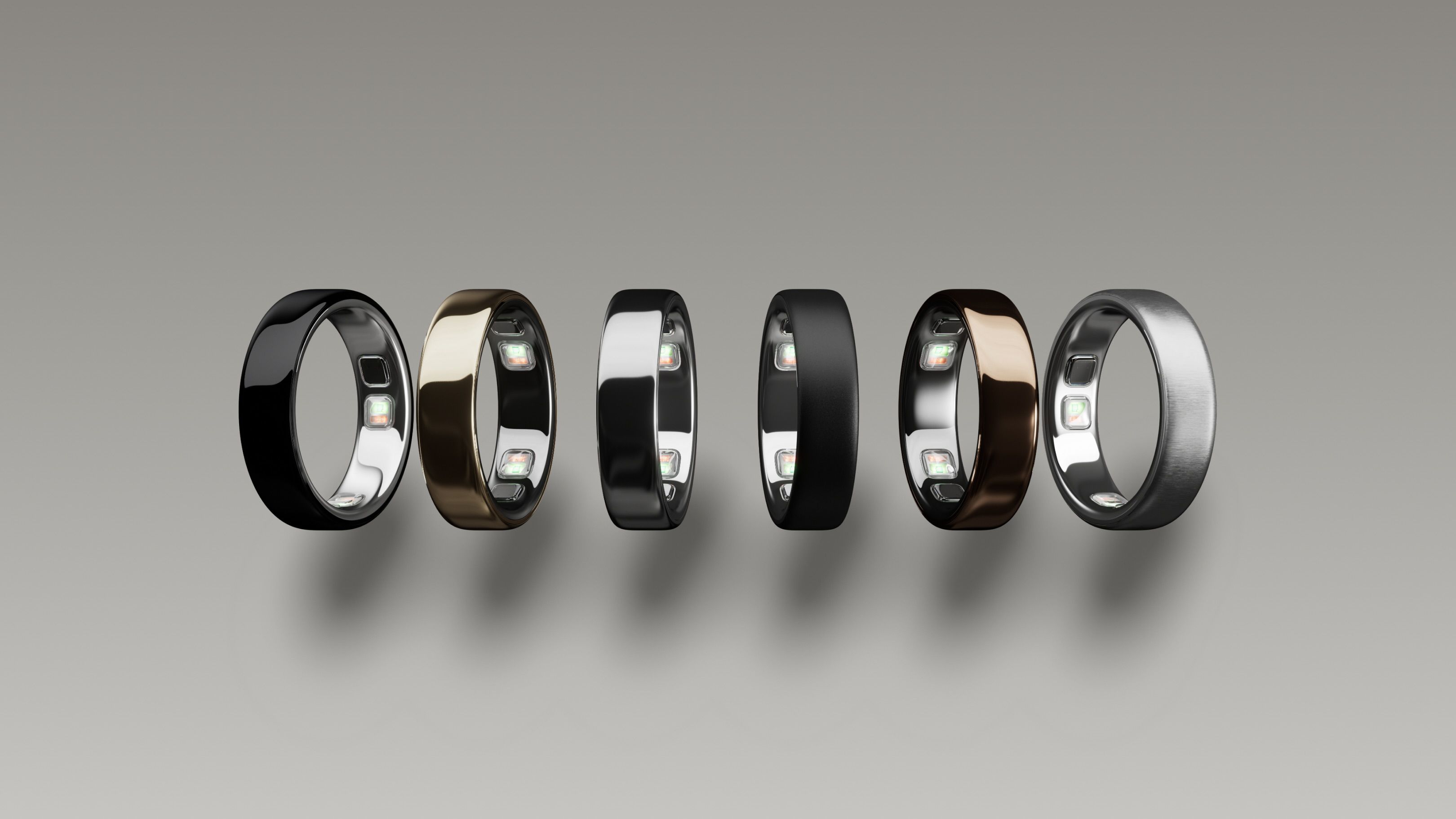
Oura launched the Oura Ring 5, a 40% smaller device priced at $399-$499, with new features including blood pressure trend detection, nighttime breathing analysis, GLP-1 tracking, and expanded health records import tools. Battery life remains about one week, while a new $99 charging case adds a month of backup power and wireless charging. The release broadens Oura's health-monitoring platform and premium accessory ecosystem, but the impact is likely limited to the company rather than the broader market.
This launch is less about one ring and more about Oura trying to move from a premium wellness gadget into a longitudinal health-data platform. The smaller industrial design lowers the biggest adoption friction for wearables, but the more important second-order effect is that better adherence should improve data density, which raises switching costs and improves the accuracy of downstream alerts, coaching, and clinical partnerships. That creates a flywheel: more daily wear time improves models, which improves perceived value, which supports higher subscription attach and lower churn.
The most interesting strategic shift is the push toward medically adjacent use cases rather than generic fitness tracking. Blood-pressure patterning, breathing disturbance monitoring, medication tracking, lab ingestion, and virtual physician access all increase the probability that users justify recurring spend under a health-management budget instead of a discretionary consumer budget. That should be incrementally negative for Apple Watch as an ecosystem substitute at the margin, but more importantly it pressures digital health incumbents by moving basic triage and data aggregation into a consumer-native funnel.
The near-term risk is regulatory and evidentiary: once a consumer device starts implying cardiovascular or respiratory risk, accuracy scrutiny rises sharply, and any false-positive clusters could damage trust faster than a fitness feature would. The bigger medium-term catalyst is not hardware shipments but membership conversion and retention over the next 2-4 quarters; if Oura can prove that these features reduce churn or lift ARPU, the multiple can expand even without a major unit acceleration. The contrarian view is that the market may be underestimating how premium this business can become if it owns the daily health record, but also overestimating how quickly consumers will pay for a second health subscription on top of existing app fatigue.
AI-powered research, real-time alerts, and portfolio analytics for institutional investors.
Request TrialOverall Sentiment
mildly positive
Sentiment Score
0.35
