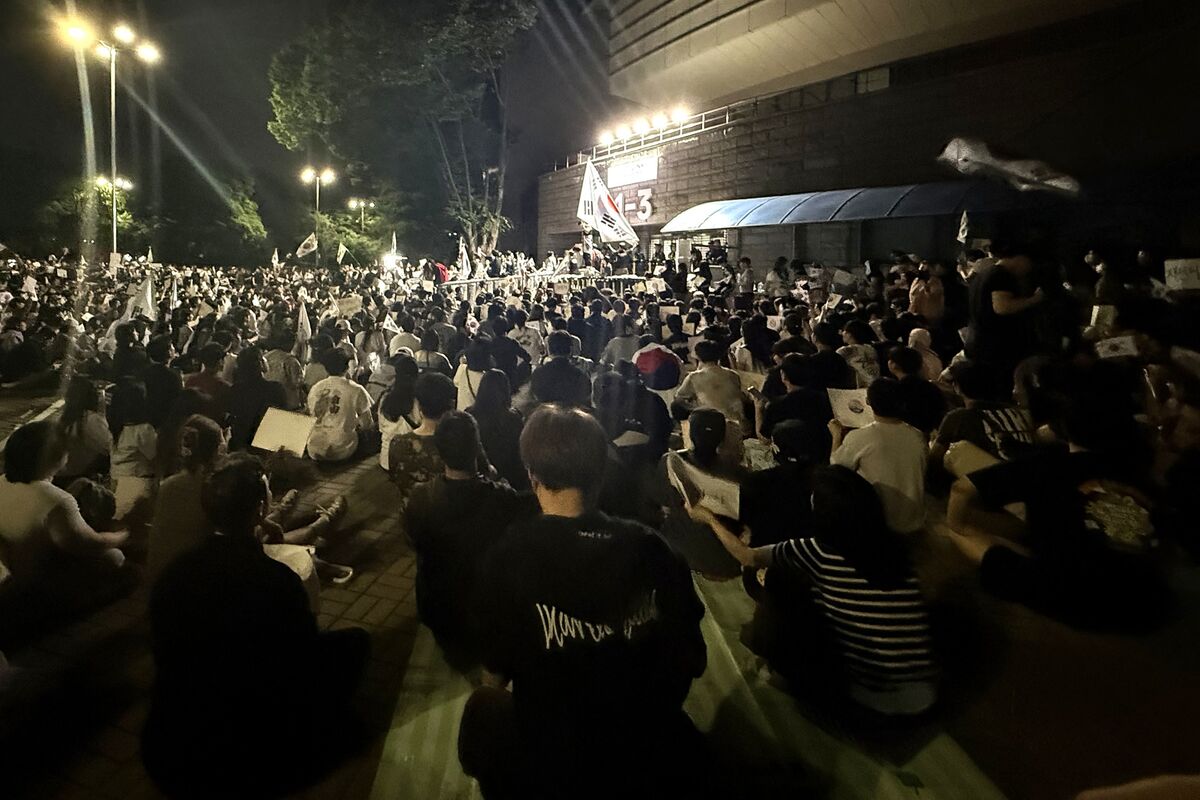
More than 32,000 protesters reportedly gathered in Seoul’s Olympic Park by 9 p.m. Saturday, demanding a revote after ballot shortages disrupted South Korea’s June 3 local elections. The protests began near the Jamsil polling station and have broadened as public anger mounts over the voting snafu. The article points to domestic political unrest rather than a direct market or corporate catalyst.
This is less about the immediate protest optics and more about whether South Korea’s institutional credibility takes a measurable hit. The first-order market issue is not the local election result itself, but the risk that a procedural failure becomes a proxy fight over administrative competence, which can lift the country risk premium at the margin and pressure domestic cyclicals, small caps, and consumer-facing names more than exporters.
The second-order effect is political bandwidth: if the issue metastasizes into broader election integrity litigation, policy follow-through slows just as the market is looking for stability on fiscal, housing, and labor reforms. That tends to benefit large multinational chaebols with foreign revenue and balance-sheet resilience, while hurting rate-sensitive domestic beta where valuation depends on a cleaner policy backdrop and smoother capital allocation.
This is likely a days-to-weeks volatility event unless polling or legal action broadens it into a legitimacy story. The key catalyst is whether authorities offer a narrow remedial fix versus a concession that validates the protest narrative; the former caps contagion, the latter invites copycat mobilization and keeps headline risk alive into the next policy cycle. If the issue fades without a wider investigation, the market should quickly reprice back to idiosyncratic fundamentals.
The consensus may be overestimating the permanence of the shock. In Korea, episodic political noise often creates a better entry point than a regime change signal; the more tradable angle is a temporary spread widening between domestic-earnings names and export-heavy large caps rather than a macro bear thesis on the entire market.
AI-powered research, real-time alerts, and portfolio analytics for institutional investors.
Request DemoOverall Sentiment
mildly negative
Sentiment Score
-0.20
