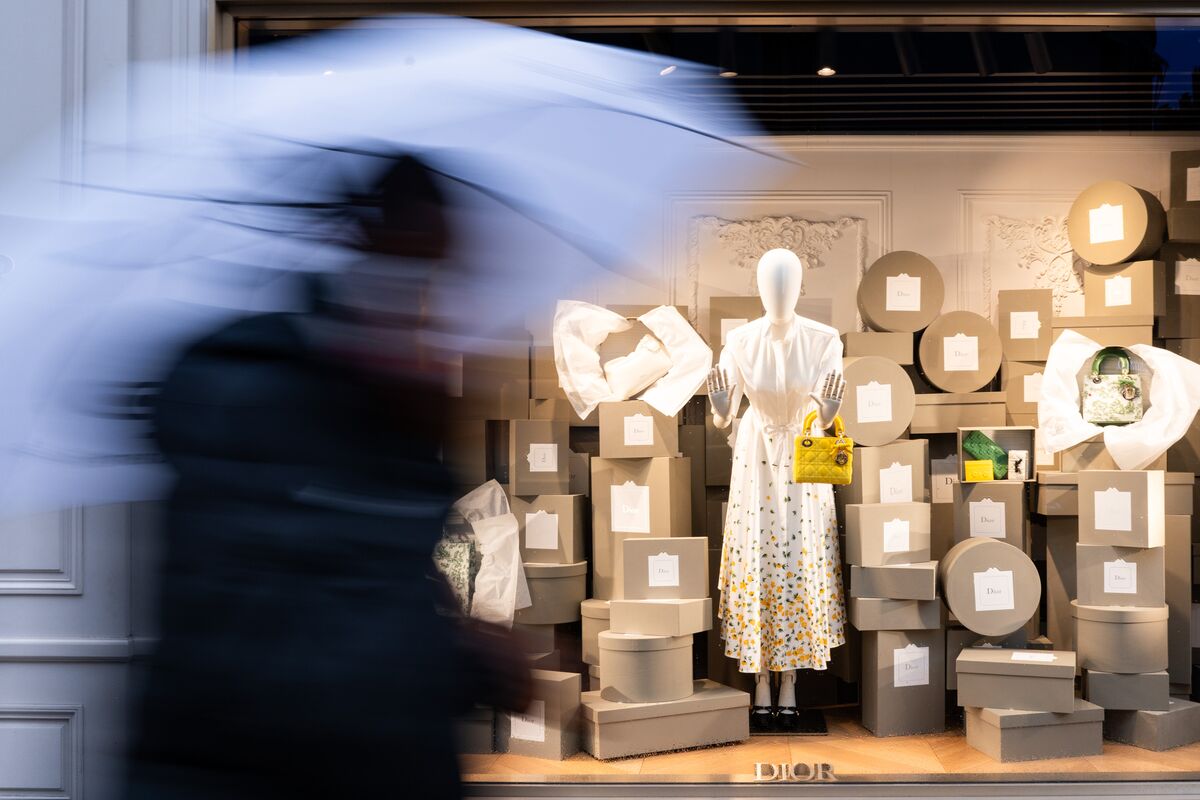
LVMH’s key fashion and leather goods division posted a 2% organic revenue decline in the first quarter, missing the 0.05% decline expected by analysts. Group organic sales still rose 1%, but the result trailed estimates and management cited the Middle East war as a drag on demand for Louis Vuitton and Dior. The update points to softer luxury consumer demand and near-term pressure on LVMH’s core brands.
The key read-through is not just a one-off miss in luxury; it is a signal that the high-end consumer is becoming more geographically fragile and more promotion-sensitive. When top-tier European luxury underperforms in a quarter where expectations were already low, it usually means demand is being pulled forward in some regions and delayed in others rather than broadly destroyed — but the mix matters because LVMH’s fashion engine is the profit center. That makes this more damaging to margin quality than to headline revenue: weaker full-price sell-through at the flagship brands can force more channel support, softer inventory discipline, and lower operating leverage over the next 1-2 quarters. The second-order effect is competitive, not just company-specific. If the Middle East weakness reflects broader geopolitical spillover into affluent travel and tourist purchases, then other luxury names with similar regional exposure and high fixed-cost structures should see the same elasticity, but brands with stronger local pricing power or a larger U.S. client base should take share. The risk is that this morphs from a region-specific demand issue into a broader sentiment reset for China-exposed luxury, because investors will extrapolate any LVMH disappointment into category-wide deceleration. That usually pressures valuation multiples before it shows up in earnings revisions. The catalyst path is clear: a 1-2 quarter window where management commentary on order trends, traffic, and pricing power will matter more than reported sales. If geopolitical tensions persist, the downside is a longer normalization of ultra-high-end discretionary spend; if travel and regional sentiment stabilize, the miss can be faded as a timing issue rather than a structural one. The contrarian angle is that LVMH’s brand architecture still has enough pricing power to absorb a mid-single-digit regional slowdown without a lasting earnings impairment, so the stock-level reaction may overshoot if investors ignore mix and base effects.
AI-powered research, real-time alerts, and portfolio analytics for institutional investors.
Request DemoOverall Sentiment
moderately negative
Sentiment Score
-0.45
