
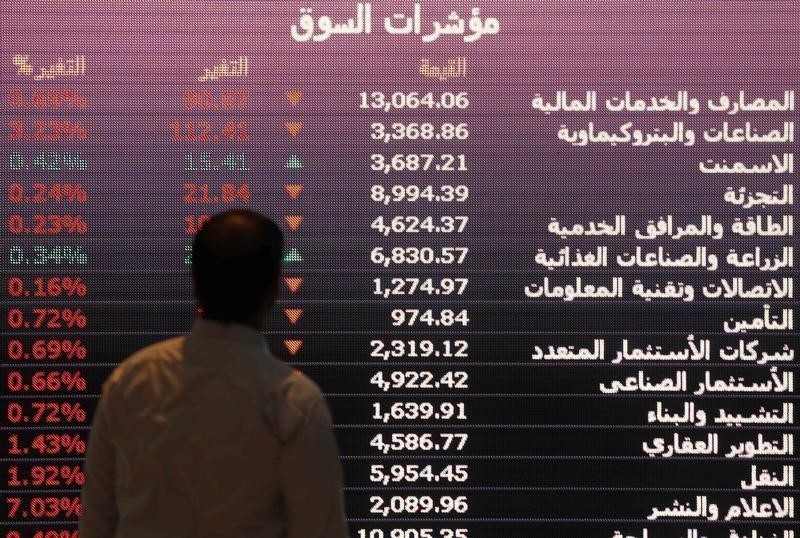
Crude oil pared an early 5% surge but remained elevated, with August WTI up 4.13% to $74.36/bbl and September Brent up 4.24% to $79.23/bbl as new US-Iran strikes kept Hormuz supply-fear risks alive. Saudi stocks finished slightly lower (Tadawul All Share -0.16%), while FX was mixed with EUR/SAR +0.17% to 4.29 and USD/SAR flat at 3.75.
The move is still mostly a geopolitical risk premium, not a proven supply shock. That matters because headline-driven oil spikes tend to mean-revert quickly unless there is a verified physical disruption through Hormuz; if flows remain intact, crude can give back most of the intraday gain within days as CTA and macro hedges unwind. In that regime, the right beneficiaries are not broad equities but the parts of the complex with immediate optionality on volatility: upstream energy, tanker rates, and short-duration hedges on transport/retail margins.
For Saudi equities, the first-order losers are not just petrochemicals but any capital-intensive domestic cyclicals that trade on global growth expectations. Higher oil from war risk raises input-cost uncertainty while simultaneously tightening financial conditions for consumers and exporters, which can pressure industrial margins before it helps fiscal headlines. Insurance strength in the tape is likely idiosyncratic, but if the market starts pricing a sustained regional conflict, underwriting risk and reserve uncertainty rise quickly and that bid can reverse.
The contrarian view is that this may be an overreaction if there is no follow-through strike damage or shipping disruption. Brent at ~$79 is enough to hurt sentiment, but not enough to force a durable earnings reset for most U.S. companies unless gasoline stays elevated for several weeks. For TGT, the transmission is indirect and delayed: higher fuel is a consumer-tax and freight-cost headwind, but it usually needs persistence, not a one-day spike, to hit comp sales and margins.
The cleanest tell over the next 1-3 weeks is whether Brent holds above the recent breakout and whether tanker insurance, freight, and forward curves steepen. If crude slips back while open interest stays elevated, this is likely a fadeable event trade; if the market starts pricing a sustained Hormuz disruption, then the second-order winners shift toward energy, shipping, and defense, while retailers and transports become clearer shorts.
AI-powered research, real-time alerts, and portfolio analytics for institutional investors.
Request TrialOverall Sentiment
neutral
Sentiment Score
0.08
Ticker Sentiment
